

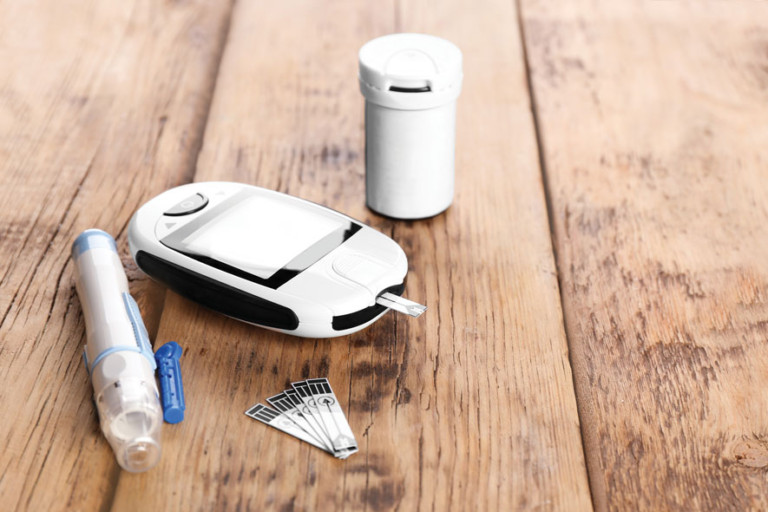
Diabetes is a chronic disease characterized by high glucose (blood sugar) levels resulting from an inability to make or use sufficient insulin.1 When high blood glucose levels remain high and largely uncontrolled for a long period of time, the result can be a variety of serious complications. These complications include, but are not limited to, neuropathy (pain in the hands and feet), high blood pressure, cholesterol and triglyceride levels, peripheral vascular disease (including pain when walking and foot ulcers), retinopathy (the leading cause of blindness worldwide), and weight gain and/or obesity.2 According to the CDC (Centers for Disease Control and Prevention), more than 34 million Americans have diabetes (about one in 10), and approximately 90-95 percent of them have type 2 diabetes. Type 2 diabetes most often develops in people over age 45, but more and more children, teens and young adults are also developing it.3
Likewise, metabolic syndrome (aka, prediabetes) is a serious health condition where blood sugar levels are higher than normal, but not high enough yet to be diagnosed as type 2 diabetes. Approximately 88 million American adults—more than one in three—have metabolic syndrome. Of those with metabolic syndrome, more than 84 percent don’t know they have it. Prediabetes puts you at increased risk of developing type 2 diabetes, heart disease and stroke.4
A Personal Issue
For me, diabetes is a very personal issue. Two of my uncles and one of my cousins died due to complications from diabetes. This is one of the reasons that I wrote a book called A Guide to Complementary Treatments for Diabetes (2010, Square One Publishers), to help provide people with additional strategies for managing their diabetes. Since that time, however, other novel nutraceuticals have entered the marketplace, some of which have significant research demonstrating exciting and promising results. Once such nutraceutical is chitosan oligosaccharide—which goes by the trade name KitoMax (manufactured by Kunpoong Bio, distributed in the U.S. by Zehn Naturals).
What Is Chitosan Oligosaccharide?
Chitosan oligosaccharide is a nutraceutical from crab shell derived chitosan, and broken down via a proprietary, enzymatic process to create a unique profile of low molecular weight chitosan oligosaccharide (below 1,000 Da).5 Chitosan oligosaccharide should not to be confused with ordinary chitosan, the weight management ingredient, which has a much higher molecular weight and different mechanism of action.
Speaking of which, chitosan oligosaccharide has two primary mechanisms of action in supporting a healthy glycemic response. The first is helping to control carbohydrate digestion and absorption from the small intestine via inhibition of starch and sugar breakdown. The second is promoting insulin sensitivity via enhancement of glucose uptake and metabolism in cells.
Chitosan Oligosaccharide & Carbohydrate Digestion and Absorption
Alpha-glucosidases are a group of enzymes located in the brush boarder of the small intestine. They digest starch-derived carbohydates and disaccharides (e.g. sucrose) into the monosaccharide sugar, glucose. If alpha-glucosidases are inhibited, then starch and disaccharides cannot be effectively broken down and absorbed. Chitosan oligosaccharide reduces digestion of both sucrose and starch-derived carbohydrates via inhibition of alpha-glucosidases. In fact, in-vitro research, chitosan oligosaccharide inhibits alpha-glucosidase by up to 75 percent.6 Additional in-vitro research has shown that chitosan oligosaccharide impacts the uptake of glucose through the small intestine to the blood by modulating specific glucose transporters, including the inhibition of SGLT1 up to 30 percent and GLUT2 up to 50 percent.7
Chitosan Oligosaccharide & Insulin Sensitivity
The hormone insulin facilitates glucose uptake from the blood into muscle and fat cells. Research has shown that chitosan oligosaccharide increases physiological biomarkers of insulin sensitivity including:
1. PPAR-gamma (peroxisome proliferator-activated receptor-gamma)—An extensive body of scientific studies has revealed that PPAR-gamma is needed for improved insulin sensitivity and glycemic balance due to increased glucose disposal rates within cells. Studies have revealed that chitosan oligosaccharide significantly enhances PPAR-gamma expression.8
2. Adiponectin—Adiponectin is a hormone that acts as insulin sensitizer and is associated with increased glucose uptake in muscle and fat cells. Pre-clinical studies involving animal models and human clinical research have found that chitosan oligosaccharide consumption leads to significantly increased levels of adiponectin, resulting in greater insulin sensitivity.9-10
3. AMPK (adenosine monophosphate-activated protein kinase)—A third indicator related to improved glucose uptake in cells is AMPK. Studies have found that greater levels of AMPK are associated with increased insulin sensitivity. Pre-clinical in-vivo studies have found that chitosan oligosaccharide significantly increases the level of AMPK in cells.11
4. GLUT 4 (Glucose transporter type 4)—The final indicator in relation to improved glucose uptake in cells is GLUT 4, an insulin-regulated glucose transporter found primarily in adipose tissues and striated muscle (skeletal and cardiac), and which functions as a key determinant of glucose homeostasis. Pre-clinical in-vitro studies found that chitosan oligosaccharide treated cells increase GLUT 4 mRNA expression significantly.12
Effect of Chitosan Oligosaccharide on Mice
A study13 was conducted on diabetic mice to evaluate the effect of long-term supplementation with chitosan oligosaccharide, as well as the effect on sucrase (the specific enzyme that breaks down sucrose) and glucoamylase (the enzyme that breaks down starch). After 42 days of treatment, supplementation reduced both the blood glucose level and HbA1c in a similar manner with a known anti-diabetic drug, acarbose. In addition, sucrase and glucoamylase activities were significantly inhibited in various parts of the intestinal tract. These findings demonstrate that long-term chitosan oligosaccharide supplementation in diabetic mice results in a significant blood glucose and HbA1c reduction, and that it also inhibits carbohydrate enzymes.
HbA1C
Many of the complications of diabetes are the result of glycosylated protein. This simply means that glucose has attached itself to protein. For example, glucose can attach itself to the protein in your red blood cells’ hemoglobin and form glycosylated hemoglobin, also HbA1C. Measuring blood levels of HbA1C is a way to determine long-term glucose control.
Effect of Chitosan Oligosaccharide in Healthy Individuals
In the dietary supplement industry, the ability to make meaningful structure/function claims are often associated with studies that have been conducted on healthy individuals. The reason for this is that DSHEA (Dietary Supplement Health and Education Act of 1994) essentially defines the role of dietary supplements as helping to keep healthy people in a state of good health—despite the fact that people often use supplements to help address various health conditions. The fact that there were two human clinical trials conducted on healthy people using chitosan oligosaccharide (KitoMax) are especially helpful.
The effects of chitosan oligosaccharide on postprandial (after a meal) blood glucose levels in adults with normal blood glucose levels were investigated in a controlled study.14 Postprandial blood glucose levels were measured at 30, 60, 90 and 120 minutes after sucrose administration with and without 500 mg of chitosan oligosaccharide. Results were that chitosan oligosaccharide blood glucose levels. Specifically there were reductions in the area under the blood glucose-time curve (AUC) and the blood glucose peak (Cmax) while the time of peak plasma concentration of blood glucose (Tmax) value was significantly (p<0.05) increased, compared to controls. In conclusion, chitosan oligosaccharide reduced postprandial blood glucose level increases via slower absorption of glucose in the small intestine based on carbohydrate hydrolyzing enzyme inhibition.
In another study,15 the effect of chitosan oligosaccharide administration on postprandial blood glucose levels of subjects with normal blood glucose levels was evaluated following bread consumption. Postprandial blood glucose levels were determined for two hours after bread ingestion with or without 500 mg of chitosan oligosaccharide. Results were that chitosan oligosaccharide significantly lowered the mean, maximum and minimum levels of postprandial blood glucose at 30 min after the meal. Postprandial blood glucose levels were decreased by about 25 percent (from 155.11±13.06 to 138.50±13.59, p<0.01) at 30 min when compared to control. Furthermore, the area under the concentration-time curve was decreased by about 6 percent (from 255.46±15.43 to 240.15±14.22, p<0.05) and the peak concentration of blood glucose (C max) was decreased by about 11 percent (from 157.94±10.90 to 140.61±12.52, p<0.01) when compared to control. These findings suggest that chitosan oligosaccharide limits the increase in postprandial blood glucose levels following bread consumption.
Effect of Chitosan Oligosaccharide in Individuals With Prediabetes (Metabolic Syndrome)
A randomized, double-blind, placebo-controlled clinical trial16 was conducted, this one on subjects with prediabetes (metabolic syndrome). The study aimed to evaluate the effect of chitosan oligosaccharide supplementation on glucose control. Subjects were randomly assigned to receive 500 mg chitosan oligosaccharide before each meal (1,500 mg/day) or a placebo for 12 weeks. Researchers assessed the serum levels of glucose, insulin and C-peptide by way of a glucose tolerance test (OGTT), HbA1c, pro-inflammatory cytokines and plasma adiponectin at baseline and after the 12-week intervention. Results were that those in the chitosan oligosaccharide treatment group showed a significant decrease in the serum glucose level at 30 minutes (p = 0.013) and at 60 minutes (p = 0.028). The change of the serum glucose level at 60 minutes was significant in the treatment group compared with the placebo group (p = 0.030). Also, the plasma level of HbA1c (p = 0.023) and the pro-inflammatory cytokines (IL-6 and TNF-α) were reduced and plasma adiponectin was increased in the chitosan oligosaccharide intervention group after the 12-week treatment. However, the placebo group did not show any significant changes in these biomarkers. In subjects with prediabetes, 12-week supplement with chitosan oligosaccharide helped control postprandial glucose compared with control.
Conclusion
Chitosan oligosaccharide (KitoMax by Kunpoong Bio, distributed in the U.S. by Zehn Naturals) is a novel nutraceutical that works to help manage blood glucose levels by helping to control carbohydrate digestion and absorption from the small intestine, and by promoting insulin sensitivity. Human clinical research had demonstrated that chitosan oligosaccharide helps lower serum glucose levels and HbA1C. VR
References:
1 Rolfes SR, Pinna K, Whitney E. Understanding Normal and Clinical Nutrition, 7th Edition. Belmont, CA: Thomson Wadsworth; 2006.
2 Bruno G. A Guide to Complementary Treatments for Diabetes. Garden City Park, NY: Square One Publishing; 2010.
3 Type 2 Diabetes. Centers for Disease Control. Page last reviewed: May 30, 2019. Retrieved January 5, 2021 from www.cdc.gov/diabetes/basics/diabetes.html.
4 Prediabetes – Your Chance to Prevent Type 2 Diabetes. Page last reviewed: June 11, 2020. Retrieved January 5, 2021 from www.cdc.gov/diabetes/basics/prediabetes.html.
5 Kim J-G, Jo S-H, Ha K-S, et al. Effect of long-term supplementation of low molecular weight chitosan oligosaccharide (GO2KA1) on fasting blood glucose and HbA1c in db/db mice model and elucidation of mechanism of action. BMC Complement Altern Med. 2014 Jul 29;14:272.
6 Jo S-H, Ha K-S, Moon K-S, et al. 2013. Molecular weight dependent glucose lowering effect of low molecular weight chitosan oligosaccharide (Go2KA1) on postprandial blood glucose level in SD rats model. Int J Mol Sci 14:14214-24.
7 Yu S-Y, Kwon Y-I, Lee C, et al. Antidiabetic effect of chitosan oligosaccharide (GO2KA1) is mediated via inhibition of intestinal alpha-glucosidase and glucose transporters and PPARγ expression. Biofactors. 2017 Jan 2;43(1):90-99.
8 Yu S-Y, Kwon Y-I, Lee C, et al. Antidiabetic effect of chitosan oligosaccharide (GO2KA1) is mediated via inhibition of intestinal alpha-glucosidase and glucose transporters and PPARγ expression. Biofactors. 2017 Jan 2;43(1):90-99.
9 Yu S-Y, Kwon Y-I, Lee C, et al. Antidiabetic effect of chitosan oligosaccharide (GO2KA1) is mediated via inhibition of intestinal alpha-glucosidase and glucose transporters and PPARγ expression. Biofactors. 2017 Jan 2;43(1):90-99.
10 Hee JK, Ahn HY, Kwak JH, et al. 2014.The effects of chitosan oligosaccharide (Go2KA1) supplementation on glucose control in subjects with prediabetes: Double blind randomized placebo-controlled study. Food & Function. 5(10): 2662-9.
11 Young-Cheul Kim. 2015. Potential mechanisms of the anti-diabetic actions of chitosan oligosaccharide (Go2KA1), Oral Presentation, Industry-Academy Symposium, 2015.
12 Yu S-Y, Kwon Y-I, Lee C, et al. Antidiabetic effect of chitosan oligosaccharide (GO2KA1) is mediated via inhibition of intestinal alpha-glucosidase and glucose transporters and PPARγ expression. Biofactors. 2017 Jan 2;43(1):90-99.
13 Kim J-G, Jo S-H, Ha K-S, et al. Effect of long-term supplementation of low molecular weight chitosan oligosaccharide (GO2KA1) on fasting blood glucose and HbA1c in db/db mice model and elucidation of mechanism of action. BMC Complement Altern Med. 2014 Jul 29;14:272.
14 Jo S-H, Ha K-S, Lee J-W, et al. The Reduction Effect of Low Molecular Weight Chitosan Oligosaccharide (GO2KA1) on Postprandial Blood Glucose Levels in Healthy Individuals. Food Sci. Biotechnol. 2014; 23(3): 971-973.
15 Kang Y-R, Choi H-Y, Lee J-Y, et al. Effect of supplementation of low-molecular-weight chitosan oligosaccharide, GO2KA1, on postprandial blood glucose levels in healthy individuals following bread consumption. Food Sci Biotechnol. 2016 Jun 30;25(3):911-914.
16 Kim HJ, Ahn HY, Kwak JH, et al. The effects of chitosan oligosaccharide (GO2KA1) supplementation on glucose control in subjects with prediabetes. Food Funct. 2014 Oct;5(10):2662-9.
Gene Bruno, MS, MHS, the dean of academics for Huntington University of Health Sciences, is a nutritionist, herbalist, writer and educator. For more than 30 years he has educated and trained natural product retailers and health care professionals, has researched and formulated natural products for dozens of dietary supplement companies, and has written articles on nutrition, herbal medicine, nutraceuticals and integrative health issues for trade, consumer magazines and peer-reviewed publications. He can be reached at [email protected].
![[Extra! Extra!] Achieving Prediabetes Remission](https://vitaminretailer.com/wp-content/uploads/2026/03/BllodSugarMetabolicHealth-300x275-1774637379.jpg)

![[Extra! Extra!] Trends, Size and Growth of the Glucose Supplements Market](https://vitaminretailer.com/wp-content/uploads/2025/09/Blood-Sugar-and-Metabolic-Health-300x280-1759156501.jpg)