


When we mention energy, we often think of fun—riding horses, roller blading, skiing, rock climbing and dancing, to name only a few. Sometimes we also think about energy in the context of our work and home life—raising children, shopping for meals, mopping the floor, cutting the grass, not to mention the energy to fulfill our job duties. Seldom do we think of energy as a resource needed by every cell in our body to a) do its specific job and b) stay alive as long as it possibly can before it needs to be replaced.
And yet keeping our cells healthy and alive keeps us healthy and alive. Energy also plays an important role in recovery, whether it is from a round of chemotherapy, healing after a major surgery, physical therapy after an accident, or rebuilding damaged tissue. Everything in our life comes down to an incredibly important resource: energy.
That said, I have rarely met the individual who states that they have all the energy they desire. Even my marathon-running, green-smoothie-drinking energizer bunny friends want more energy! It is a valuable resource.
One way to have more energy is to use stimulants. A stimulant I use every day is coffee, and though I love it, I limit it to two cups a day and never past noon because I know overuse can be problematic. The way that stimulants (i.e. caffeine, cocaine, amphetamines, certain other substances) work is to block the receptors that send fatigue messages. You can send fatigue telegrams as much as you want, but if they are blockaded from delivery, you will not get that message. But once the stimulants wear off, all the fatigue signals rush in at once and cause a big crash. Also, high doses of stimulants can make you anxious and be hard on your blood pressure and heart, so better to use sparingly and as needed.
Another way to have more energy is to make less fatigue. As you tire, your body sends fatigue messages, we talked about that above. But what if your strength and stamina increase and you send fewer fatigue signals? The result is perceptibly more energy! That is the way that some adaptogenic herbs work, most especially the king of energy—red ginseng.
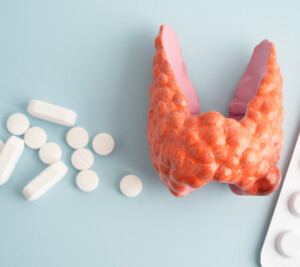
It is also important to understand how our body makes energy and do whatever we can to make that process more efficient and bountiful. The two glandular systems to target are thyroid and adrenal function. Thyroid hormone dictates how much and how quickly our food (fuel) is burned as energy. Even slight decreases in thyroid function can leave you tired, depleted and gaining weight, as more food is turned into adipose tissue instead of being burned as energy.
Last but not least is adrenal function. The adrenal gland is responsible for emergency, sometimes lifesaving, energy. If you are dead tired after working a double shift and are walking home, thinking only of dropping into bed fully clothed for some much-needed sleep, and an escaped tiger leaps into your path and roars, I 100 percent guarantee that you will not be too tired to run away! Your adrenals will release hormones that fire every neuron in your body, and you will either run away with all the speed you can muster or fight with great vigor. There are targeted nutrients that can help in each aspect of the creation of energy, prevention of fatigue and improvement in stamina.
Red Ginseng
There are a few plants called “ginseng” and it can be confusing. American ginseng is Panax quinquefolia and is not the same as Asian (also called Chinese or Korean) ginseng. While it has some medicinal value, it is a cousin plant and therefore the multitude of studies on Asian ginseng do not apply. Another botanical sometimes called ginseng is Eleutherococcus senticosus, Siberian ginseng. It is not even in the ginseng family. The true Asian ginseng is called Panax ginseng, “Panax” for “cures all” because it has such broad-reaching activity in the body. With more than 10,000 published studies listed on the National Institutes of Health (NIH) electronic database, it is a proven powerhouse. Historically, this form has been utilized in China and Korea for well over 4,000 years.
Also, there is some confusion between white and red ginseng. Both are Panax ginseng, but the red form has been steamed to release more of its medicinal compounds.
Panax ginseng contains compounds called ginsenosides that can influence central nervous system activity and modulate the stress response. Ginseng influences biomarkers associated with fatigue, decreases the production of inflammatory compounds, and helps increase energy production.
Red ginseng’s antifatigue properties are so profound that is has been found to help improve fatigue even in people struggling with chronic fatigue syndrome, cancer and multiple sclerosis.
In a 2021 study, a special form of hydroponic ginseng (HRG80) was found to be effective for people with post-viral fatigue, chronic fatigue, and fibromyalgia. There were 188 participants who took HRG80 ginseng for one month. At the end of the study, 60.1 percent of participants experienced significant improvements. They reported an average increase of 67 percent in energy, 44 percent sense of well-being, 48 percent in mental clarify, 46 percent in sleep, 72 percent in stamina.
Ginseng contains ginsenosides that have had a great deal of research. Ginsenosides come in two forms, classic and rare noble. Classic ginsenosides have as little as 1 percent absorption, and so are not very useful. Rare noble, however, has 17 times better absorption and are extremely effective. The rarer the noble ginsenosides, the more powerful the ginseng.
I think ginseng is the most energizing of the adaptogens, and for that reason, you might want to take it earlier in the day, unless you need to be energetic later into the night. And because it is not a stimulant, it does not interfere with blood pressure or sleep.
Thyroid Function
More than 23 million people in the U.S. take synthetic thyroid hormone, making it one of the most prescribed drugs in America. And those prescriptions do not consider the even larger number of people with suboptimal thyroid function, sometimes called thyroid slow down or sluggish thyroid, that were not quite bad enough to be diagnosed with hypothyroidism.
Although conventional thyroid medications are increasing annually, some integrative practitioners estimate one in two women and one in three men over the age of 40 have less than ideal thyroid function.
One of the reasons we see these issues may be at least partially related to a lack of iodine in the diets. There are estimates that dietary iodine intake has decreased by almost 50 percent in the last 30 years. And during that same period, exposure to fluoride, chlorine, bromine and bromides and astatine—all iodine competitors in the body—has increased.
This means that people have more and more exposure to iodine competitors while at the same time dietary iodine is dramatically declining. That’s a perfect storm for thyroid dysfunction.
There is no organ in the body as reliant on a single mineral as the thyroid gland is on iodine. Not enough iodine, not enough thyroid hormone product. Another key ingredient in the nutrient mix to improve thyroid function is the amino acid L-tyrosine. That is basically the recipe for thyroid hormone—weaving together iodine and L-tyrosine.
There is a great deal of debate regarding dosages and types of iodine. While iodine goes everywhere in the body, certain systems like certain types. The thyroid gland loves potassium iodide, breast and prostate tissue loves molecular iodine, and sodium iodide is the most absorbable of the group and boosts the absorption of other forms of iodine as well. For many people, using a blend of these three will be somewhat more beneficial.
As for dosing, the RDI is very low, just 150 mcg to prevent iodine deficiency syndrome, or goiter. However, integrative practitioners use much higher dosages for specific benefits. For thyroid function, the dose can be 15 to 30 mg daily, and for other uses, such as cancer support, hormonal issues or brain fog, 6.25 to 12.5 mg daily. If the dose of iodine is too high, a person often feels a rapid heartbeat, jitteriness and trouble sleeping, so a lower dose may be needed.
Adrenal Function
Remember that adrenal hormones give us emergency energy, so people who deal with chronic stress can start to have lower adrenal function. They feel burned out and unable to cope with stressful situations. To restore healthy adrenal gland function and optimal hormone levels, it is important to replenish nutrients that have been depleted over time, as well as increase hormone production.
Boosting adrenal function is a little more complex than the interventions for the thyroid gland and may include bovine-sourced adrenal extract, the hormones DHEA and pregnenolone, amino acids like L-tyrosine, vitamin B6 as pyridoxal-5-phosphate (the bioidentical form) vitamin C, and the clinically studied herbs licorice and rehmannia.
Adrenal extract and the hormones help augment what a healthy adrenal gland should be making and provide building block raw materials. The adrenal gland is the largest repository of vitamin C in the body, and it is quickly depleted under stress, so a daily supplement can help make sure the adrenal gland remains replete with this vitamin. Licorice helps adrenal hormones stay active in the blood stream longer, and rehmannia is a lovely purple flower that contains a compound called couteragenin that is a very mild adrenal stimulant. It gently increases adrenal activity. This is important because we want to make sure we do not overstress a glandular system that is already a bit depleted.
Because adrenal gland activity is highest in the morning, I would use adrenal boosters early in the day and not much past 2 or 3 in the afternoon.
Make Sure You Know What You Are Dealing With
Low energy is a little like pain. It is difficult and interferes with your life and daily function, but it is not a disease. It is a symptom. If you are struggling with very low levels of energy, it is important to discuss with your health care provider to make sure you are addressing any underlying causes, like a chronic viral infection, autoimmune disease, chronic fatigue syndrome or other illnesses. However, there are effective natural interventions to improve energy in our body—to do what we love to do, and for our cells to do all that they should be doing to maintain our overall health and even our lifespan.VR
References:
Yale School of Medicine. Levothyroxine: 21 Million Americans May Take a Hypothyroidism Drug They Don’t Need. Available at : https://medicine.yale.edu/news-article/21-million-americans-may-take-a-hypothyroidism-drug-they-dont-need/#:~:text=Approximately percent2023 percent20million percent20Americans percent20take,free percent20thyroxine percent20(Free percent20T4). Accessed May 24, 2024.
Lee SM, Bae BS, Park HW, et al. Characterization of Korean Red Ginseng (Panax ginseng Meyer): History, preparation method, and chemical composition. J Ginseng Res. 2015 Oct;39(4):384-91.
Fan W, Huang Y, Zheng H, Li S, Li Z, Yuan L, Cheng X, He C, Sun J. Ginsenosides for the treatment of metabolic syndrome and cardiovascular diseases: Pharmacology and mechanisms. Biomed Pharmacother. 2020 Dec;132:110915.
Teitelbaum J, Goudie S. An Open-Label, Pilot Trial of HRG80™ Red Ginseng in Chronic Fatigue Syndrome, Fibromyalgia, and Post-Viral Fatigue. Pharmaceuticals. 2022; 15(1):43.
Mariage PA, Hovhannisyan A, Panossian AG. Efficacy of Panax ginseng Meyer Herbal Preparation HRG80 in Preventing and Mitigating Stress-Induced Failure of Cognitive Functions in Healthy Subjects: A Pilot, Randomized, Double-Blind, Placebo-Controlled Crossover Trial. Pharmaceuticals 2020. 13;57.
Dimpfel W, Mariage PA, Panossian AG. Effects of red and white ginseng preparations on electrical activity of the brain in elderly subjects: a randomized, double-blind, placebo-controlled, three-armed cross-over study. Pharmaceuticals. 2021;14:182.
Abraham, G.E.,The History of Iodine in Medicine Part III: Thyroid Fixation and Medical Iodophobia. Original Internist. 2006;13: 71-78.
Triggiani V, Tafaro E, Giagulli VA, et al. Role of iodine, selenium and other micronutrients in thyroid function and disorders. Endocr Metab Immune Disord Drug Targets. 2009;9(3):277-94.
Ghent WR, et al. Iodine replacement in fibrocystic disease of the breast. Can J Surg 1993;36:453-460.
Patrick L. Iodine: deficiency and therapeutic considerations. Altern Med Rev. 2008 Jun;13(2):116-27.
Angermayr L, Clar C. Iodine supplementation for preventing iodine deficiency disorders in children. Cochrane Database Syst Rev. 2004;(2):CD003819.
L-tyrosine. In: Hendler SS, ed. PDR for Nutritional Supplements. 2nd ed. Montvale, NJ: Physician’s Desk Reference; 2008:396.
Zimmermann MB, Jooste PL, Pandav CS. Iodine-deficiency disorders. Lancet. 2008 Oct 4;372(9645):1251-62. doi: 10.1016/S0140-6736(08)61005-3.
Leung AM, Braverman LE, Pearce EN. History of U.S. iodine fortification and supplementation. Nutrients. 2012 Nov 13;4(11):1740-6. doi: 10.3390/nu4111740.
Padayatty SJ, Doppman JL, Chang R, Human adrenal glands secrete vitamin C in response to adrenocorticotrophic hormone. Am J Clin Nutr. 2007;86(1):145-9.
Allolio B, Arlt W, Hahner S. DHEA: why, when, and how much–DHEA replacement in adrenal insufficiency. Ann Endocrinol (Paris). 2007;68(4):268-73.
Johannsson G, Burman P, Wirén L, et al. Low dose dehydroepiandrosterone affects behavior in hypopituitary androgen-deficient women: a placebo-controlled trial. J Clin Endocrinol Metab. 2002;87(5):2046-52.
Deijen JB, Orlebeke JF. Effect of tyrosine on cognitive function and blood pressure under stress. Brain Res Bull. 1994;33(3):319-23.
Isbrucker RA, Burdock GA. Risk and safety assessment on the consumption of Licorice root (Glycyrrhiza sp.), its extract and powder as a food ingredient, with emphasis on the pharmacology and toxicology of glycyrrhizin. Regul Toxicol Pharmacol. 2006c;46(3):167-92.
Soucy P, Luu-The V. Conversion of pregnenolone to DHEA by human 17alpha-hydroxylase/17, 20-lyase (P450c17). Evidence that DHEA is produced from the released intermediate, 17alpha-hydroxypregnenolone. Eur J Biochem. 2000;267(11):3243-7.
Vitamin B6. In: In: Hendler SS, ed. PDR for Nutritional Supplements, 2nd ed. Montvale, NJ: Physician’s Desk Reference; 2008:634-644.
Coombs G. Pantothenic Acid. In: The Vitamins: Fundamental Aspects in Nutrition and Health. San Diego, California: Academic Press, Inc; 1992:345-356.
Dharmananda S. Rehmannia. Available at: www.itmonline.org/arts/rehmann.htm. Accessed May 24.
Blood tonics. In: Reid DP. Chinese Herbal Medicine. Boston, Mass: Shambala Publications; 1992:150.
Glandulars. In: Hendler SS, ed. PDR for Nutritional Supplements, 2nd ed. Montvale, NJ: Physician’s Desk Reference; 2008:264.
Karatsoreos IN, McEwen BS. Resilience and vulnerability: a neurobiological perspective. F1000Prime Rep. 2013 May 1;5:13.
von Mühlen D, Laughlin GA, Kritz-Silverstein D, Barrett-Connor E. The Dehydroepiandrosterone And WellNess (DAWN) study: research design and methods. Contemp Clin Trials. 2007 Feb;28(2):153-68.
Patak P, Willenberg HS, Bornstein SR, Vitamin C. is an important cofactor for both adrenal cortex and adrenal medulla. Endocr Res. 2004;30:871–875.
Cheryl Myers is an integrative health nurse, author, and an expert on natural medicine. She is a nationally recognized speaker who has been interviewed by the New York Times, Wall Street Journal and Prevention magazine. Her many articles have been published in such diverse journals as Aesthetic Surgery Journal and Nutrition in Complementary Care, and her research on botanicals has been presented at the American College of Obstetrics and Gynecology and the North American Menopause Society. Myers is the head of scientific affairs and education for EuroPharma, Inc.