


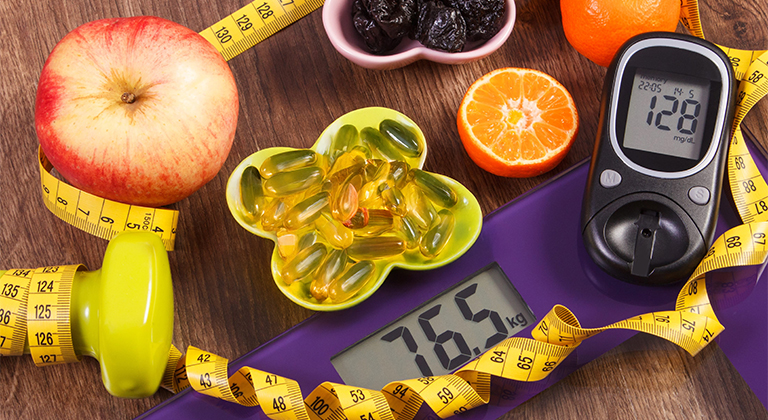
Let’s start the conversation by agreeing that our cultural cult of thin-at-all-costs is neither healthy nor respectful of human differences. But perhaps we can also agree that decades of changes to the food we eat, the water we drink, the toxins we take in, the hormones we absorb, and the indoor, sedentary nature of many jobs has created a crisis of overweight and obesity that does no one any good.
It is important to understand that the efficiency with which our body turns the food we eat into energy can make a big difference in gaining weight, losing weight and maintaining weight. Please don’t expect any miracle 20 pounds in 20 days weight loss promises here—this article is about setting yourself up for long-term success, whatever that looks like to you.
In the simplest of terms, humans eat food and the food is broken apart by digestion. Components are converted into blood sugar (blood glucose), which is carried by a taxicab in the bloodstream called insulin. Insulin transports these sugar molecules to the cells, where they are absorbed and utilized as fuel to be burned in the cellular engine—the mitochondria. This yields energy for the cell to do its job, and for the cell to stay alive. While it is true that cells replace themselves several times over the course of a lifespan, having to do so more frequently will shorten your life expectancy. It just makes sense—we only live as long as our cells do. Take care of your cells!
Anything that makes that sequence glitchy and less efficient is going to result in problems, such as diabetes, weight gain, underactive thyroid, and all the physical ailments that come with this metabolic dysfunction.
No supplement can outperform lifestyle changes. Getting more active (hopefully outdoors), eating much less processed food, and doing your best to avoid toxic exposure is crucially important. Vote for clean air acts, invest in a reverse-osmosis water filtration system, plant a garden, buy organic—you get the idea. But today we are talking about supplements that can help in this journey.
Berberine
Berberine is certainly having its media moment, and it has even been called nature’s Ozempic. I do not agree with that description, but I do know that berberine can help correct certain kinds of metabolic dysfunction that contribute to weight gain, most central of which is metabolic syndrome.
It is estimated that one in three American adults has metabolic syndrome—a condition that usually includes type 2 diabetes, high blood pressure, cholesterol imbalance, obesity (especially around the waist) and high triglycerides. These problems are some of the most prevalent disorders in the modern world, and in most cases, entirely preventable. Berberine is not a plant, but a compound available from many botanical sources. It is one of the most effective natural medicines to treat metabolic syndrome. The extra weight or obesity so common in metabolic syndrome is often influenced by excessive blood sugar levels.
One of the first steps in developing type 2 diabetes is insulin resistance. Remember when I called insulin a taxicab to carry sugar to the cell? Insulin resistance means the cell won’t let the taxicab deliver its load. So, the taxi drives to a new location, and if it can’t get into the cell, it just keeps driving around. This is reflected in the blood sugar going up because it can’t get into the cell to be turned into energy. If the blood sugar isn’t used, the body assumes it is not needed and turns it into the storage form of sugar—fat! And since the sugar isn’t getting into the cells, the cells are hungry, sending messages that they need to be fed. High blood sugar promotes fat accumulation and, ironically, increases appetite. Most people think you gain weight and develop type 2 diabetes, but the reverse is true—you develop insulin resistance and the beginnings of type 2 diabetes, and then you gain weight.
Berberine can help get this process back on track. In clinical research, berberine helped to significantly lower weight, blood sugar and triglyceride levels. It also cut the levels of enzymes associated with fatty liver disease almost in half.
In a three-month clinical trial, berberine lowered fasting and postprandial (after eating) blood sugar and reduced A1C levels from 8.1 percent to 7.3 percent. One of the most important take aways from this trial is that it reduced insulin resistance by 44 percent. These numbers are on par with reductions seen after using a common diabetes drug called metformin, but without the unpleasant side effects.
Berberine works in multiple ways to normalize blood sugar levels and metabolic function. First, it stimulates glycolysis, the process of releasing the energy from sugars so they are used up by the mitochondria as fuel rather than overloading the bloodstream or being stored as fat. Berberine also inhibits alpha glucosidase, an enzyme that breaks down carbohydrates in the intestines. That slows sugar absorption and reduces blood sugar spikes in the bloodstream.
Reducing insulin resistance and getting the sugar into the cells to be burned to create energy is one of the most important steps we can take in repairing our metabolism. And a healthy metabolism is important to achieve and maintain a healthy weight.
Berberine is very poorly absorbed and newer products feature boosted absorption systems, which can be quite beneficial.
Hintonia
This is an herb you may not have heard of, but it is spectacular for reducing blood sugar levels and repairing metabolism. Hintonia latiflora, is indigenous to the Southwest, Mexico and Central America but the development of this plant into an effective medicine for diabetes was done in Germany.
Hintonia latiflora is combined with vitamins and minerals in Europe because of certain diabetes product requirements and has been shown to lower A1C levels by 10 percent, improve fasting and postprandial blood sugar by 23 percent and 24 percent, balance total cholesterol and reduce triglyceride levels, prevent reactive hypoglycemia—undesirable drops in blood sugar. And even remarkable is that these statistics are in individuals already being treated for diabetes with diet, and/or oral medications, and/or insulin injections.
Hintonia latiflora has been clinically studied in Europe for more than 70 years for type 2 diabetes. In clinical trials, patients with type 2 diabetes saw significant reductions in their daily blood sugar levels. Many of the people in the studies who were using insulin or oral medications to reduce their blood sugar levels were able to reduce the dosage of their prescriptions medications or insulin after adding hintonia, and some were able to go off oral medications entirely. However, please remember that these trials and changes in prescription medications were overseen by medical doctors. In long-term follow-up, after three years of use hintonia was still effective, and no serious side effects occurred.
Lower blood sugar means less sugar converted into fat, and stable blood sugar means fewer spikes in hunger and overeating.
The Metabolism Master
I think a case can be made that your thyroid gland is the master switch for your metabolism. The hormone that it produces, thyroxine, dictates the rate at which your body turns food (fuel) into energy. Not just energy to go roller skating and disco dancing, but the cellular energy we talked about before—the energy for your cell to do its job, and the energy for the cell to stay alive.
If the thyroid is making an abnormally low amount of hormone, it is called hypothyroidism and is treated in the mainstream medical world with synthetic thyroid hormone, one brand name of which is Synthroid. If it is abnormally high, which is a much less common experience, it is treated with thyroid hormone blockers or in severe cases, the thyroid is destroyed using radiation to stop its production of hormones. They call this thyroid ablation.
However, there is a very wide range of “normal.” Let’s do a thought experiment. Let’s just say that the normal annual income for a family of four is between $30,000 and $200,000. If you are supporting your family on 35K a year, you will certainly NOT be able to do the same things as a family with 200K a year, correct? So, while both are in the “normal” range, there is a wide spectrum of what that means in real life. The same is true of thyroid laboratory tests. Someone who is a decimal point above the lowest range of “normal” is almost certainly going to have symptoms, often severe. They will be considered normal while their hair gets thinner, their eyebrows fade, they pack on extra weight, have trouble digesting their food, and have slower, maybe even depressed mental function.
That is why many integrative practitioners have changed their approach and the current mantra is “treat the patient, not the numbers!” I wholeheartedly agree.
The best natural medicine for sub-optimal thyroid function is a combination of iodine and the amino acid, L-tyrosine. These are the raw materials that the thyroid uses to make thyroid hormone.
Many of us think we get enough iodine from salt. However, iodine was added to salt to reduce incidence of goiter (enlarged thyroid gland) back in the 1920s and it is still available today as iodized salt. As people have reduced their use of salt and opt for healthier more natural salts, like Celtic Sea salt of Himalayan pink salt, iodine intake from salt has gone down. Additionally, the food we grow and eat now has about 50 percent less iodine than in the 1970s. And unfortunately, we are frequently exposed to all of iodine’s competitors—fluoride, bromine, astatine and chorine. These elements block iodine’s ability to attach to our cells. Chlorine is now used to purify water instead of iodine. Fluoride is almost universally found in toothpaste and drinking water. And bromide replaced iodine in commercial baked goods over 30 years ago. Brominated vegetable oil is everywhere, especially citrus soft drinks and sodas.
Is it any wonder that so many people have problems with their thyroid gland? It is estimated that one in eight Americans will develop a diagnosable thyroid condition in their lifetimes. And that does not even count those people struggling with sub-optimal thyroid function.
As if this weren’t enough, the minimum daily requirement for iodine is still set far too low at only 150 micrograms (mcg) per day. That level may be enough to prevent goiter (severe iodine deficiency), but not enough for vital energy and a dynamic metabolism. Many integrative practitioners recommend 6.25 to 12.5 mg of iodine for individuals with low thyroid function. For most people, this is enough to increase metabolism. And improved metabolism yields more energy, longer lifespan of the individual cells, and potentially weight loss, as more calories are turned into energy than fat.
Supplemental iodine is available in different forms, each of which affects the body in a slightly different manner. The best formula provides three forms of iodine—sodium iodide, potassium iodide, and molecular iodine—at levels that can make a noticeable difference. If iodine is not making the impact you desire, consider a formula that also contains L-tyrosine, as that is another building block for thyroid hormone.
Summary
These three interventions for improved metabolism are each powerful in their own right, but as a protocol can make an even bigger difference in your health. There is no reason not to use all three. As your metabolism improves, you may feel more energy to be active, to make more muscle tissue, which also improves metabolism further. The best way to stary any journey is to repair the underlying problems before you start, and metabolism is the perfect starting point.VR
References:
Yin J, Xing H, Ye J. Efficacy of berberine in patients with type 2 diabetes mellitus. Metabolism. 2008;57(5):712–717.
Pan GY, Huang ZJ, Wang GJ, et al. The antihyperglycaemic activity of berberine arises from a decrease of glucose absorption. Planta Med. 2003 Jul;69(7):632-6.
Di Pierro F, Putignano P, Villanova N. Retrospective analysis of the effects of a highly standardized mixture of Berberis aristata, Silybum marianum, and monacolins K and KA in diabetic patients with dyslipidemia. Acta Biomed;88(4):462–469.
Wüpper S, Lüersen K, Rimbach G. Cyclodextrins, Natural Compounds, and Plant Bioactives-A Nutritional Perspective. Biomolecules. 2021 Mar 9;11(3):401. doi: 10.3390/biom11030401. PMID: 33803150; PMCID: PMC7998733.
Mata R, Cristians S, Escandón-Rivera S, Juárez-Reyes K, Rivero-Cruz I. Mexican antidiabetic herbs: valuable sources of inhibitors of α-glucosidases. J Nat Prod. 2013 Mar 22;76(3):468-83.
Cristians S, Guerro-Analco JA et al. Hypoglycemic activity of extracts and compounds from the leaves of Hintonia standleyana and H. Latiflora: potential alternatives to the use of stem bark of these species. Journal of Natural Products, 2009 Mr 27:72(3);4-08-13.
Korec R, Heniz Sensch K et al. Effects of the neoflavonoid coutareagenin, one of the antidiabetic active substances of Hintonia latiflora, on streptozotocin-indicted diabetes mellitus in rats. Arzneimittelforschung. 2000 Feb;50(2):122-8.
Chen J, Mangelinckx S, Adams A, Wang ZT, Li WL, De Kimpe N. Natural flavonoids as potential herbal medication for the treatment of diabetes mellitus and its complications. Nat Prod Commun. 2015 Jan;10(1):187-200.
Schmidt M, Hladikova M. Hintonia concentrate – for the dietary treatment of increased blood sugar values: Results of a multicentric, prospective, non-interventional study with a defined dry concentrate of Hintonia latiflora. Naturheilpraxis. Feb. 2014. (Translated article).
Korecova M, Hladikova M. Treatment of mild and moderate type-2 diabetes: open prospective trial with Hintonia latiflora extract. European Journal of Medical Research. 2014;19(1):16.
Abraham, G.E.,The History of Iodine in Medicine Part III: Thyroid Fixation and Medical Iodophobia. Original Internist. 2006;13: 71-78.
Triggiani V, Tafaro E, Giagulli VA, et al. Role of iodine, selenium and other micronutrients in thyroid function and disorders. Endocr Metab Immune Disord Drug Targets. 2009;9(3):277-94.
Patrick L. Iodine: deficiency and therapeutic considerations. Altern Med Rev. 2008 Jun;13(2):116-27.
Reinhardt W, Kohl S, Hollmann D, Klapp G, Benker G, Reinwein D, Mann K. Efficacy and safety of iodine in the postpartum period in an area of mild iodine deficiency. Eur J Med Res. 1998;3(4):203-10.
Angermayr L, Clar C. Iodine supplementation for preventing iodine deficiency disorders in children. Cochrane Database Syst Rev. 2004;(2):CD003819.
L-tyrosine. In: Hendler SS, ed. PDR for Nutritional Supplements. 2nd ed. Montvale, NJ: Physician’s Desk Reference; 2008:396.
Zimmermann MB, Jooste PL, Pandav CS. Iodine-deficiency disorders. Lancet. 2008 Oct 4;372(9645):1251-62. doi: 10.1016/S0140-6736(08)61005-3.
Leung AM, Braverman LE, Pearce EN. History of U.S. iodine fortification and supplementation. Nutrients. 2012 Nov 13;4(11):1740-6. doi: 10.3390/nu4111740.
Pirola I, Rotondi M, Cristiano A, et al. Selenium supplementation in patients with subclinical hypothyroidism affected by autoimmune thyroiditis: Results of the SETI study. Endocrinol Diabetes Nutr. 2020;67(1):28-35.
Cheryl Myers is an integrative health nurse, author, and an expert on natural medicine. She is a nationally recognized speaker who has been interviewed by the New York Times, Wall Street Journal and Prevention magazine. Her many articles have been published in such diverse journals as Aesthetic Surgery Journal and Nutrition in Complementary Care, and her research on botanicals has been presented at the American College of Obstetrics and Gynecology and the North American Menopause Society. Myers is the head of scientific affairs and education for EuroPharma, Inc.