


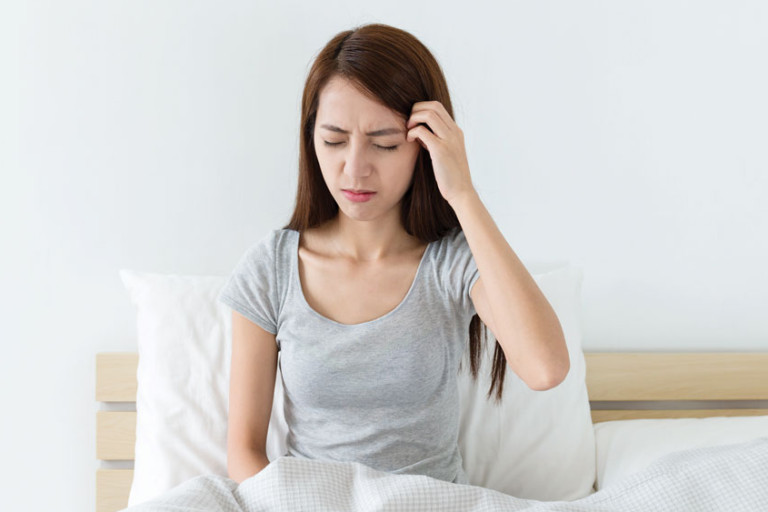
If you are a functioning human living in the 21st century, then I would argue you have likely experienced the effects of a stressful day (or maybe the last year has really put stress on the front burner for you and your family) or the aftermath of a few sleepless nights. The good news is you are not alone; in fact, in America, 70 percent of adults report that they obtain insufficient sleep at least one night per month, and 11 percent report insufficient sleep every night. It also is estimated that sleep-related problems affect 50 to 70 million Americans.
As if getting a good night’s rest isn’t arduous enough, layer in the “chicken or egg” situation when it comes to sleep and stress. Research has shown that insufficient sleep can lead to increased markers of stress hormones, as well as over activation of certain areas of the brain (such as the amygdala, which is associated with the body’s fear and stress responses, as well as memory), leading to a heighted stress response.
One of the main negative effects of stress is that it can cause sleep deprivation. For instance, researchers have found that being in a heightened stress response (or state of alertness) can actually delay the onset of sleep, which can lead to anxious thoughts and feeling restless before bed, making it difficult to not only fall asleep but also stay asleep.
At this point in the article, you might be saying to yourself, well this sounds dismal and seems like counting sheep isn’t going to cut it, however, let’s not stress about stress. There are ways to develop sleep routines (also referred to as sleep hygiene), as well as support a healthy stress response in the body, because believe or not, the goal is not to evade stress. In fact, that would be nearly impossible and would potentially be detrimental to your overall health.
As with anything when it comes to wellness, the dose makes the poison, which means we do in fact need some stress. The goal is to modulate the stress response (or find some balance with it, control what you can control, know when to give up and call your mom for a good cry, etc.), identify triggers that might be contributing to sleep issues (such as dysregulated circadian cycles, imbalances of cortisol to melatonin levels, working out too late in the day, nutrient deficiencies, etc.) and understand that you can add in sedative and nervine herbs when needed to support both stress and sleep issues.
When we are dealing with health issues as multifactor as sleep and stress, we need to put on our health detective hats and start asking some honest questions.
Let’s start with some stress focused questions:
Am I stressing about things that are out of my control? Is this a made-up story in my mind or are these thoughts based in facts? Is there anything I can do right now to bring myself back to the present moment? Can I reframe this thought? Where am I feeling this emotion in my body?
Now let’s shift into nighttime detective mode and address some sleep related questions:
Did I eat something before bed that is not sitting well with me? Have I been on my phone for the last four hours scrolling on the internet? Have I been watching TV late night (aka total load of blue light)? Have I exposed my eyes to natural light during the day (to support the circadian cycle)? Did I drink way too much coffee late in the day?
The above questions are a short jumping off point to begin identifying triggers, common denominators and dietary and lifestyle factors that may be contributing to sleep and stress related issues. If you feel as though you’ve done your homework and figured out all of your answers, but still find yourself experiencing bouts of sleepless nights or stressful moments, then it is time to consider layering in botanical and nutraceutical support.
Core Nutrients
Before we dive into an herbal protocol, I want to ensure that some of the core nutrients for sleep, relaxation and a healthy stress response have been addressed.
Assess your current vitamin B levels. B vitamins in general are important for neurotransmitter levels, a healthy stress response and the conversion of certain hormones we need for sleep. Research is finding a strong correlation between depression and sleep problems (another chicken or egg situation … Am I in a bad mood because I didn’t sleep, or am I not sleeping because I am in a bad mood? … but I digress). A lack of vitamin B6 in particular has been linked to symptoms of insomnia and depression. Vitamin B6 aids in the production of serotonin and melatonin, both of which support sleep and mood.
Magnesium is referred to as “the relaxation mineral” or the “multi-tasking mineral,” and it can play a role in relaxation and mood support.
Zinc may help support a good night’s sleep and is involved in many cellular metabolic processes and is often taken along with magnesium to support relaxation. While some of the body’s highest levels of zinc have been found in the hippocampus (which plays a role in learning and memory), data has also shown zinc deficiency to cause abnormal glucocorticoid secretion (aka stress hormones) and increased depression-like behavior in animals. One of the signs of zinc deficiency is mood swings (even mental lethargy), and some newer research has suggested that low zinc levels can be linked to a decreased mood.
Lastly, zinc is involved in processes in the brain that control sleep; therefore, consumption of zinc has been shown to help individuals to have less episodes of waking up throughout the night and is thought to act as a circadian rhythm regulator.
Nervines, an Herbal Approach
Have you ever had one of those days when everything is getting on your nerves or you feel like you quite literally might have a nervous breakdown? Then nervines might be of interest to you.
The term nervine is a bit of a catch all, but by definition, a nervine is a plant/herb that has a beneficial effect upon the nervous system. As a quick refresher, your nervous system is broken down into two main parts—the central nervous system, which is made up of the brain and spinal cord and the peripheral nervous system, which is made up of nerves that branch off from the spinal cord and extend to all parts of the body. Your nervous system is responsible for getting messages from your brain to the rest of the body and back once again to either chill out (known as parasympathetic mode or rest/digest) or go into hyperarousal (also known as sympathetic nervous system response or fight/flight).
There are stimulating nervines, calming nervines and some that fall right in the middle, but for the most part they work to support relaxation, stress and anxiety. They are generally tonic in nature, meaning you can be in a long term committed relationship with them, however, some are more sedative in nature (such as hops and valerian root) and might be used on an as-needed basis. Below are some of my favorite nervines.
Kava Root
In traditional Pacific cultures, kava was used as medicine for the body as well as the mind and spirit. Main indications for kava include anxiety and stress as it is a relaxing nervine (works on the nervous system). Kava isn’t simply for people with anxiety; it can also increase happiness and bring euphoria, as it works on neurotransmitter levels.
The effects of kava are similar to those from valerian root and it is well known for its calming effects on the mind and body—the active ingredient is the kavalactones, which bind to the same receptor as valerian, however kava can be taken during the day (unlike valerian, which can be a bit more sedative in nature).
Passion Flower
Passion flower is particularly good when you’re “tired but wired,” unable to shut down the mind or body. Passion flower can work on your brain’s receptors of GABA, our main calming neurotransmitter. Passion flower is indicated for tightly wound-up, type A over thinking people.
Passion flower has specific action upon the medulla oblongata, a portion of the brainstem that oversees sleep, temporary fluctuations in blood pressure due to stress, and actions of the vagus nerve. One of the most popular uses for passion flower is for its ability to promote restful sleep, especially when the person feels overwhelmed with work or worry.
Lemon Balm
Lemon balm is a cooling nervine with a strong lemony smell that belongs to the mint family. It can be called a nervous trophorestorative, which indicates that over time it can support the nervous system. A 2003 clinical trial assessed 20 individuals who were given one capsule of powder dried lemon balm and found that there were significant increases in “calmness” in individuals given lemon balm compared to placebo.
Lemon balm can also support sleep, healthy moods and immune health due to its anti-viral properties. Lemon balm is a gentle sedative, and it can help both the mind and the body to relax.
Albizia
Albizia is commonly known as the herb of happiness due to its use in supporting a person’s mood during times of anxiousness and distress.
Albizia is traditionally known as “huan hua” (flowers) and “he huan pi” (bark) and is known for its mood supportive and calming properties. Albizia in the Chinese Materia Medica is referred to as a calming spirit herb; the bark is said to anchor the spirit, while the flowers lighten.
Milky Oats
A fresh milky oats extract can be soothing and restorative to the nervous system. In fact, many herbalists refer to milky oats people as those who are depleted and drained, type A and burnt out. Anyone who has experienced prolonged stress and feels emotionally drained might benefit from taking milky oats, alongside adaptogens, such as rhodiola or ginseng. VR
References:
5 Ways That Vitamin Deficiencies Can Impact Your Sleep. (2019). Retrieved 2 June 2021, from www.psychologytoday.com/us/blog/sleep-newzzz/201905/5-ways-vitamin-deficiencies-can-impact-your-sleep#:~:text=A%20lack%20of%20vitamin%20B6,between%20depression%20and%20sleep%20problems.
Evidence-Based Research on the Role of Zinc and Magnesium Deficiencies in Depression. (2016). Retrieved 2 June 2021, from www.psychiatrictimes.com/view/evidence-based-research-role-zinc-and-magnesium-deficiencies-depression.
Kennedy, D., Wake, G., Savelev, S. et al. Modulation of Mood and Cognitive Performance Following Acute Administration of Single Doses of Melissa Officinalis (Lemon Balm) with Human CNS Nicotinic and Muscarinic Receptor-Binding Properties. Neuropsychopharmacol 28, 1871–1881 (2003). https://doi.org/10.1038/sj.npp.1300230.
Sarris J. (2018). Herbal medicines in the treatment of psychiatric disorders: 10-year updated review. Phytotherapy Research: PTR, 32(7), 1147–1162. https://doi.org/10.1002/ptr.6055.
The State of Sleep Health in America. (2017). Retrieved 2 June 2021, from www.sleephealth.org/sleep-health/the-state-of-sleephealth-in-america/
#:~:text=In%20America%2C%2070%25%20of%20adults,report%20insufficient%20sleep%20every%20night.&text=It%20is%20estimated%20that%20sleep,all%20ages%20and%20socioeconomic%20classes.
Diorio is a graduate from Monmouth University and the Universidad de Cadiz, where she received her B.A. in Spanish, while also receiving two minors in communications and health studies. She continued on to graduate school and received her Masters of Science in human nutrition from the University of Bridgeport. She is also a functional diagnostic nutrition practitioner (FDN), an herbal practitioner through the Herbal Academy, a NASM Certified Personal Trainer, and a holistic lifestyle coach from the C.H.E.K Institute. She is currently enrolled in a PhD program at the University of Natural Medicine, pursuing her doctorate in natural health sciences. She also has created a podcast platform of education, called the Brianna Approved Podcast, which covers a variety of wellness topics.


![[Extra! Extra!] Gnosis Discusses What Retailers Should Know About Stress Relief Products](https://vitaminretailer.com/wp-content/uploads/2026/03/Stress-Anxiety-300x285-1774638246.jpg)