


I do not have to tell you that pain is an incredibly unpleasant experience. Scientists call it a “noxious stimuli,” and that it is, indeed. I am not a big fan of enduring pain. Not only is it, well, painful, it is exhausting and depressing. It wears you out and uses up your body’s resources. It alters your hormonal and neurotransmitter balance. It drains the joy from your day. I don’t agree with the idea that you put up with pain as long as possible before taking action. I want it gone. Yesterday.
That’s not to say that pain is not important. Pain lets you know that something is wrong. Your leg is broken, so don’t walk on it because it is excruciating. The frying pan is hot, so stop touching it. Your appendix is swollen and about to rupture, so get to a hospital … quickly. The first step in addressing pain is to figure out what is causing the pain in the first place. Sometimes it is obvious, but sometimes it takes detective work to figure it out.
Pain can be acute, meaning sudden onset (you step on a shard of glass) or chronic, meaning long-term and ongoing (arthritis). Chronic pain can be more difficult to alleviate, but there is no pain that cannot be improved.
Drugs for Pain
Using over-the-counter (OTC) and prescription drugs for pain may work in the short run, but they have a huge list of very serious—sometimes lethal—side effects. The majority of OTC pain drugs are called NSAIDs (nonsteroidal anti-inflammatory drugs), which stands for non-steroidal anti-inflammatory drugs, which includes ibuprofen, naproxen sodium, aspirin and ketoprofen. Last year, more than 16,500 deaths were attributed to the use of ibuprofen and more than 30,000 to the family of NSAIDs. That’s because they can cause stomach and intestinal lining erosion leading to ulcers, anemia, perforated ulcers with peritonitis, reduced kidney function and doubling and tripling the risk of heart attack and stroke. One exception is acetaminophen, an OTC pain reliever that is not an NSAID and does not have these side effects. Instead, it is the number one cause of acute liver failure, and the number one accidental overdose drug seen in emergency rooms.
Prescription drugs for pain are generally a combination of an NSAID or acetaminophen combined with an opioid. Opiates are extremely dangerous because of their addiction potential. They also reduce breathing and can impair oxygenation in some cases.
Say “No” to Drugs, but “Yes” to Pain Relief
While I firmly believe you should avoid OTC and prescription drugs whenever you can, that doesn’t mean you need to be in pain. There are so many natural interventions, from chiropractic, to acupuncture, to touch therapies, to massage, to aromatherapy—all with research substantiation for their effectiveness. However, my personal area of expertise is in dietary supplements, and there are a few that stand out for effective pain relief.
Curcumin
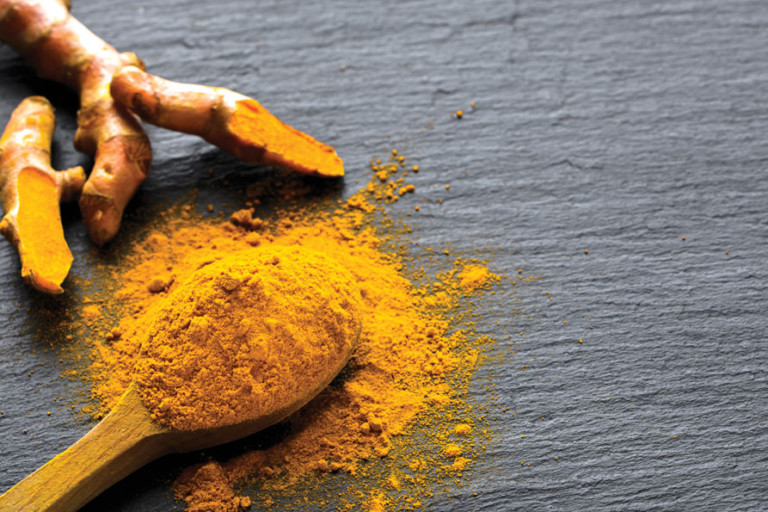
Curcumin is one of the most clinically studied herbs on the planet, with more than 16,000 studies listed in the electronic database of the National Institutes of Health (NIH) at PubMed.gov. One of the most notable of curcumin’s many attributes is its powerful ability to quell inflammation, which has been demonstrated in studies on osteoarthritis, rheumatoid arthritis, athletic injuries, back pain, bone fractures and more. Since inflammation plays a central role in the vast majority of pain, curcumin has become one of the most notable natural interventions for painful injuries and diseases because of its powerful anti-inflammatory effects.
One challenge to the optimal use of curcumin as a natural medicine has to do with its absorbability. Two notable clinically studied forms with enhanced absorption proven in published research for pain are the curcumin phytosome, in which the curcumin is combined with lecithin and a special binding cellulose, and BCM-95 Curcumin in which the curcumin is combined with turmeric essential oil in a patented process.
Boswellia
Boswellia is another well-studied anti-inflammatory herb that works differently than curcumin. Whereas curcumin touches and downregulates every inflammatory pathway in the body, boswellia does not. However, it is particularly powerful on a very hard to address inflammatory activity in the body called the 5-lipoxegenase or 5-LOX pathway. Some problems that exhibit high levels of 5-LOX inflammation are arthritis, gout, psoriasis, psoriatic arthritis, as well as chronic lung and intestinal disorders.
Boswellia contains a family of compounds called boswellic acids. Some boswellic acids are much more powerful than others. The most anti-inflammatory is called acetyl-keto-11 beta boswellic acid, or AKBA. Unstandardized boswellia can have as little as 1 percent AKBA. Effective products have at least 10 percent AKBA, so make sure you check for standardization to assure benefits. It is also useful to purify boswellia to screen out pro-inflammatory BBAs which can boost effectiveness further.
Super Combo: Curcumin and Boswellia
Boswellia and curcumin are particularly effective when taken together, because each augments the other’s activity. There are studies on unique combinations of curcumin and boswellia for painful conditions, including studies on osteoarthritis of the knee, where it worked better than the prescription drug celecoxib (one brand name is Celebrex).
A recent study compared curcumin and boswellia emulsified in a base of black sesame seed oil for speed of relief in acute pain. This study compared the herbal formula to acetaminophen (one brand name is Tylenol) and found it worked as well as 1,000 mg of this drug for pain relief, worked as quickly, and was eight times better at relieving the emotional aspects of pain (suffering, overwhelming, punishing, etc.) that can intensify the experience.
Which Is It? Hemp or CBD?
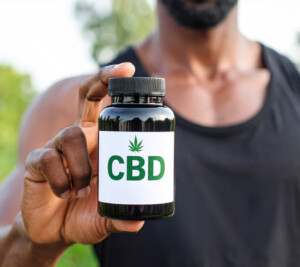
Hemp oil contains a group of more than 100 compounds called phytocannabinoids, of which only one is CBD. CBD is the most prevalent phytocannabinoid, and is clinically studied for pain relief. However, CBD in isolation is not considered a dietary supplement but a drug. The FDA (U.S. Food and Drug Administraition) has approved isolated CBD for two prescription drugs that address certain rare seizure disorders. Ironically, later studies have indicated that CBD works better within the full family of hemp phytocannabinoids. Hemp oil that contains natural levels of CBD can be extremely useful for pain relief, especially in certain kinds of atypical painful disorders, such as migraine headaches, temporal mandibular joint (TMJ) disorder and myofascial pain syndromes. The mode of activity for full-spectrum hemp oil is to connect with the body’s cannabinoid receptors that modulate a variety of physiological responses.
Other Natural Pain Relievers
Though curcumin, boswellia and hemp are acknowledged leaders as natural pain relievers, there are a multitude of other interventions for pain. For example, nerve dysfunction and nerve pain respond well to alpha lipoic acid. There are great studies on vitamin B6 (the best form is called P5P, or pyridoxal-5-phosphate) for carpal tunnel disorders. Ginger contains anti-inflammatory compounds called gingerols that can be quite helpful. Dl-phenylalanine alleviates pain via endorphin/enkephalin activity. Comfrey cream made from a PA-free plant developed in Germany called trauma comfrey has over a dozen studies on use for topical pain relief. Standardized artichoke can help with gall bladder pain. Glucosamine sulfate can improve joint function and joint pain over time, as can native collagen.
Often the best answer to pain is a protocol instead of a product, especially if the pain is complicated or long-term. You may have to experiment a bit to find what works best for you. However, as I stated at the beginning, there is no pain that cannot be improved with natural interventions! VR
References:
Welty TE, Luebke A, Gidal BE. Cannabidiol: promise and pitfalls. Epilepsy Curr. 2014 Sep;14(5):250-2.
Rabinski, G. “Understanding Cannabinoid Receptors:
Why Cannabis Affects Humans,” November 19, 2015. Available at: www.massroots.com/learn/what-are-cannabinoid-receptors.
La Porta C, Bura SA, Llorente-Onaindia J, et al. Role of the endocannabinoid system in the emotional manifestations of osteoarthritis pain. Pain. 2015 Oct;156(10):2001-12.
Biernacki M, Skrzydlewska E. Metabolism of endocannabinoids. Postepy Hig Med Dosw (Online). 2016 Aug 11;70(0):830-43.
Richardson D, Pearson RG, Kurian N, et al. Characterisation of the cannabinoid receptor system in synovial tissue and fluid in patients with osteoarthritis and rheumatoid arthritis. Arthritis Res Ther. 2008;10(2):R43.
Burston JJ, Woodhams SG. Endocannabinoid system and pain: an introduction. Proc Nutr Soc. 2014 Feb;73(1):106-17. doi: 10.1017/S0029665113003650. Epub 2013 Oct 22.
Barrie N, Manolios N. The endocannabinoid system in pain and inflammation: Its relevance to rheumatic disease. Eur J Rheumatol. 2017 Sep;4(3):210-218.
Corcoran L, Roche M, Finn DP. The Role of the Brain’s Endocannabinoid System in Pain and Its Modulation by Stress. Int Rev Neurobiol. 2015;125:203-55. doi: 10.1016/bs.irn.2015.10.003. Epub 2015 Nov 6.
Burston JJ, Woodhams SG. Endocannabinoid system and pain: an introduction. Proc Nutr Soc. 2014 Feb;73(1):106-17. doi: 10.1017/S0029665113003650. Epub 2013 Oct 22.
Lynch ME, Cesar-Rittenberg P, Hohmann AG. A double-blind, placebo-controlled, crossover pilot trial with extension using an oral mucosal cannabinoid extract for treatment of chemotherapy-induced neuropathic pain. J Pain Symptom Manage. 2014 Jan;47(1):166-73.
Kogan NM, Melamed E, Wasserman E, et al. Cannabidiol, a Major Non-Psychotropic Cannabis Constituent Enhances Fracture Healing and Stimulates Lysyl Hydroxylase Activity in Osteoblasts. J Bone Miner Res. 2015 Oct;30(10):1905-13.
Jeong M, Cho J, Shin JI, et al. Hempseed oil induces reactive oxygen species- and C/EBP homologous protein-mediated apoptosis in MH7A human rheumatoid arthritis fibroblast-like synovial cells. J Ethnopharmacol. 2014 Jul 3;154(3):745-52.
Chandran B, Goel A. A Randomized, Pilot Study to Assess the Efficacy and Safety of Curcumin in Patients with Active Rheumatoid Arthritis. Phytother Res. March 9, 2012 doi: 10.1002/ptr.4639.
Antony B, Kizhakedath R, Benny M, Kuruvilla BT. Clinical Evaluation of a herbal product (Rhulief) in the management of knee osteoarthritis. Abstract 316. Osteoarthritis Cartilage. 2011;19(S1):S145-S146.
Haroyan A, Mukuchyan V, Mkrtchyan N, et al. Efficacy and safety of curcumin and its combination with boswellic acid in osteoarthritis: a comparative, randomized, double-blind, placebo-controlled study. BMC Complement Altern Med. 2018 Jan 9;18(1):7
Nicol LM, Rowlands DS, Fazakerly R, Kellett J. Curcumin supplementation likely attenuates delayed onset muscle soreness (DOMS). Eur J Appl Physiol. 2015 Aug;115(8):1769-77. doi: 10.1007/s00421-015-3152-6. Epub 2015 Mar 21.
Sciberras JN, Galloway SD, Fenech A, Grech G, Farrugia C, Duca D, Mifsud J. The effect of turmeric (Curcumin) supplementation on cytokine and inflammatory marker responses following 2 hours of endurance cycling. J Int Soc Sports Nutr. 2015 Jan 21;12(1):5. doi: 10.1186/s12970-014-0066-3. eCollection 2015.
Hatcher H, Planalp R, Cho J, et al. Curcumin: from ancient medicine to current clinical trials. Cell Mol Life Sci 2008;65:1631-1652.
Rudrappa GH, Chakravarthi PT, Benny IR. Efficacy of high-dissolution turmeric-sesame formulation for pain relief in adult subjects with acute musculoskeletal pain compared to acetaminophen: A randomized controlled study. Medicine (Baltimore). 2020;99(28):e20373.
Khadem Haghighian M, Alipoor B, Malek Mahdavi A, Eftekhar Sadat B, Asghari Jafarabadi M, Moghaddam A. Effects of sesame seed supplementation on inflammatory factors and oxidative stress biomarkers in patients with knee osteoarthritis. Acta Med Iran. 2015;53(4):207-13. PMID: 25871017.
Vallath N, Salins N, Kumar M. Unpleasant subjective emotional experiencing of pain. Indian J Palliat Care. 2013;19(1):12-19.
Löffler M, Kamping S, Brunner M, et al. Impact of controllability on pain and suffering. Pain Rep. 2018;3(6):e694. Published 2018 Oct 22.
Mischkowski D, Crocker J, Way BM. A Social Analgesic? Acetaminophen (Paracetamol) Reduces Positive Empathy. Front Psychol. 2019;10:538. Published 2019 Mar 29.
Mischkowski D, Crocker J, Way BM. From painkiller to empathy killer: acetaminophen (paracetamol) reduces empathy for pain. Soc Cogn Affect Neurosci. 2016;11(9):1345-1353. doi:10.1093/scan/nsw057.
Cheryl Myers is an integrative health nurse, author, and an expert on natural medicine. She is a nationally recognized speaker who has been interviewed by the New York Times, Wall Street Journal and Prevention magazine. Her many articles have been published in such diverse journals as Aesthetic Surgery Journal and Nutrition in Complementary Care, and her research on botanicals has been presented at the American College of Obstetrics and Gynecology and the North American Menopause Society. Myers is the head of scientific affairs and education for EuroPharma, Inc.