


Let me start by saying I like the sparkly stuff as much as the next person. But I would trade every piece of jewelry I own in a heartbeat for limitless energy. Imagine getting up in the morning with energy and optimism and the physical endurance to do anything you want to do. Head for the gym, go to work, stop for a glass of wine with friends, cook a gourmet dinner, finish a few household tasks, work on a hobby, take an online language course, read a book, and, finally, fall into bed, relaxed and comfortable, sleeping like a baby—or maybe even something more romantic! Unfortunately, and for many reasons, most adults in the U.S. do not have optimal levels of energy, and some are struggling to even make it through the day.
The causes of low energy are myriad. They range from lack of physical fitness and nutritional challenges, to diseases that often sap your strength, such as chronic fatigue, cancer, sleep disorders, chronic infections, hypothyroidism, depression, heart failure and liver disease. If you don’t know why you are so tired, it is important to work with your health care practitioner to find out what kinds of underlying problems might be contributing to your fatigue. Lack of energy and stamina is an important diagnostic symptom and should not be overlooked.
Some people deal with fatigue by using stimulants like caffeine. And while I admit to occasionally using a few extra shots of espresso in my coffee as a crutch when I have to be mentally alert for a 4 a.m. trip to the airport, over-reliance on stimulants is not sustainable. That is because stimulants do not create energy, they borrow energy. Caffeine tricks your body into thinking it is not tired by blocking compounds that tell us when to slow down and rest. When the caffeine wears off, the fatigue comes rolling back in like a tidal wave.
I am not anti-coffee, and am aware of the enormous health benefits to be had with drinking moderate amounts of coffee and tea with naturally occurring caffeine. I am totally anti-synthetic caffeine, like the stimulants found in sodas and energy drinks. I will make one extreme exception: there are some medical uses for synthetic caffeine, but those are uncommon, and the health toll being extracted by the pervasiveness of energy drinks is frightening.
So how do we get more energy? Lifestyle changes come first, but today we are talking about nutritional interventions that can make a difference. My two favorite energy categories are adaptogenic herbs and natural B vitamins.
B Vitamins Are Not Boring
I know that it is more exciting to hear about some strange and heretofore undiscovered exotic rare herb in the rainforest of Brazil, maybe a blue flower that only blossoms in a blue moon. That is a cool story, and all it needs is Indiana Jones or some other swashbuckler to do it justice. But when it comes to health, especially energy, sometimes the tried and true is the best answer.
The B vitamins are important cofactors in energy metabolism. They are rate limiting in some instances, which means that if there are not sufficient Bs on board, there will not be energy production at a cellular level. This is one of the reasons that healthy levels of B vitamins are needed for healthy brain and heart function. The other is that B vitamins reduce homocysteine, a compound associated with chronic inflammation, and chronic inflammation contributes greatly to fatigue.
Another aspect of B vitamins and energy has to do with depression. Several studies have demonstrated that suboptimal levels of B vitamins are associated with the development and/or worsening of depressive disorder. Depression is a frequent cause of extreme fatigue.
There are so many reasons why people do not have enough B vitamins on board. B vitamin deficiencies are much more common than you might imagine. Some of the body’s biggest B vitamin obstacles come from genetic conditions, liver dysfunction, digestive and intestinal diseases, such as Crohn’s disease or chronic heartburn, common prescription and over-the-counter medications and aging. If that isn’t bad enough, there are prescription drugs that actually deplete B vitamins. Some examples are birth control pills, some diabetes medications, anti-seizure drugs, blood pressure and ulcer medications, steroids and antibiotics. In fact, up to 30 percent of people taking metformin (a drug for type 2 diabetes) have significantly reduced vitamin B12 absorption. People that are taking these drugs should make extra sure they are getting enough B vitamins.
Form Is Important
While there are many B-complex supplements on the market, you need to know that not all B vitamin forms are the same. For example, vitamin B12 can be active (methylcobalamin) or inactive (cyanocobalamin). In order for the inactive form to work, it must be made active by a process that takes place in the liver, and not everyone is good at this conversion. Up to 30 percent of the population is inefficient at the conversion of one or more B vitamins. Look for B12 in the methylcobalamin form, B6 as pyridoxal-5-phosphate, and folic acid as folate or methylfolate. Vitamins B1, B2 and B3 are very important, but less problematic with regard to conversion.
Adaptogens
Adaptogens are a rare class of botanical that helps your body adapt to changing circumstances and both physical and psychological stressors and gives you the vigor to overcome obstacles. Three of my favorites for energy are ashwagandha (Withania somnifera), rhodiola (Rhodiola rosea), and Asian red ginseng (Panax ginseng).
Strong Like the Horse
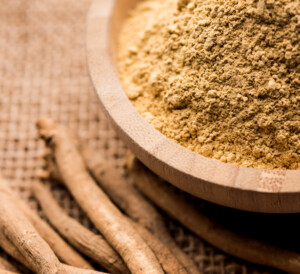
Ashwagandha means smells like a horse, or the essence of a horse, and I am sure those who named it meant it in the most favorable light possible. The essence of the horse is strength and stamina, and ashwagandha is certainly useful for both. Ashwagandha has been used as a powerful medicine in ayurveda for millennia, and modern science has discovered an explanation for some of its energy benefits. Compounds in ashwagandha called withanolides facilitate mitochondrial activity, especially in fat and muscle tissue. The mitochondria are the engines of the cells, so boosting engine output is always a good thing.
Ashwagandha is also calming without causing sleepiness. Stress eats up a lot of energy, so remaining calm is energy sparing. Also, because it tones down our excessive adrenal responses, people sleep better at night. This was demonstrated in a recent published clinical trial of a unique form of ashwagandha that has much higher levels of withanolides—35 percent, instead of the more usual 5 percent.
Rhodiola, the Arctic Root
This plant is native to cold regions and high altitudes, so it is a tough botanical to withstand an inhospitable environment. Not only does it boost energy and stamina, it promotes hormonal health as well. Historically, this amazing natural medicine was gifted to newlyweds to represent fertility. Hormonal health in both men and women is important to energy and vitality. The key compounds identified in rhodiola are rosavins and salidrosides. The best clinical studies have used rhodiola standardized to at least 3 percent rosavin and 1 percent salidroside.
There has been a fair amount of rhodiola adulteration noted in the botanical raw material market. Adulteration occurs when herbs become popular, or supply is inconsistent and the unscrupulous start to slip in other botanicals that are similar to rhodiola. Make sure you are working with companies that demonstrate a robust quality assurance and quality control program.
Red Ginseng, a Noble Powerhouse
I saved my personal favorite for energy for last, which is Asian red ginseng. This is a different species than American ginseng (Panax quinquefolius) and they do not have the same properties. The longer ginseng stays in the ground, the more powerful it becomes. When it has fought off weather changes, insects, ground molds, worms and light and soil variations, it has become very strong indeed. Twenty-year-old wildcrafted ginseng was purchased by emperors with gold and jewels. For a while, it was only legal for royalty to possess ginseng.
Asian ginseng was considered the most powerful plant in the pharmacopeia for vitality, strength, recovery from disease and injury, clear thinking, sexual prowess and longevity. Modern research has validated these properties, but there are some challenges with ginseng today. First, it is commercially extinct in the wild, and cultivated crops in Asia are drenched in pesticides. Second, cultivated ginseng is weak, because it doesn’t have to fight off predators and isn’t allowed to stay in the ground for more than six or seven years.
Ginseng contains many beneficial compounds, and the ginsenosides in this plant have had a great deal of research. Ginsenosides come in two forms, classic and rare noble. Classic ginsenosides have as little as 1 percent absorption, so not very useful. Rare noble, however, has 17 times better absorption and are extremely effective. The more rare noble ginsenosides, the more powerful the ginseng.
There is a newer hydroponic growing process that produces the equivalent of 20-year-old wildcrafted ginseng without the use of any pesticides or herbicides. It is not an extract—it is a whole root powder. There have already been a few studies on this newer ginseng, and it has been found effective for improving focus and concentration despite mental stressors. It increases stamina.
As for improvements in sexual health, ginseng is not just for men. It is useful for women who are finding themselves less in the mood than is their norm. It has been shown in studies to improve arousal and satisfaction. It is particularly useful around menopause, as these hormonal changes can seriously affect women’s libido.
Ginseng’s power is not just for a boost in energy and stamina. It is also useful in boosting the energy of the body to recover from illness or trauma. Many integrative practitioners use this herb to help people recover from serious accidents, draining medical treatments like chemotherapy, or strength to undergo physical therapy. It is an herbal medicine that can wear a lot of hats.
I think ginseng is the most energizing of the adaptogens, and for that reason, you might want to take it earlier in the day.
You Don’t Have to Choose Just One
Regardless of your energy situation, you do not have to choose only one intervention. It is useful to combine a great B vitamin complex with a few adaptogens. You might have to experiment a bit to figure out what works best for you. VR
Some References Used:
Baik HW, Russell RM. Vitamin B12 deficiency in the elderly. Annu Rev Nutr. 1999;19:357-77.
Buvat DR. Use of metformin is a cause of vitamin B12 deficiency. Am Fam Physician. 2004;69:264.
Oudi ME, Aouni Z, Mazigh C, Khochkar R, Gazoueni E, Haouela H, Machghoul S. Homocysteine and markers of inflammation in acute coronary syndrome. Exp Clin Cardiol. 2010 Summer;15(2):e25-8.
Miller AL. The methylation, neurotransmitter, and antioxidant connections between folate and depression. Altern Med Rev. 2008 Sep;13(3):216-26. Guaraldi GP, Fava M, Mazzi F, la Greca P. An open trial of methyltetrahydrofolate in elderly depressed patients. Ann Clin Psychiatry. 1993 Jun;5(2):101-5.
Reynolds E. Vitamin B12, folic acid, and the nervous system. Lancet Neurol. 2006 Nov;5(11):949-60.
Chiang EP, Smith DE, Selhub J, Dallal G, Wang YC, Roubenoff R. Inflammation causes tissue-specific depletion of vitamin B6. Arthritis Res Ther. 2005;7(6):R1254-62.
Clayton PT. B6-responsive disorders: a model of vitamin dependency. J Inherit Metab Dis. 2006 Apr-Jun;29(2-3):317-26.
Lee S, Rhee DK. Effects of ginseng on stress-related depression, anxiety, and the hypothalamic-pituitary-adrenal axis. J Ginseng Res. 2017;41(4):589-594. doi:10.1016/j.jgr.2017.01.010.
Kim HG, Cho JH, Yoo SR, et al. Antifatigue effects of Panax ginseng C.A. Meyer: a randomised, double-blind, placebo-controlled trial. PLoS One. 2013 Apr 17;8(4):e61271.
de Andrade E, de Mesquita AA, Claro Jde A, et al. Study of the efficacy of Korean Red Ginseng in the treatment of erectile dysfunction. Asian J Androl. 2007 Mar;9(2):241-4. Epub 2006 Jul 11.
Chung HS, Hwang I, Oh KJ, Lee MN, Park K. The Effect of Korean Red Ginseng on Sexual Function in Premenopausal Women: Placebo-Controlled, Double-Blind, Crossover Clinical Trial. Evid Based Complement Alternat Med. 2015;2015:913158.
Wiklund IK, Mattsson LA, Lindgren R, Limoni C. Effects of a standardized ginseng extract on quality of life and physiological parameters in symptomatic postmenopausal women: a double-blind, placebo-controlled trial. Swedish Alternative Medicine Group. Int J Clin Pharmacol Res. 1999;19(3):89-99.
Lee HW, Choi J, Lee Y, Kil KJ, Lee MS. Ginseng for managing menopausal woman’s health: A systematic review of double-blind, randomized, placebo-controlled trials. Medicine (Baltimore). 2016;95(38):e4914.
Oh KJ, Chae MJ, Lee HS, Hong HD, Park K. Effects of Korean red ginseng on sexual arousal in menopausal women: placebo-controlled, double-blind crossover clinical study. J Sex Med. 2010 Apr;7(4 Pt 1):1469-77.
Seo SK, Hong Y, Yun BH, et al. Antioxidative effects of Korean red ginseng in postmenopausal women: a double-blind randomized controlled trial. J Ethnopharmacol. 2014 Jul 3;154(3):753-7.
Deshpande A, Irani N, Balkrishnan R, Benny IR. A randomized, double blind, placebo controlled study to evaluate the effects of ashwagandha (Withania somnifera) extract on sleep quality in healthy adults. Sleep Med. 2020;72:28-36. doi:10.1016/j.sleep.2020.03.012.
Chandrasekhar K, Kapoor J, Anishetty S. A prospective, randomized double-blind, placebo-controlled study of safety and efficacy of a high-concentration full-spectrum extract of ashwagandha root in reducing stress and anxiety in adults. Indian J Psychol Med. 2012;34(3):255-62.
Lopresti AL, Smith SJ, Malvi H, Kodgule R. An investigation into the stress-relieving and pharmacological actions of an ashwagandha (Withania somnifera) extract: A randomized, double-blind, placebo-controlled study. Medicine (Baltimore). 2019;98(37):e17186.
Shenoy S, Chaskar U, Sandhu JS, Paadhi MM. Effects of eight-week supplementation of Ashwagandha on cardiorespiratory endurance in elite Indian cyclists. J Ayurveda Integr Med. 2012;3(4):209-14.
Pérez-Gómez J, Villafaina S, Adsuar JC, Merellano-Navarro E, Collado-Mateo D. Effects of Ashwagandha (Withania somnifera) on VO2max: A Systematic Review and Meta-Analysis. Nutrients. 2020;12(4):1119. Published 2020 Apr 17. doi:10.3390/nu12041119.
Lopresti AL, Drummond PD, Smith SJ. A Randomized, Double-Blind, Placebo-Controlled, Crossover Study Examining the Hormonal and Vitality Effects of Ashwagandha (Withania somnifera) in Aging, Overweight Males. Am J Mens Health. 2019;13(2):1557988319835985. Panossian A, Wikman G, Sarris J. Rosenroot (Rhodiola rosea): traditional use, chemical composition, pharmacology and clinical efficacy. Phytomedicine. 2010 Jun;17(7):481-93.
Edwards D, Heufelder A, Zimmermann A. Therapeutic effects and safety of Rhodiola rosea extract WS 1375 in subjects with life-stress symptoms–results of an open-label study. Phytother Res. 2012 Aug;26(8):1220–5.
Olsson EM, von Schéele B, Panossian AG. A Randomised, Double-Blind, Placebo-Controlled, Parallel-Group Study of the Standardised Extract SHR-5 of the Roots of Rhodiola rosea in the Treatment of Subjects with Stress-Related Fatigue. Planta Med. 2009 Feb;75(2):105-12.
De Bock K, Eijnde BO, Ramaekers M, Hespel P. Acute Rhodiola rosea intake can improve endurance exercise performance. Int J Sport Nutr Exerc Metab. 2004 Jun;14(3):298-307.
Cheryl Myers is an integrative health nurse, author, and an expert on natural medicine. She is a nationally recognized speaker who has been interviewed by the New York Times, Wall Street Journal and Prevention magazine. Her many articles have been published in such diverse journals as Aesthetic Surgery Journal and Nutrition in Complementary Care, and her research on botanicals has been presented at the American College of Obstetrics and Gynecology and the North American Menopause Society. Myers is the head of scientific affairs and education for EuroPharma, Inc.