



Years ago, we had the opportunity to speak to the late James Duke, an ethnobotanist who travelled the world gathering information on how herbs were used in different cultures, about herbal aphrodisiacs. He gave us access to his database of folkloric aphrodisiacs: it contained more than 321 aphrodisiac herbs! Can it be true? For some of them, science says, “Yes!” Female sexual dysfunction (FSD) is surprisingly common—as many as 43 percent of women struggle with some form of sexual dysfunction—but, like so many health conditions, female sexual dysfunction is less understood and less studied than male sexual dysfunction. Drugs fail to outperform, or barely outperform, a placebo. So, there is no real treatment. Unless you turn to nature!
Female sexual dysfunction can include difficulty with desire, orgasm, arousal and pelvic pain/penetration.
Here are some of the best herbal remedies that have been validated by science.
Saffron
Saffron has been traditionally used as an aphrodisiac, and science has begun to support the tradition for sexual dysfunction in both men and women. The latest promise comes from a double-blind study that gave 68 women with severe sexual dysfunction 15 mg of saffron or placebo twice a day for six weeks. Improvement in the Female Sexual Function Index (FSFI) was checked every two weeks. FSFI measures desire, arousal, lubrication, pain, orgasm and satisfaction. At week two, both groups had significantly better FSFI scores. But, after that, saffron took over. At six weeks, FSFI scores in the saffron group had improved by 62 percent. That improvement was significantly better than placebo.
Women in the saffron group had significantly better improvement in desire, lubrication and satisfaction. The most dramatic improvement was in satisfaction. There was also improvement in pain, but that was the least dramatic improvement.1
Saffron can also help if the cause is SSRI antidepressants. A double-blind study of women experiencing sexual dysfunction caused by Prozac found significant improvement on total FSFI scores, as well as in arousal, lubrication and pain.2
A systematic review and meta-analysis backed saffron’s claim to help sexual dysfunction in both men and women. It doesn’t always increase libido, but it helps sexual function. And when women struggle with sexual dysfunction caused by SSRI antidepressants, saffron comes to the rescue. It significantly helps with sexual dysfunction, arousal, lubrication and pain.3
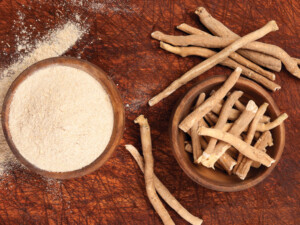
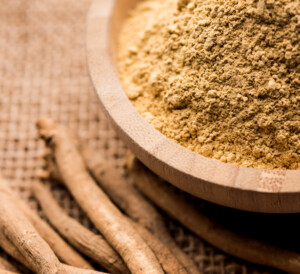
Ashwagandha
Ashwagandha has been used in the ayurvedic traditional system of India as an aphrodisiac.
A double-blind study wanted to see if ashwagandha could help women with female sexual dysfunction. The 50 women in the study had all been diagnosed with FSD, and they all had either hypoactive (underactive) sexual desire disorder, female sexual arousal disorder, female orgasmic disorder or combined genital and subjective arousal disorder.
Half the women were given a placebo, and half were given 300 mg of ashwagandha root extract standardized for at least 5 percent withanolides twice a day for eight weeks. At the end of the study, the FSFI had improved significantly more in the ashwagandha group. In the placebo group, FSFI scores went from 13.57 to 20.06; in the ashwagandha group, scores went up from 13.63 to 23.86. Ashwagandha does not seem to be an aphrodisiac. It did not improve desire more than the placebo, but it did improve arousal, lubrication, orgasm and satisfaction significantly more. Scores on the Female Sexual Distress Scale, which measures worry and distress about sex, also improved significantly more in the ashwagandha group.4
Ginseng
Menopause is a time of many symptoms, often including sexual dysfunction. In a double-blind study, 58 menopausal women were given either 500 mg of standardized ginseng or a placebo twice a day for four weeks. While total score on the FSFI worsened in the placebo group, it improved on ginseng. There were significant improvements in desire, arousal, lubrication, orgasm, satisfaction and pain.5
Another double-blind study gave 62 women with sexual dysfunction either a placebo or a combination of 100 IU of vitamin E and 67 mg of Korean ginseng and 40 mg of eleuthero (formerly called Siberian ginseng) for six weeks. The women taking the supplement experienced significantly greater improvement in sexual desire and satisfaction.6
Lemon Balm
Forty-three women who were experiencing low sexual desire (female sexual interest/arousal disorder) were given either a placebo or 1 g of lemon balm an hour after breakfast and an hour after dinner for four weeks. There was a significant increase in desire in the lemon balm group versus placebo. There was also significantly greater improvement in arousal, lubrication, orgasm, satisfaction, alleviation of pain and total FSFI score. Women on lemon balm had intercourse more than twice as often. 81.8 percent of the lemon balm group was highly or very highly satisfied with the treatment while only 4.8 percent of the placebo group was highly satisfied.7
Chastetree Berry
The great women’s herb, chastetree berry, has been shown to improve sexual function in perimenopausal and postmenopausal women. New research shows that chastetree berry also helps younger women. The double-blind study gave 102 women either a placebo or 3.2-4.8 mg of dried chastetree berry extract for 16 weeks. At the end of the study, the women in the chastetree berry group had a significantly higher overall score on the FSFI.8
Fenugreek
Intriguing research has looked at the effect of this little discussed women’s herb on healthy, young women who are experiencing some degree of sexual issues. The study of 46 women gave half a placebo and half 250 mg of fenugreek extract twice a day for 42 days. The fenugreek produced significant benefits to sexual problems. The fenugreek group improved by a significant 41.67 percent among the women with the higher sexual dysfunction scores. The placebo group improved by only 18.18 percent. Fenugreek was able to safely rebalance hormones. Hormones that support sexual function, including estradiol and testosterone, went up significantly and safely in the women. They only went up in the women who needed them to go up.9
This is the second fenugreek study to find such encouraging results for healthy, young women. An earlier double-blind study found that 600 mg of fenugreek extract significantly increased sexual desire and arousal. In that study too, fenugreek increased estradiol and testosterone.10
Celery Seed Extract
Traditional medical texts from the Middle East ascribe libido stimulating effects to celery. Now, for the first time, a double-blind study has validated the traditional claim. Eighty women with sexual dysfunction were given either a placebo or 500 mg of celery seed, three times a day for six weeks. Total FSFI scores improved significantly more in the celery group. There was significant improvement in sexual desire, arousal, lubrication and pain.11
Chocolate
Chocolate was considered a powerful sexual tonic and stimulant by the Aztecs. At least one study says they were right. Women who eat chocolate daily have significantly higher total and desire FSFI scores.12
Traditional Aphrodisiacs
Other traditional aphrodisiacs include damiana, ginger, anise, muira puama, maca and nettle.VR
References:
1 Avicenna J Phytomed. 2022 May Jun;12(3):257-268.
2 Hum Psyschopharmacol. 2013;28(1):54-60.
3 Avicenna J Phytomed. Sep-Oct2019;9(5):419-427.
4 Biomed Res In. 2015;2015:284154.
5 Complement Ther Med. August 2019;45:57-64.
6 Women Health. 2020 Sep 6;1-10.
7 Iran J Pharm Res. 2018;17(Suppl):89-100.
8 J Educ Health Promot. 2021; 10: 294.
9 Clin Phytosci. 2021: 7: 63.
10 Phytother Res. 2015;29(8):1123-30.
11 J Ethnopharmacol. 2021 Jan 10:264:113400.
12 J Sex Med. 2006 May;3(3):476-82.
Linda Woolven is a master herbalist, acupuncturist and solution-focused counsellor with a virtual practice in Toronto, ON, Canada. Woolven and Ted Snider are the authors of several books on natural health. You can see their books at www.thenaturalpathnewsletter.com. They are also the authors of the natural health newsletter The Natural Path. The Natural Path is a natural health newsletter specifically designed to help health food stores increase their sales by educating their customers. The Natural Path contains no advertising and never mentions a brand name. Retailers can provide The Natural Path Newsletter to their customers. For more information, contact Snider at [email protected] or (416) 782-8211.