


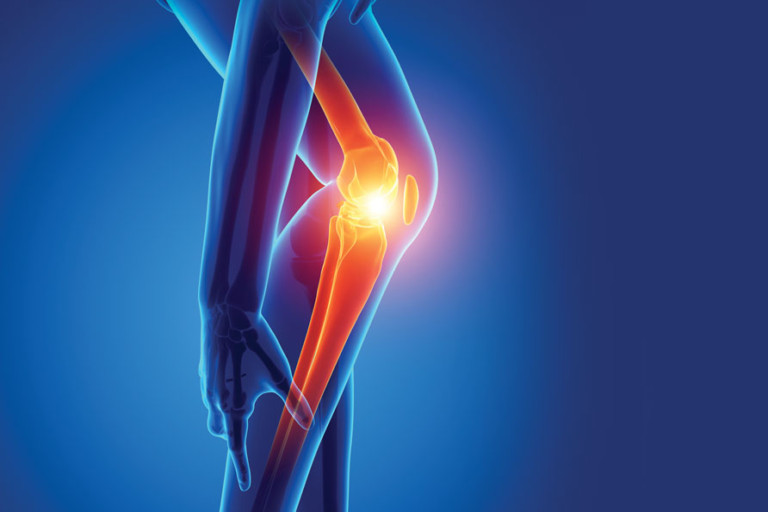
Bone health supports quality of life at any age. Bones undergo a constant renewal process: new bone is created while old bone is broken down. Before the age of 20, new bone is created faster than old bone is broken down, which develops bone mass. After the age of 20, this process slows down, and bone mass peak typically happens around age 30. As you continue to age, bone mass is lost at a quicker rate than created.1 While this is a normal process; several risk factors exist that compound above average bone loss leading to osteoporosis. Osteoporosis is defined as a bone disease that develops when bone mineral density decreases, leading to decreased bone strength and an increased risk of fractures.2 These risk factors include:
• Sex (women are more likely to develop osteoporosis than men)
• Age (increased age leads to increased risk)
• Race (those of Caucasian or Asian descent are at increased risk)
• Family history (if a family member has osteoporosis, you are at greater risk)
• Body frame size (smaller sized individuals are at increased risk because they have less bone mass to draw from as they age)1
Osteoporosis is considered a silent disease because bone loss typically occurs without symptoms and is sometimes diagnosed only after a fracture has already happened.2 While calcium is well known for its role in supporting bone health, there are two other key nutrients less well known for this same role: vitamins D and K.
Vitamin D
Vitamin D has been receiving much attention lately for immune support, and rightfully so. Retrospective studies have shown supplementation may be protective against COVID-19, especially in immunocompromised individuals.3 In fact, vitamin D is considered essential in the modulation of immune function.4 Vitamin D is also critical for numerous other physiological needs in the body, including bone health. It is a fat-soluble vitamin known for its role as a steroid hormone precursor. The steroid hormone form of vitamin D, 1,25-dihydroxycholecalciferol, is critical for the expression of specific DNA and RNA sequences that work collectively to support bone/mineral metabolism, calcium absorption, the renin-angiotensin-aldosterone system, immune function, the cardiovascular system, muscle metabolism/strength, as well as cellular health.5 The understanding and recognition of vitamin D’s role in health and wellness has raised global awareness of vitamin D sufficiency, and thus, its supplemental use is on the rise.6
Almost 1 billion people worldwide have vitamin D deficiency, defined as a serum 25-hydroxyvitamin D concentrations ≤20 ng/mL (50 nmol/L), and 50 percent of the population has vitamin D insufficiency, defined as 21 – 29 ng/mL.6 The deficiency rates of vitamin D can be attributed to a lack of sun exposure, dietary intake devoid of fish and fermented foods, skin pigmentation (melanin reduces skin’s ability to make vitamin D in response to sun exposure), higher latitude and season (i.e., winter).4
Vitamin K
Vitamin K is a fat-soluble nutrient known as the clotting vitamin. Its descriptor “K” stems from its function in the body and represents the German word “koagulation.” Coagulation (English spelling) is the process of forming blood clots, in which vitamin K is essential to prevent abnormal bleeding, thus, acting as a natural band-aid. However, vitamin K’s role is even more expansive in the utilization of calcium for bone health—keeping calcium out of the arteries and in the bones.7 Traditionally, it is classified into two groups:
• Phylloquinone (K1), sometimes called phytonadione and phytomenadione, is a natural nutrient with a chlorophyll side-chain isolated from green plants, like kale, broccoli and some oils such as olive or canola oil.7
• Menaquinones (K2) are a family of compounds made up of subtypes that are generally synthesized in the large intestines by bacteria in humans but can also be found in small amounts in liver meat, curd, eggs, cheese and fermented soybeans known as natto. Menaquinones have different side chains, and their specific name is based on the number of repeating isoprenoid units*—this number is the suffix [e.g., menaquinone-4 = menatetrenone = MK-4; menaquinone-7 = MK-7].7
While K1 is known for being the “blood-clotting” vitamin, there is growing evidence for K2’s role in regulating bone metabolism. Osteoblasts (the bone-building cells) produce osteocalcin, which helps take calcium from the blood and bind it to the bone matrix. The osteocalcin, however, is only activated by vitamin K2 to become fully functional and bind calcium. Vitamin K2 also keeps calcium from accumulating on the walls of blood vessels. The vitamin K-dependent protein, matrix GLA protein (MGP), produced by the cells of vascular smooth muscles, inhibits the binding of calcium to the vascular walls and regulates the potentially fatal accumulation of calcium.8 Vitamin K deficiency is not common; however, it is still an essential nutrient in the diet. Adequate intakes set by the Food and Nutrition Board are listed in Table 2.
Correlation Between the Two
The correlation with vitamin D3 and vitamin K2 as it relates to bone health is simple yet critical. The argument against vitamin D3 supplementation is that toxicity could occur if the intake is too high. It leads to hypercalcemia, which causes vascular calcification, osteoporosis and kidney stones. Vitamin K2, however, has been shown to activate osteocalcin, which deposits calcium in the bones rather than the arteries.4 Essentially, vitamins K and D are critical for keeping calcium in the bones and out of the vessels, allowing optimal bone density later in life. VR
References:
1. Mayo Clinic. Osteoporosis, 2021. (available at www.mayoclinic.org/diseases-conditions/osteoporosis/symptoms-causes/syc-20351968).
2. National Institutes of Health. Osteoporosis Overview; 2021. (available at www.bones.nih.gov/health-info/bone/osteoporosis/overview).
3. Cangiano B, Fatti LM, Danesi L, et al. Mortality in an Italian nursing home during COVID-19 pandemic: correlation with gender, age, ADL, vitamin D supplementation, and limitations of the diagnostic tests. Aging (Albany NY). 2020;12(24):24522-24534. doi:10.18632/aging.202307.
4. Aygun H. Vitamin D can prevent COVID-19 infection-induced multiple organ damage. Naunyn Schmiedebergs Arch Pharmacol. 2020;393(7):1157-1160. doi:10.1007/s00210-020-01911-4.
5. Report of the WHO-China Joint Mission on Coronavirus Disease 2019 (COVID-19) 16-24 February 2020. Geneva: World Health Organization; 2020 (available at www.who.int/docs/default-source/coronaviruse/who-china-joint-mission-on-covid-19-final-report.pdf (links to external site).
6. National Institutes of Health. Vitamin D Fact Sheet for Health Professionals; 2021. (available at https://ods.od.nih.gov/factsheets/VitaminD-HealthProfessional/).
7. Institute of Medicine. Dietary reference intakes for vitamin A, vitamin K, arsenic, boron, chromium, copper, iodine, iron, manganese, molybdenum, nickel, silicon, vanadium, and zinc. Washington, DC: National Academy Press; 2001.
8. Maresz, K. (2015). Proper Calcium Use: Vitamin K2 as a Promoter of Bone and Cardiovascular Health. Integrative Medicine: A Clinician’s Journal, 14(1), 34–39.
Jennifer Bradley Weinhardt is a senior research & development specialist at Bluebonnet Nutrition where she has almost a decade of successful experience formulating nutritional supplements. She collaborates on all aspects of new products launches, provides educational trainings to the sales staff, constructs marketing pieces and technical papers, and is also a part of the Quality Compliance team. Weinhardt holds a Master of Science degree in nutrition from Texas Woman’s University and a Bachelor of Science degree in nutrition from Texas A&M University. When she isn’t designing new products, Jennifer is a health enthusiast, avid cyclist and loves to spend time with her family.