



Anxiety is a negative word, and most would not describe “anxious” as a pleasant experience. However, if we were not hard-wired for anxiety, we would likely not have survived. Our ancestors would have succumbed to the first saber-tooth tiger or cave bear they stumbled upon. Anxiety triggers vigilance, wariness, self-protection and anticipation. If we are worried about being eaten by wild animals, we pay attention to our surroundings, we take protective steps and we anticipate worst case scenarios so we can try to avoid becoming dinner. The tigers hunt at night? Maybe I will stay in my cave near the fire in the company of my family. With a big, sharpened stick at my side!
At least, that is the way anxiety is supposed to work. When we are afraid, we work both physically and intellectually to resolve that fear. We avoid the trap, we carry a spear for protection, we do not enter areas with sightings of predators, we make for the protection of home. In the not-too-distant past, most efforts to save ourselves required physical effort, such as running, fighting, or climbing. Our stress hormones are designed to help us do that better in an emergency.
But that is not what we experience as anxiety today.
Thank goodness, most of us do not encounter life-threatening situations daily. But our poor Stone Age bodies think we do. And when something does go wrong, we do not usually have any extreme exertion to correct it. The furnace dies, our boss gives us the side eye, our spouse is suspiciously absent. These are very stressful situations but do not require activity. That means stress hormones (especially cortisol) pulsate throughout our body without resolution. And even if the fear is resolved—the repairman will be there in 15 minutes to fix the furnace—those stress hormones hang around a good long while. Intellectually knowing the cause for anxiety is resolved does not alleviate the immediate physical experience. I once had a near miss with a car crash. I was able to swerve at the last minute and avoid impact, but I shook for at least a half hour after that encounter and was disturbed most of the day.
People with an anxiety disorder often have hair-trigger hormone responses to stressful situations. Their bodies have a difficult time returning to normal after a period of anxiety. These folks wake up feeling like something bad is going to happen. It is miserable to feel the physical manifestations of anxiety day after day. It is depressing and it is exhausting.
One of the best things we can do when anxious is to get physical. Run, walk, jump rope, hit a punching bag—you will absolutely feel better. We need that activity to settle down our overstimulated body and burn off those stress hormones. It is also true that meditation and cognitive behavioral therapy can make a big difference. However, this article is about the use of dietary supplements that can help with chronic anxiety.
Three natural ways to deal with anxiety are to stimulate cannabinoid receptors, reduce the hair-trigger production of cortisol and bolster the ability of our hormones and neurotransmitters to resist the damaging impact of stress and anxiety.
Plant Cannabinoids in Echinacea
When I mentioned cannabinoids, you probably thought of marijuana, CBD or hemp oil. After all, the receptors are named for the plants in the cannabis family. However, there are cannabinoids in plants other than cannabis that can be extremely useful in treating anxiety. One that stands out is echinacea.
Unfortunately, the amount of plant cannabinoids in echinacea is very small, so to have anti-anxiety benefits, it must be extracted, purified and concentrated. This kind of extract has been clinically studied and found to have anxiety relieving properties as strong as many of the prescription drugs used for this disorder.
It works because the plant compounds attach to CB1 receptors in the brain that are most specific to the experience of anxiety. It relieves anxiety without causing sleepiness, altered thinking, changes in appetite, addiction or changes in perception.
Clinical research on this echinacea extract has demonstrated rapid results. In one study, the cannabinoid extract of Echinacea angustifolia was tested with individuals experiencing increased anxiety and tension. After just one day, the participants noticed a measurable reduction in stress and anxiety, with an even greater reduction in seven days. In another study published in Phytotherapy Research, participants with generalized anxiety disorder reported noticeably reduced stress and anxiety in just three days.
This uniquely standardized echinacea extract showed significant results in participants taking 40 mg twice daily, which is a relatively low dose. There have been no serious adverse effects reported in the studies, and it is approved for use in children ages four and older. Additionally, if you only have occasional anxiety, such as stress with flying or impending work deadlines, this can be used as needed to help reduce stress.
Nutrients That Reduce Excess Cortisol Production
Cortisol is a hormone produced by the adrenal glands in response to stimulation and stress. It enhances alertness and is essential for daily functioning. However, chronic stress leads to frequent cortisol spikes, resulting in exhaustion and health issues. Balanced cortisol levels are crucial for energy, mood stability and overall health; both high and low levels can be detrimental.
There are specific nutrients that are very useful to help regulate a more balanced cortisol response:
• Active B Vitamins: B6 (as pyridoxal-5-phosphate), B12 (as methylcobalamin), and folate (as methylfolate) are vital for adrenal function and cortisol regulation. They help reduce stress and improve energy levels.
• Vitamin C: Essential for adrenal response, vitamin C helps manage cortisol levels during stress and aids recovery from stress-related symptoms.
• DHEA: This hormone balances cortisol levels and supports emotional stability. Supplementation can lower cortisol throughout the day and improve focus and memory.
As we age and in the presence of certain health conditions, our ability to convert B vitamins into their active form diminishes and we make less DHEA. Using these specific nutrients does not take cortisol out of the blood stream; rather, they help the body respond with a more balanced release of cortisol in response to stressors, so less of the excess production that contributes to anxiety. These nutrients are especially important for individuals over the age of 40 who also struggle with stress and anxiety. Increasing Resilience With Ashwagandha
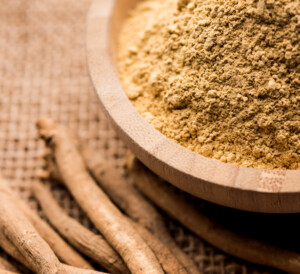
Ashwagandha (Withania somnifera) is a highly valued herb in ayurvedic medicine, one of the oldest healing systems in the world. However, not all ashwagandha extracts used in natural medicine today are the same. Most are processed with milk, which makes it unsuitable for vegans or those with dairy sensitivities. Also, there is variance in the amounts of key compounds called withanolides. The standard ashwagandhas have about 5 percent withanolides, but a newer process produces a dairy-free extraction with a 35 percent withanolide level, making it seven times more powerful. This new process has been the subject of recent research.
One eight-week clinical study of middle-aged, overweight men found that this 35 percent ashwagandha increased testosterone levels by almost 15 percent and beneficial DHEA-S levels by 18 percent. Low testosterone in men can cause irritability, anxiety, sluggishness and fatigue. You might wonder if this herb also raises testosterone in women, and interestingly, it does not do so in any significant manner. In a clinical study of both men and women, ashwagandha was found to boost testosterone levels only in the men but not in women. Another clinical study found that ashwagandha 35 percent significantly reduced stress in men and women, according to a common anxiety measurement scale. The researchers noted that it did this in four ways: helping to rebalance the hypothalamus-pituitary-adrenal (HPA) axis, reducing oxidative stress, reducing inflammation, and perhaps most importantly, influencing brain chemistry, most notably, serotonin and GABA. Balanced levels of serotonin are associated with a positive mood and reduced anxiety.
Other studies have shown that ashwagandha produces not just stress reduction, but stress resilience—the ability to bounce back after stressful events. It has also been shown to improve sleep quality in as little as six weeks. It is a safe and effective way to reduce stress, sleep soundly and feel better.
Summary
There are many more interventions for stress and anxiety, including theanine, lavender, kava, magnesium, to name a few. Finding the right combination of regular physical activity and effective nutrients can dramatically improve your quality of life.VR References:
1 Witkin JM, Tzavara ET, Nomikos GG. A role for cannabinoid CB1 receptors in mood and anxiety disorders. Behav Pharmacol. 2005 Sep;16(5-6):315-31.
2 Hájos N, Holderith N, Németh B, Papp OI, Szabó GG, Zemankovics R, Freund TF, Haller J. The effects of an Echinacea preparation on synaptic transmission and the firing properties of CA1 pyramidal cells in the hippocampus. Phytother Res. 2012 Mar;26(3):354-62.
3 Zanettini C, Panlilio LV, Alicki M, Goldberg SR, Haller J, Yasar S. Effects of endocannabinoid system modulation on cognitive and emotional behavior. Front Behav Neurosci. 2011 Sep 13;5:57.
4 Haller J, Freund TF, Pelczer KG, Füredi J, Krecsak L, Zámbori J. The Anxiolytic Potential and Psychotropic Side Effects of an Echinacea Preparation in Laboratory Animals and Healthy Volunteers. Phytother Res. 2012 Mar 26. doi: 10.1002/ptr.4677.
5 Young LM, Pipingas A, White DJ, Gauci S, Scholey A. A Systematic Review and Meta-Analysis of B Vitamin Supplementation on Depressive Symptoms, Anxiety, and Stress: Effects on Healthy and ‘At-Risk’ Individuals. Nutrients. 2019 Sep 16;11(9):2232. doi: 10.3390/nu11092232. PMID: 31527485; PMCID: PMC6770181. www.ncbi.nlm.nih.gov/pmc/articles/PMC6770181/.
6 Reynolds E. Vitamin B12, folic acid, and the nervous system. Lancet Neurol. 2006 Nov;5(11):949-60.
7 Fava M, Shelton RC, Zajecka JM. Evidence for the use of l-methylfolate combined with antidepressants in MDD. J Clin Psychiatry. 2011 Aug;72(8):e25.
8 Mischoulon D, Raab MF. The role of folate in depression and dementia. J Clin Psychiatry. 2007;68 Suppl 10:28-33.
9 Camfield DA, Wetherell MA, Scholey AB, Cox KH, Fogg E, White DJ, Sarris J, Kras M, Stough C, Sali A, Pipingas A. The effects of multivitamin supplementation on diurnal cortisol secretion and perceived stress. Nutrients. 2013 Nov 11;5(11):4429-50. doi: 10.3390/nu5114429. PMID: 24284609; PMCID: PMC3847740. www.ncbi.nlm.nih.gov/pmc/articles/PMC3847740/.
10 Brody S, Preut R, Schommer K, Schürmeyer TH. A randomized controlled trial of high dose ascorbic acid for reduction of blood pressure, cortisol, and subjective responses to psychological stress. Psychopharmacology (Berl). 2002 Jan;159(3):319-24. doi: 10.1007/s00213-001-0929-6. Epub 2001 Nov 20. PMID: 11862365.
11 Kroboth PD, Amico JA, Stone RA, Folan M, Frye RF, Kroboth FJ, Bigos KL, Fabian TJ, Linares AM, Pollock BG, Hakala C. Influence of DHEA administration on 24-hour cortisol concentrations. J Clin Psychopharmacol. 2003 Feb;23(1):96-9. doi: 10.1097/00004714-200302000-00014.
12 Alhaj HA, Massey AE, McAllister-Williams RH. Effects of DHEA administration on episodic memory, cortisol and mood in healthy young men: a double-blind, placebo-controlled study. Psychopharmacology (Berl). 2006 Nov;188(4):541-51. doi: 10.1007/s00213-005-0136-y. Epub 2005 Oct 18.
13 Lopresti AL, Smith SJ, Malvi H, Kodgule R. An investigation into the stress-relieving and pharmacological actions of an ashwagandha (Withania somnifera) extract: A randomized, double-blind, placebo-controlled study. Medicine (Baltimore). 2019;98(37):e17186.
14 Fuladi S, Emami SA, Mohammadpour AH, Karimani A, Manteghi AA, Sahebkar A. Assessment of Withania somnifera root extract efficacy in patients with generalized anxiety disorder: A randomized double-blind placebo-controlled trial [published online ahead of print, 2020 Apr 13]. Curr Clin Pharmacol. 2020;10.2174/ 1574884715666200413120413.
15 Kumar A, Kalonia H. Protective effect of Withania somnifera Dunal on the behavioral and biochemical alterations in sleep-disturbed mice (Grid over water suspended method). Indian J Exp Biol. 2007 Jun;45(6):524-8.
16 Saykally JN, Hatic H, Keeley KL, Jain SC, Ravindranath V, Citron BA. Withania somnifera Extract Protects Model Neurons from In Vitro Traumatic Injury. Cell Transplant. 2017 Jul;26(7):1193-1201.
17 Choudhary D, Bhattacharyya S, Bose S. Efficacy and Safety of Ashwagandha (Withania somnifera (L.) Dunal) Root Extract in Improving Memory and Cognitive Functions. J Diet Suppl. 2017 Nov 2;14(6):599-612.
18 Chengappa KN, Bowie CR, Schlicht PJ, Fleet D, Brar JS, Jindal R. Randomized placebo-controlled adjunctive study of an extract of Withania somnifera for cognitive dysfunction in bipolar disorder. J Clin Psychiatry. 2013;74(11):1076-1083. doi:10.4088/JCP.13m08413.
Cheryl Myers is an integrative health nurse, author, and an expert on natural medicine. She is a nationally recognized speaker who has been interviewed by the New York Times, Wall Street Journal and Prevention magazine. Her many articles have been published in such diverse journals as Aesthetic Surgery Journal and Nutrition in Complementary Care, and her research on botanicals has been presented at the American College of Obstetrics and Gynecology and the North American Menopause Society. Myers is the head of scientific affairs and education for EuroPharma, Inc.
![[Extra! Extra!] Gnosis Discusses What Retailers Should Know About Stress Relief Products](https://vitaminretailer.com/wp-content/uploads/2026/03/Stress-Anxiety-300x285-1774638246.jpg)