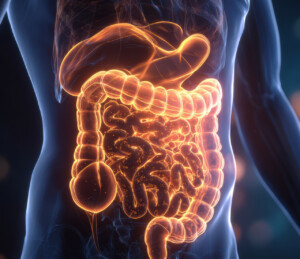




The stomach and intestines have a mucous membrane lining that provides protection against hydrochloric acid and other digestive juices normally used to break down food in our digestive system. If there is even a small loss of that mucous membrane, there is likely to be significant discomfort. Unfortunately, one in 10 Americans will develop this mucous membrane loss (aka, ulcers) in their gastrointestinal tract at some time in his or her life. Such a loss may occur as the result of an imbalance between friendly and unfriendly bacteria that reside in our intestinal tract. When unfriendly bacteria gain the upper hand, it may affect the stability of the mucous membrane at some point.1 A strategy for maintaining a healthy gastrointestinal lining, therefore, is to help avoid the non-preferential balance of unfriendly flora over friendly flora in the first instance. A 1:1 molecular combination of zinc and L-carnosine (ß-alanyl-L-histidine) may be able to help by promoting immune function, supporting healing, and acting as an antioxidant.
Before jumping into the research on the zinc carnosine complex, let’s take a look at individual components that make up this complex.
Zinc
Zinc is a versatile trace mineral required as a cofactor by more than 300 enzymes in every organ of the body.2 It is also plays important roles in growth and development, immune response, neurological function, reproduction and wound healing.3 The highest concentrations of zinc in the body are in bone, the prostate gland and the eyes.4
Zinc and Cell Membranes
Zinc plays an important role in the structure of proteins and cell membranes. The functions of cell membranes are also affected by zinc. Loss of zinc from biological membranes increases their susceptibility to oxidative damage and impairs their function.5 In fact zinc has been shown to be helpful in healing ulcers in the gastrointestinal tract.6,7 Futhermore, zinc supplementation is associated with a reduced incidence of stomach ulcers.8
Zinc, Immune & Antioxidant Functions
Zinc has been found to play a role in apoptosis (programmed cell death), a critical cellular regulatory/immune process with implications for growth and development.9 In fact, adequate zinc intake is essential in maintaining the integrity of the immune system,10 and zinc-deficient individuals are known to experience increased susceptibility to a variety of infectious agents.11 In addition, zinc plays a critical structural role in the antioxidant enzyme copper-zinc superoxide dismutase (CuZnSOD), as well as playing a critical structural role.12-14
L-carnosine
First isolated and characterized in 1900, L-carnosine is a dipeptide (i.e., small protein molecule composed of two amino acids) commonly present in mammals,15 and found in relatively high concentrations in several body tissues—most notably in skeletal muscle, heart muscle and brain.16,17 Carnosine is responsible for a variety of activities related to the detoxification of the body from antioxidant activity against free radical oxidation and damage of tissues, to membrane-protecting activity, and helping to promote immune function.18
Carnosine and Immune Function
Carnosine has been shown to modulate immune response in animal research.19 Likewise, in human research carnosine had the capacity to modulate immune response with regard to neutrophils, a type of white blood cell found in response to the presence of inflammation and bacteria.20 Furthermore, supplementation with carnosine-zinc enhanced the response to interferon,21 which are natural cell-signaling proteins produced by the cells of the immune system. In addition, carnosine has reduced the secretion of inflammatory cytokines by intestinal cells that had been exposed to oxidative stress.22
Carnosine and Healing
Several studies have demonstrated that carnosine possesses strong and specific antioxidant properties, protects against radiation damage, and promotes healing from wounds caused by radiation.23 In animal research carnosine has demonstrated an ability to promote wound healing in gastrointestinal wounds.24 Research has demonstrated that at least one mechanism by which carnosine acts to promote healing via an interaction with stem cell populations.25 This is consistent with other research showing that carnosine promotes healing via gene expression.26
Carnosine the Antioxidant
Research has shown that carnosine is an effective, naturally occurring antioxidant and transition-metal (e.g., cadmium, mercury) sequestering agent. Carnosine is able to reduce cellular oxidative stress and can inhibit the intracellular formation of reactive oxygen species and reactive nitrogen species. By virtue of these properties, carnosine is able to reduce DNA damage.27 Other research has also demonstrated carnosine’s antioxidant and metal ion binding properties.28
Zinc carnosine for protecting against gastrointestinal ulcers/discomfort
Research has shown that the molecular combination of zinc and L-carnosine has benefit for treating both gastrointestinal ulcers as well as gastrointestinal discomfort. While experimental animal studies have shown that carnosine-zinc exerts significant protection against gastrointestinal ulcers, and help promotes the healing of ulcerated mucous membranes,29,30 human studies have also shown significant benefit.
In one study,31 66 individuals who had experienced some amount of ulceration in the gastrointestinal tract, were given 150 mg daily of the zinc carnosine combination as a mucosal protective agent for seven days. The results were that symptoms of discomfort were mitigated, and a more favorable balance of intestinal flora was achieved.
Furthermore, human research has demonstrated that when zinc carnosine was supplemented in daily doses of 75 mg, it was capable of promoting wound healing and stabilizing the gut mucosa.32 In animal research, similar healing of ulcers in the gastrointestinal tract was seen with zinc carnosine.33 Likewise, other animal research has also shown that zinc carnosine promotes healing of mucous membranes.34,35
In a randomized, multi-center, double blind study,36 166 patients with acute and chronic gastritis with erosion (i.e., ulcer) or hemorrhage received either zinc carnosine, in a 75 mg or 150 mg daily dose (87 were in the 75 mg group and 79 in the 150 mg group). General safety was analyzed in 166 cases. Subjective/objective symptoms were analyzed in 146 cases, the results of which were significantly improved or moderately improved symptoms in the following percentage of subjects as indicated (see chart below). This included improvements across the category of symptoms including heartburn, tenderness, epigastric pain, diarrhea and constipation after eight weeks. No significant difference was seen between the two dosage groups.
In an open label trial,37 28 patients with solitary gastric ulcers were given 150 mg/day of zinc carnosine and monitored for eight weeks. Improvement was rated on a scale of subjective and objective symptoms. Endoscopic evaluation revealed that ulcer healing rates were 15 percent after four weeks, 66.7 percent after eight weeks, and 54.5 percent at the end of the study. The results also showed significantly improved or moderately improved symptoms in 87.5 percent of patients after eight weeks.
Protrusion (bulging out) of the ulcer sometimes occurs during healing when a peptic ulcer is treated with proton pump inhibitors (PPI), a common class of drugs, which reduced hydrochloric acid secretion. In a clinical study,38 163 ulcer patients were treated with either 30 mg per day of lansoprazole (a PPI) or 30 mg of lansoprazole plus 150 mg of zinc carnosine. Results were that lansoprazole plus zinc carnosine provided significantly better ulcer healing and protrusion of the ulcer only occurred in 1.3 percent of patients, while ulcer protrusion occurred in 20.7 percent of those receiving only lansoprazole.
Conclusion
In short, the zinc carnosine complex offers a viable option for promoting immune function, supporting healing, and acting as an antioxidant in cases of gastrointestinal ulcers and discomfort. Furthermore, the research conducted on zinc carnosine has shown a very high safety profile. VR
References:
1 National Digestive Diseases Information Clearinghouse, National Institute of Diabetes and Digestive and Kidney Diseases. H. pylori and Peptic Ulcer. NIH Publication No. 07–4225; October 2004. Retrieved http://digestive.niddk.nih.gov/ddiseases/pubs/hpylori/index.htm. 2 McCall KA, Huang C, Fierke CA. Function and mechanism of zinc metalloenzymes. J Nutr. 2000;130(5S Suppl):1437S-1446S.
3 Cousins RJ. Zinc. In: Bowman BA, Russell RM, eds. Present Knowledge in Nutrition. 9th ed, Vol. 1. Washington, D.C.: ILSI Press; 2006:445-457.
4 Whitney E, Cataldo C, Rolfes S. Understanding Normal and Clinical Nutrition, Fifth Edition. Belmont, California:West/Wadsworth; 1998:463-8.
5 O’Dell BL. Role of zinc in plasma membrane function. J Nutr 2000;130(5S Suppl):1432S-1436S.
6 Cho CH, Ogle CW. A correlative study of the antiulcer effects of zinc sulphate in stressed rats. Eur J Pharmacol 1978;48:97–105. 7 Frommer DJ. The healing of gastric ulcers by zinc sulphate. Med J Aust 1975;2:793–6.
8 Santos LH, Feres CA, Melo FH, Coelho MM, Nothenberg MS, Oga S, Tagliati CA. Anti-inflammatory, antinociceptive and ulcerogenic activity of a zinc-diclofenac complex in rats. Braz J Med Biol Res 2004;37(8):1205-13.
9 Truong-Tran AQ, Ho LH, Chai F, Zalewski PD. Cellular zinc fluxes and the regulation of apoptosis/gene-directed cell death. J Nutr 2000;130(5S Suppl):1459S-1466S.
10 Baum MK, Shor-Posner G, Campa A. Zinc status in human immunodeficiency virus infection. J Nutr 2000;130(5S Suppl):1421S-1423S. 11 Shankar AH, Prasad AS. Zinc and immune function: the biological basis of altered resistance to infection. Amer J Clin Nutr 1998; 68:447S-463S.
12 Food and Nutrition Board, Institute of Medicine. Zinc. Dietary reference intakes for vitamin A, vitamin K, boron, chromium, copper, iodine, iron, manganese, molybdenum, nickel, silicon, vanadium, and zinc. Washington, D.C.: National Academies Press; 2001:442-501. 13 King JC, Cousins RJ. Zinc. In: Shils ME, Shike M, Ross AC, Caballero B, Cousins RJ, eds. Modern Nutrition in Health and Disease. 10th ed. Baltimore: Lippincott Williams & Wilkins; 2006:271-285.
14 O’Dell BL. Role of zinc in plasma membrane function. J Nutr 2000;130(5S Suppl):1432S-1436S.
15 Guiotto A, Calderan A, Ruzza P, Borin G.Carnosine and carnosine-related antioxidants: a review. Curr Med Chem 2005;12(20):2293-315.
16 Quinn PJ, Boldyrev AA, Formazuyk VE. Carnosine: its properties, functions and potential therapeutic applications. Mol Aspects Med 1992;13:379-444.
17 Bonfanti L, Peretto P, De Marchis S, Fasolo A. Carnosine-related dipeptides in the mammalian brain. Prog Neurobiol 1999;59:333-53.
18 Guiotto A, Calderan A, Ruzza P, Borin G.Carnosine and carnosine-related antioxidants: a review. Curr Med Chem 2005;12(20):2293-315.
19 Soliman K, Abou-El Dobal S, Marei N. Effect of carnosine administration on the immune response of rabbit to Schistosoma mansoni antigens. J Egypt Soc Parasitol 2003;33(3):663-78.
20 Tan KM, Candlish JK. Carnosine and anserine as modulators of neutrophil function. Clin Lab Haematol 1998;20(4):239-44.
21 Takagi H, Nagamine T, Abe T, et al. Zinc supplementation enhances the response to interferon therapy in patients with chronic hepatitis C. J Viral Hepat 2001;8:367–71.
22 Shimizu M. Food-derived peptides and intestinal functions. Biofactors 2004;21(1-4):43-7.
23 Guney Y, Turkcu UO, Hicsonmez A, Andrieu MN, Guney HZ, Bilgihan A, Kurtman C. Carnosine may reduce lung injury caused by radiation therapy. Med Hypotheses 2006;66(5):957-9.
24 Roberts PR, Black KW, Santamauro JT, Zaloga GP. Dietary peptides improve wound healing following surgery. Nutrition 1998;14;266–9. 25 Bickford PC, Tan J, Shytle RD, Sanberg CD, El-Badri N, Sanberg PR. Nutraceuticals synergistically promote proliferation of human stem cells. Stem Cells Dev 2006;15(1):118-23.
26 Ito-Kato E, Suzuki N, Maeno M, Takada T, Tanabe N, Takayama T, Ito K, Otsuka K. Effect of carnosine on runt-related transcription factor-2/core binding factor alpha-1 and Sox9 expressions of human periodontal ligament cells. J Periodontal Res 2004;39(3):199-204. 27 Reddy VP, Garrett MR, Perry G, Smith MA. Carnosine: a versatile antioxidant and antiglycating agent. Sci Aging Knowledge Environ 2005; (18):pe12.
28 Zieba R.[Carnosine–biological activity and perspectives in pharmacotherapy] Wiad Lek 2007;60(1-2):73-9.
29 Nishiwaki H, Kato S, Sugamoto S, et al. Ulcerogenic and healing impairing actions of monochloramine in rat stomachs: effects of zinc L-carnosine, polaprezinc. J Physiol Pharmacol 1999;50:183–95.
30 Arakawa T, Satoh H, Nakamura A, et al. Effects of zinc L-carnosine on gastric mucosal and cell damage caused by ethanol in rats. Correlation with endogenous prostaglandin E2. Dig Dis Sci 1990;35:559–66.
31 Kashimura H, Suzuki K, Hassan M, Ikezawa K, Sawahata T, Watanabe T, Nakahara A, Mutoh H, Tanaka N. Polaprezinc, a mucosal protective agent, in combination with lansoprazole, amoxycillin and clarithromycin increases the cure rate of Helicobacter pylori infection. Aliment Pharmacol Ther 1999;13(4):483-7.
32 Mahmood A, FitzGerald AJ, Marchbank T, Ntatsaki E, Murray D, Ghosh S, Playford RJ.Zinc carnosine, a health food supplement that stabilises small bowel integrity and stimulates gut repair processes. Gut 2007;56(2):168-75.
33 Kato S, Tanaka A, Ogawa Y, Kanatsu K, Seto K, Yoneda T, Takeuchi K. Effect of polaprezinc on impaired healing of chronic gastric ulcers in adjuvant-induced arthritic rats–role of insulin-like growth factors (IGF)-1. Med Sci Monit 2001;7(1):20-5.
34 Katayama S, Nishizawa K, Hirano M, Yamamura S, Momose Y. Effect of polaprezinc on healing of acetic acid-induced stomatitis in hamsters. J Pharm Pharm Sci 2000;3(1):114-7.
35 Korolkiewicz RP, Fujita A, Seto K, Suzuki K, Takeuchi K. Polaprezinc exerts a salutary effect on impaired healing of acute gastric lesions in diabetic rats. Digestive diseases and sciences 2000;45(6):1200-9.
36 Miyoshi A, Matsuo H, Miwa T, et al. Clinical evaluation of Z-103 on gastritis – a multicenter double-blind dose finding study. Jpn Pharm Ther. 1997;25(5):1403-1442.
37 Misawa T, Oyamada C, Sakai K, et al. Clinical study of Z-103 – clinical effects on gastric ulcer and influence on endocrine function. Jpn PharmTher. 1992; 20(1):245-254.
38 Inaba T, Ishikawa S, Toyokawa T, et al. Basal protrusion of ulcers induced by endoscopic submucosal dissection (ESD) during treatment with proton pump inhibitors, and the suppressive effects of polaprezinc. Hepatogastroenterology. 2010 May-Jun;57(99-100):678-84.
Gene Bruno, MS, MHS, the dean of academics for Huntington College of Health Sciences, is a nutritionist, herbalist, writer and educator. For more than 30 years he has educated and trained natural product retailers and health care professionals, has researched and formulated natural products for dozens of dietary supplement companies, and has written articles on nutrition, herbal medicine, nutraceuticals and integrative health issues for trade, consumer magazines and peer-reviewed publications.