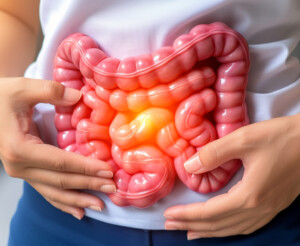


Irritable bowel syndrome (IBS) is becoming an epidemic in our culture. So many people have it, and there is little that conventional medicine can do to help control it. Of all the disorders of the gastrointestinal tract, IBS is the most common, affecting at least 11 percent of all people. That’s a lot of people who need help from this painful and uncomfortable condition. And a lot of help is on the way.
The pain and bloating are in the digestive system, so it makes sense that diet helps. Two-thirds of IBS sufferers have intolerances to at least one food, and many improve when that food is eliminated. Dairy is a common culprit, and sugar can also be a problem.
There are lots of supplements that help a lot. Here are the top ones.
1. Peppermint Oil
The most important herb for IBS is peppermint oil. Enteric coated peppermint oil has been well documented to be effective for treating IBS.1-7 A review of the literature that included seven controlled studies concluded that most studies report improvement in IBS symptoms with peppermint oil compared to placebo or drug.8
The largest, best designed meta-analysis of enteric coated peppermint oil and IBS has now proven its benefit beyond a doubt. Meta-analysis of seven studies showed that peppermint oil is significantly better than placebo for global improvement of IBS, and meta-analysis of six studies proved it is significantly better for the abdominal pain.9
In one of the most important and exciting studies of all, the combination of peppermint oil and caraway oil has been shown to be more effective than the drug cisapride.10 Other double-blind research has also found this combination effective. Peppermint oil combined with caraway oil in both enteric-coated11 and non-enteric coated12 capsules has been found to significantly reduce the symptoms of IBS.
Peppermint oil is usually taken in the form of enteric-coated capsules. The non-enteric coated may work just as well, but the enteric-coated ones are better studied and may be better tolerated. The usual dose is 2 to 4 ml three times a day. Double-blind research has also found that half that dose is effective for helping older children with IBS.13
2. Fennel and Curcumin
Peppermint and caraway may be the best essential oils for IBS, but they aren’t the only ones. A double-blind study gave 116 people with IBS either fennel essential oil and curcumin or a placebo for 30 days. IBS Severity Symptom Score went down significantly more in the herb group: a 50.05-point drop versus 28.85 on placebo. Significantly more people on the herbs were symptom free: 25.9 percent versus 6.8 percent. They also had a significantly greater improvement in abdominal pain: 63.8 percent pain reduction versus 27.1 percent. Quality of Life scores were also significantly higher in the herb group: 17.4 versus 7.7.14
3. Aloe Vera
Another soothing, healing herb that’s valuable for IBS is aloe vera. A recent systematic review and meta-analysis analyzed three controlled studies of aloe vera and people with IBS. The studies all compared aloe vera to a placebo, but there was no comparison. Aloe worked way better than the placebo. Significantly more people responded to the aloe vera, and they had significantly greater improvement in their symptoms. And the aloe vera was safe: there were no adverse events in any of the studies. The efficacy and safety of the herb led the researchers to conclude that aloe vera “is effective and safe for the treatment of patients with IBS.”15
4. Boswellia
Boswellia is a valuable anti-inflammatory herb. A recent study compared 250 mg a day of a standardized phytosome extract of boswellia to standard drug and diet management. All symptoms, except “altered bowel movement,” were significantly better in the boswellia group, and the people taking the boswellia needed significantly less rescue medication and fewer consultations or hospital admissions.
At the end of the six-month study, ultrasounds showed bloating and peristalsis as well as dilated bowel loops in 58.2 percent of the control group but only 17.14 percent of the boswellia group. There was also significantly less free radical damage in the herb group. There were significantly fewer adverse events in the boswellia group than in the control group.16
5. Calming Herbs
Stress doesn’t cause IBS, but it sure makes it worse. So, adding calming, antispasmodic herbs, like valerian and chamomile, might help.
6. Artichoke
Artichoke doesn’t get the respect it deserves for digestive problems. Preliminary research shows that artichoke leaf extract improves symptoms in 26 percent of people with IBS.17
In a study of dyspeptic patients with symptoms of IBS, artichoke significantly relieved abdominal pain, bloating, gas, right side cramps and constipation. All IBS symptoms were significantly reduced in severity, with the improvement ranging from 65 percent to 77 percent. And the improvement was fast: averaging just 10.4 days. Eighty-four percent of both patients and doctors rated the overall effectiveness of artichoke extract as good or excellent.18
7. Probiotics
A systematic review of 28 controlled studies has shown that probiotics safely improve overall IBS symptoms and abdominal pain scores.19
A recent study tried adding vitamin B6 to probiotics and found that the supplement was significantly better than placebo, reducing abdominal pain by 48.8 percent, bloating by 35.35 percent and severity of disease by 30.1 percent.20
8. Psyllium
It has long been known that psyllium helps adults with IBS.21-23 But new double-blind research extends the benefit to kids. Kids taking psyllium had a significant improvement on the IBS severity scale compared to kids given a placebo. And, while only 9.7 percent of the kids on placebo went into remission, 43.9 percent of the kids on psyllium did.24
9. Vitamin D
It helps everything else, so why not IBS? A study that compared 60 people with IBS to 100 people without found that a full 82 percent of the IBS people were deficient in vitamin D compared to just 31 percent of people who did not suffer from IBS.25
So, what happens when you take vitamin D? A study gave 112 adolescents with IBS either a placebo or 2,000 IU of vitamin D a day for six months. The kids given vitamin D significantly improved on the irritable bowel severity score system compared to the kids given the placebo. They also had significant improvement in IBS quality of life and total scores.26
A double-blind study of 116 adults found that 50,000 IU of vitamin D a week significantly improves IBS symptom severity scores, and quality of life scores compared to placebo.27
10. Melatonin
Unexpectedly, double-blind research has also shown melatonin to help.28,29VR
Sources
1 Br Med J 1979;2:835-56.
2 Br J Clin Pract 1984; 38:394-98.
3 J Gastroenterol 1997;32:765-68.
4 Dig Liver Dis 2007; 39:530-36.
5 Aliment Pharmacol Ther 1994;8:499- 510.
6 Am J Gastroenterol 1998; 93:1131- 15.
7 Dig Dis Sci 2010.
8 Am J Health Syst Pharm 2016;73(2):22- 31.
9 BMC Complement Altern Med 2019;19:21.
10 Arneimittlforschung 1999;49:925-32.
11 Arzneimittelforschung 1996;46:1149-53.
12 Pharmazie 1999; 54:210-15.
13 J Pediatr 2001;138:125-8.
14 J Gastrointestin Liver Dis. 2016;25(2):151- 157.
15 J Neurogastroenterol Motil 2018;24(4):528-535.
16 Minerva Gastroenterol Dietol 2019;65(1):30-35.
17 J Altern Complement Med 2004;10:667-9.
18 Phytother Res 2001;1:58-61.
19 Saudi J Gastroenterol. 2020 Mar-Apr;26(2):66-77.
20 Eur J Clin Invest. 2020 Jan 21:e13201.
21 Gut 1987;11:1510-13.
22 J Gastroenterol Hepatol 1990;5:507-13.
23 BMJ. 2009 Aug 27;339:b3154.
24 J Pediatr Gastroenterol Nutr. 2023 Jan 1;76(1):14-19.
25 Oman Med J 2015;30(2): 115–118.
26 Saudi J Gastroenterol 2018;24(2): 109–114.
27 Int J Prev Med. 2019;10:16.
28 Gut 2005;54:1402-7.
29 J Clin Gastroenterol 2007;41:29-32.
Linda Woolven is a master herbalist, acupuncturist and solution-focused counsellor with a virtual practice in Toronto, ON, Canada. Woolven and Ted Snider are the authors of several books on natural health. You can see their books at www.thenaturalpathnewsletter.com. They are also the authors of the natural health newsletter The Natural Path. The Natural Path is a natural health newsletter specifically designed to help health food stores increase their sales by educating their customers. The Natural Path contains no advertising and never mentions a brand name. Retailers can provide The Natural Path Newsletter to their customers. For more information, contact Snider at [email protected] or (416) 782-8211.