


If you’ve been part of the dietary supplement industry for the past few years, you will certainly have seen the increased popularity of the biotics market (pre-, pro- and postbiotics). In particular, prebiotics have seen significant growth, with a global valuation of $6.67 billion in 2023, and an expected compound annual growth rate of 6.3 percent by 2033.1 That certainly explains the corresponding growth in the number of prebiotic options. This article will explore the novel prebiotics, acacia gum and baobab fiber, both all-natural, organic-certified and with a carbon neutral footprint.
What Are Prebiotics?
Let’s start with a definition. According to International Scientific Association for Probiotics and Prebiotics (ISAPP), a prebiotic is defined as “a substrate that is selectively utilized by host microorganisms conferring a health benefit.”2 Prebiotics are typically fiber compounds that human beings cannot digest. However, prebiotics can be digested by the friendly probiotic bacteria that reside in our gut nourishing them, stimulating their growth or activity and helping them to colonize the large intestine.3 The subsequent metabolites are short-chain fatty acids that are released into blood circulation, not only providing benefits to the gastrointestinal tracts but also other distant organs.4
There are various types of prebiotics, including fructans (e.g., inulin, fructooligosaccharides (FOS)), galactooligosaccharides, starch and glucose-derived oligosaccharides, other oligosaccharides (e.g., pectin, baobab), non-carbohydrate oligosaccharides (e.g., flavonols), and branched-polysaccharide/arabinogalactan (e.g., acacia gum).5-8 These various prebiotics all have benefits, although the intake of some, like inulin/FOS, is associated with gastrointestinal discomfort in some situations, including inducing gaseousness and bloating, as well as abdominal pain and diarrhea and an increase in gastroesophageal reflux with large daily doses.9 Acacia gum and baobab fiber, however, are associated with high digestive comfort, as well as other benefits.
Dietary Fiber
Before jumping into the discussion about acacia gum and baobab fiber, let’s briefly consider fiber in general, which plays vital roles in our health and well-being, from regularity and maintaining healthy cholesterol levels, to satiety and gut health. Now consider that the Daily Value for dietary fiber 28 g/day based on a 2,000-calorie diet. More specifically, we should be getting 14 g for every 1,000 calories consumed. However, in recent research, women were found to consume 9.9 g/1,000 calories and men consumed 8.7 g/1,000 calories. In short, only 5 percent of men and 9 percent of women are getting the recommended daily amount of dietary fiber.10 Since acacia gum and baobab fiber are both sources of dietary fiber (>90 percent fiber content), consumption of these can contribute toward the Daily Value while providing prebiotic benefits.
Acacia Gum
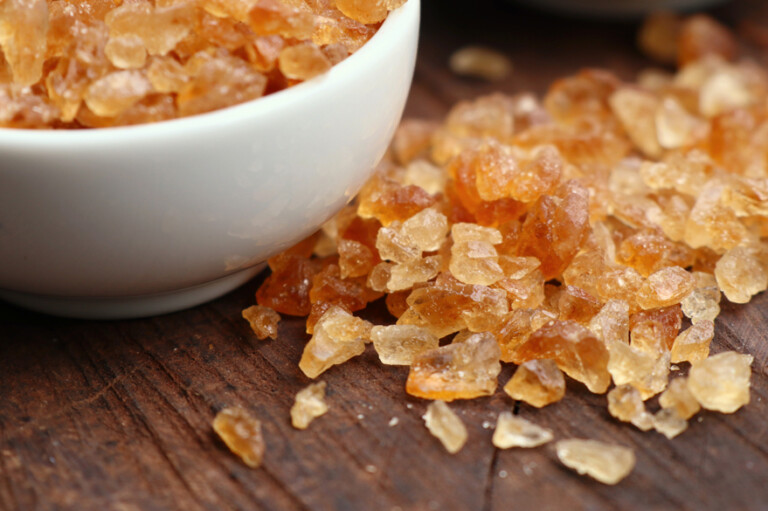
As a brief review, I’m going to repeat an introduction I wrote in an article for a Vitamin Retailer about acacia gum back in 2018. Acacia gum (also known as gum arabic, arabic gum, gum acacia, acacia, Senegal gum and Indian gum11), is derived from the hardened sap of acacia tree species. It is a complex mixture of glycoproteins and polysaccharides and is the original source of the sugars arabinose and ribose, from which both were first discovered, isolated and are named after. Originally, acacia gum was collected from Acacia nilotica which was called the gum arabic tree.12 Currently, acacia gum is derived from various Acacia species, mostly Sengalia senegal (aka, Acacia senegal)13 and Vachellia (Acacia) seyal.14 Regardless of the source, acacia gum offers some valuable benefits, including the ability to lower glycemic index and glucose levels,15-18 promoting gut barrier function,19-22 reduced gastrointestinal complaints in irritable bowel syndrome23 and cholesterol reduction.24-25 In a single-blind, controlled study,26 healthy volunteers consumed acacia gum (as Fibregum from Nexira), resulting in an increased number of stools per week, which is of interest for people with occasional constipation. In the same study, concentrations of bifidobacteria, lactobacilli and total lactic acid bacteria groups were significantly increased, demonstrating acacia gum’s prebiotic properties, which have also been demonstrated in multiple other studies.27-34
Comparison of Acacia Gum and FOS
With regard to its prebiotic effects, a study35 was conducted in which the prebiotic properties of acacia gum (as Fibregum, by Nexira) and FOS were compared to determine the location in the colon where it was fermented, and the specific bacteria that it impacted. This was accomplished during a three-week treatment period at a dose of 5 g day. Results were that FOS was mainly fermented in the simulated proximal colon, while acacia gum was still available for fermentation in the simulated distal colon. As a consequence, the main effect of the products (increase in propionate and butyrate and decrease in ammonium production) occurred in different intestinal areas. Acacia gum was associated with a statistically significant increase in the concentration of total bacteria, Bacteroidetes, Faecalibacterium prausnitzii, a delayed bifidogenic effect and a decrease of the pathogenic Clostridium perfringens. Since there does not appear to be long-term colonization of bifidobacteria36-37 from supplementation with these probiotic strains, it is significant that acacia gum had a positive impact on bifidobacteria growth. By comparison, FOS effect was primarily on lactobacilli species which already have long-term colonization.
Baobab Fiber
The baobab fruit is derived from the baobab tree (Adansonia digitate L.) and is a source of pectins.38 Although the nutritional values of baobab pulp vary among different regions, its fiber content is around 70–80 percent of its dry mass.39 In a single-blinded crossover study,40 baobab extract in a smoothie was shown to reduce feelings of hunger. This effect was likely caused by the increased fiber content in the baobab treatment as compared to the control. Baobab fruit powder was also shown to significantly reduce postprandial blood glucose response when compared to the control treatment tested after white bread consumption.41
Baobab’s Prebiotic Properties
In addition, baobab has demonstrated prebiotic properties.42 Baobab fruit pulp powder boosted colonic acidification, with a significant stimulation of health-related metabolites acetate, propionate, and to a lesser extent butyrate. Further, there was a trend of increased lactate levels and reduced branched chain fatty acid levels. Bacteroidetes levels increased, and there were increases in bifidobacteria, lactobacilli and firmicutes observed.
Co-Supplementation With Acacia Gum and Baobab Fiber
Since both acacia gum and baobab fiber have demonstrated prebiotic properties, a study was conducted to gain insight into how the human gut microbiota was affected in response to long-term co-supplementation with each when tested individually or as a combination of both. This combination is known as Inavea Baobab & Acacia (by Nexira). The validated Simulator of the Human Intestinal Microbial Ecosystem (SHIME), an in-vitro gut model simulating the entire human gastrointestinal tract, was used. Results were that repeated administration of acacia gum, baobab fiber, and their combination had a significant effect on the metabolic activity, diversity index and community composition of the microbiome present in the simulated proximal and distal colon with specific impacts on Bifidobacteriaceae (including B. adolescentis) and Faecalibacterium prausnitzii. Despite the lower dosage strategy (2.5 g/day of each), co-supplementation of both compounds resulted in some specific synergistic prebiotic effects, including a biological activity throughout the entire colon, short-chain fatty acid synthesis including a synergy on propionate, butyrate and acetate which has benefits for gut barrier cells, motility, liver and energy metabolism and pH decrease. This also increased abundance of akkermansiaceae and christensenellaceae in the distal colon region and enhancing levels of spermidine and other metabolites of interest (such as serotonin and ProBetaine). To be clear, 5 g/day of the Inavea acacia/baobab combination is equivalent to 10 g/day of acacia or baobab alone.
Formulation
As a dietary supplement formulator, I’m very cognizant of the physical properties of the nutraceuticals I’m using in my formulation, especially when the nutraceutical in question is used in a powder form. In reviewing the data on the Inavea acacia and baobab combination, I was impressed to note that this material provides 90 percent fiber content, high stability, no color and no taste.
Conclusion
Prebiotics are a burgeoning nutraceutical category. Furthermore, many prebiotics provide a source of dietary fiber, which is important since most Americans do not get sufficient amounts in their diets. Acacia gum and baobab fiber are significant sources of dietary fiber and provide meaningful prebiotic properties, as well as other health benefits. Furthermore, the combination of the two together (as Inavea Baobab & Acacia by Nexira), has been shown to be synergistic at a lower dose, helping to promote a healthy balance of important probiotic organisms, including bacteroidetes, bifidobacteria, lactobacilli, firmicutes, akkermansiaceae and christensenellaceae.VR
References:
1 Prebiotic Fiber Market. Future Market Insights. Retrieved June 21, 2024 from www.futuremarketinsights.com/reports/prebiotic-fiber-market.
2 Prebiotics. ISAPP. Retrieved June 19, 2024 from https://isappscience.org/for-consumers/learn/prebiotics/.
3 Hutkins RW, Krumbeck JA, Bindels LB, Cani PD, Fahey G Jr, Goh YJ, Hamaker B7, Martens EC, Mills DA, Rastal RA, Vaughan E, Sanders ME. Prebiotics: why definitions matter. Curr Opin Biotechnol. 2016 Feb;37:1-7.
4 Davani-Davari D, Negahdaripour M, Karimzadeh I, et al. Prebiotics: Definition, Types, Sources, Mechanisms, and Clinical Applications. Foods. 2019;8(3):92.
5 Davani-Davari D, Negahdaripour M, Karimzadeh I, et al. Prebiotics: Definition, Types, Sources, Mechanisms, and Clinical Applications. Foods. 2019;8(3):92.
6 Rawi MH, Abdullah A, Ismail A, Sarbini SR. Manipulation of Gut Microbiota Using Acacia Gum Polysaccharide. ACS Omega. 2021;6(28):17782-17797. Published 2021 Jul 2. doi:10.1021/acsomega.1c00302.
7 Foltz M, Zahradnik AC, Van den Abbeele P, Ghyselinck J, Marzorati M. A Pectin-Rich, Baobab Fruit Pulp Powder Exerts Prebiotic Potential on the Human Gut Microbiome In Vitro. Microorganisms. 2021;9(9):1981. Published 2021 Sep 17. doi:10.3390/microorganisms9091981.
8 Terpend K, Possemiers S, Daguet D, Marzorati M. Arabinogalactan and fructo-oligosaccharides have a different fermentation profile in the Simulator of the Human Intestinal Microbial Ecosystem (SHIME®). Environ Microbiol Rep. 2013;5(4):595-603.
9 Marteau P, Seksik P. Tolerance of probiotics and prebiotics. J Clin Gastroenterol. 2004;38(6 Suppl):S67-S69.
10 Most Americans are not getting enough fiber in our diets. American Society for Nutrition. June 9, 2021. Retrieved June 24, 2024 from https://nutrition.org/most-americans-are-not-getting-enough-fiber-in-our-diets/.
11 EFSA Panel on Food Additives and Nutrient Sources added to Food (ANS), et al. Re-evaluation of acacia gum (E 414) as a food additive. EFSA Journal. 2017;15 (4):4741.
12 Acacia nilotica (gum arabic tree). Invasive species compendium. Centre for Agriculture and Biosciences International. Retrieved July 2, 2018 from www.cabi.org/isc/datasheet/2342.
13 Sengalia sengal. Plants of the World online. Kewscience. Retrieved July 2, 2018 from http://powo.science.kew.org/taxon/urn:lsid:ipni.org:names:518304-1.
14 EFSA Panel on Food Additives and Nutrient Sources added to Food (ANS), et al. Re-evaluation of acacia gum (E 414) as a food additive. EFSA Journal. 2017;15 (4):4741.
15 Sharma RD. Hypoglycemic effect of gum acacia in healthy human subjects. Nutrition Research 1985; 5:1437–41.
16 Meance S, Mescheriakova VA, Charaphetdinov CC, Plotnikova OA. Glycemic Index with a supplementation of acacia gum or a viscous acacia gum mix in type 2 diabetic women 2004; Ref type: personal communication. IN Cho SS, Samuel P. Fiber Ingredients: Food Applications and Health Benefits. Boca Raton, FL: CRC Press; 2009:128.
17 Fremont, G. Glycemic Index and Insulin Index values of Fibregum enriched crispbreads 2006; Ref type: personal communication. IN Cho SS, Samuel P. Fiber Ingredients: Food Applications and Health Benefits. Boca Raton, FL: CRC Press; 2009:128.
18 Nexira. Fibregum™: A multi-functional, natural, soluble dietary fibre. Nutrafoods (2013) 12:N75-N78.
19 Sokol H, Pigneur B, Watterlot L, Lakhdari O, Bermúdez-Humarán LG, Gratadoux JJ, Blugeon S, Bridonneau C, Furet JP, Corthier G, Grangette C, Vasquez N, Pochart P, Trugnan G, Thomas G, Blottière HM, Doré J, Marteau P, Seksik P, Langella P., Faecalibacterium prausnitzii is an anti-inflammatory commensal bacterium identified by gut microbiota analysis of Crohn disease patients., Proc Natl Acad Sci U S A. 2008 Oct 28; 105(43):16731-6.
20 David Daguet, Iris Pinheiro, An Verhelst, Sam Possemiers, Massimo Marzorati, Acacia gum improves the gut barrier functionality in vitro. Agro FOOD Industry Hi Tech. July/August 2015;26(4):29-33.
21 Daguet D., Pinheiro I., Verhelst A., Possemiers S., and Marzorati M., Arabinogalactan and fructooligosaccharides improve the gut barrier function in distinct areas of the colon in the Simulator of the Human Intestinal Microbial Ecosystem. J Fuct Foods. 2016;20:369-79.
22 White paper: How Fibregum reinforces the gut barrier at the cellular level. Nexira. May 6, 2017. Along the way, acacia gum also helps lower cholesterol levels.
23 JanssenDuijghuijsen L, van den Belt M, Rijnaarts I, et al. Acacia fiber or probiotic supplements to relieve gastrointestinal complaints in patients with constipation-predominant IBS: a 4-week randomized double-blinded placebo-controlled intervention trial. Eur J Nutr. Published online April 23, 2024. doi:10.1007/s00394-024-03398-8.
24 McLean Ross AH, Eastwood MA, Brydon WG, Anderson JR, Anderson DM. A study of the effects of dietary gum arabic in humans. Am J Clin Nutr. 1983; 37:368–75.
25 Sharma RD. Hypocholesterolemic effect of gum acacia in men. Nutrition Research 1985; 5:1321–6. 26 Cherbut C, Michel C, Raison V, Kravtchenko TP, Meance S. Acacia Gum is a bifidogenic dietary fiber with high digestive tolerance in healthy humans. Microbial Ecol Health Dis. 2003; 15:43–50.
27 Rochat F, Baumgartner M, Jann A, Rochat C, Nielsen G, Reuteler G, Ballèvre O. Synergistic effect of prebiotics on human intestinal microflora. 2001 – Ref Type: Personal Communication. In Meance S. Acacia gum (Fibregum), a very well tolerated specific natural prebiotic having a wide range of food applications – Part 1. AgroFOOD industry hi-tech. 2004. January/February:24-28.
28 Cherbut C, Michel C, Raison V, Kravtchenko TP, Meance S. Acacia Gum is a bifidogenic dietary fiber with high digestive tolerance in healthy humans. Microbial Ecol Health Dis. 2003; 15:43–50.
29 Wyatt GM, Bayliss CE, Holcroft JD. A change in human faecal flora in response to inclusion of gum arabic in the diet. Br J Nutr. 1986; 55:261–66.
30 Salyers AA, Palmer JK, Wilkins TD. Degradation of polysaccharides by intestinal bacterial enzymes. Am J Clin Nutr. 1978;31:S128-S130.
31 Salyers AA, West SE, Vercellotti JR, Wilkins TD. Fermentation of mucins and plant polysaccharides by anaerobic bacteria from the human colon. Appl Environ Microbiol. 1977;34:529-33.
32 Crociani F, Alessandrini A, Mucci MM, Biavati B. Degradation of complex carbohydrates by Bifidobacterium spp. Int J Food Microbiol. 1994;24:199-210. [ABSTRACT ONLY].
33 Michel C, Kravtchenko TP, David A, Gueneau S, Kozolowski F, Cherbut C. In vitro prebiotic effects of acacia gums onto the human intestinal microbiota depends on both botanical origin and environmental pH. Anaerobe 1998;257-66. [ABSTRACT ONLY].
34 Baray S. Chapter 7: Acacia Gum. In Cho SS, Samuel P (Eds.). Fiber Ingredients: Food Applications and Health Benefits. Boca Raton, FL: CRC Press; 2009: 121-134.
35 Terpend K, Possemiers S, Daguet D, Marzorati M. Arabinogalactan and fructo-oligosaccharides have a different fermentation profile in the Simulator of the Human Intestinal Microbial Ecosystem (SHIME®). Environ Microbiol Rep. 2013;5(4):595-603.
36 Chiang BL, Sheih YH, Wang LH, et al. Enhancing immunity by dietary consumption of a probiotic lactic acid bacterium (Bifidobacterium lactis HN019): optimization and definition of cellular immune responses. Eur J Clin Nutr 2000;54:849-55.
37 Lewis SJ, Freedman AR. Review article: the use of biotherapeutic agents in the prevention and treatment of gastrointestinal disease. Aliment Pharmacol Ther 1998;12:807-22.
38 Foltz M, Zahradnik AC, Van den Abbeele P, Ghyselinck J, Marzorati M. A Pectin-Rich, Baobab Fruit Pulp Powder Exerts Prebiotic Potential on the Human Gut Microbiome In Vitro. Microorganisms. 2021;9(9):1981.
39 Muthai K.U., Karori M.S., Muchugi A., Indieka A.S., Dembele C., Mng’omba S., Jamnadass R. Nutritional Variation in Baobab (Adansonia digitata L.) Fruit Pulp and Seeds Based on Africa Geographical Regions. Food Sci. Nutr. 2017;5:1116–1129.
40 Garvey R., Clegg M., Coe S. The Acute Effects of Baobab Fruit (Adansonia digitata) on Satiety in Healthy Adults. Nutr. Health. 2017;23:83–86.
41 Coe S.A., Clegg M., Armengol M., Ryan L. The Polyphenol-Rich Baobab Fruit (Adansonia digitata L.) Reduces Starch Digestion and Glycemic Response in Humans. Nutr. Res. 2013;33:888–896.
42 Foltz M, Zahradnik AC, Van den Abbeele P, Ghyselinck J, Marzorati M. A Pectin-Rich, Baobab Fruit Pulp Powder Exerts Prebiotic Potential on the Human Gut Microbiome In Vitro. Microorganisms. 2021;9(9):1981.
Gene Bruno, MS, MHS, Professor Emeritus of Nutra-ceutical Science, is writer, educator and a nutraceutical scientist with more than 45 years of experience educating natural product retailers and health care professionals and formulating natural products for dozens of dietary supplement companies. He has written articles on nutrition, herbal medicine, nutraceuticals and integrative health issues for trade, consumer magazines and peer-reviewed publications. Bruno also hosts “The Vitamin Professor Podcast” brought to you by VRM Media. He can be reached at [email protected].


![[Extra! Extra!] Novel Enzyme Found in Gut Bacteria Could Revolutionize Prebiotic Research](https://vitaminretailer.com/wp-content/uploads/2025/07/BioticsEnzymes-300x267-1753814123.jpg)