


In an article on health.harvard.edu titled “Preserve Your Muscle Mass,” Harvard Health Publishing details the ways in which the aging male population can prevent muscle loss. “Age-related muscle loss, called sarcopenia, is a natural part of aging. After age 30, you begin to lose as much as 3 percent to 5 percent per decade. Most men will lose about 30 percent of their muscle mass during their lifetimes.” They noted that in a 2015 report by the American Society for Bone and Mineral Research, it was found that “people with sarcopenia had 2.3 times the risk of having a low-trauma fracture from a fall, such as a broken hip, collarbone, leg, arm or wrist.”
There are ways, however, to increase muscle mass to prevent these issues, according to Harvard. “One possible contributor to sarcopenia is the natural decline of testosterone, the hormone that stimulates protein synthesis and muscle growth.” As a result, according to Dr. Thomas W. Storer, director of the exercise physiology and physical function lab at Harvard-affiliated Brigham and Women’s Hospital. “The best means to build muscle mass, no matter your age, is progressive resistance training (PRT), [in which] you gradually amp up your workout volume—weight, reps and sets—as your strength and endurance improve.” In a meta-analysis published in Medicine & Science in Sports & Exercise, 49 studies of men ages 50 to 83 who did PRT found that subjects averaged a 2.4 pound increase in lean body mass.
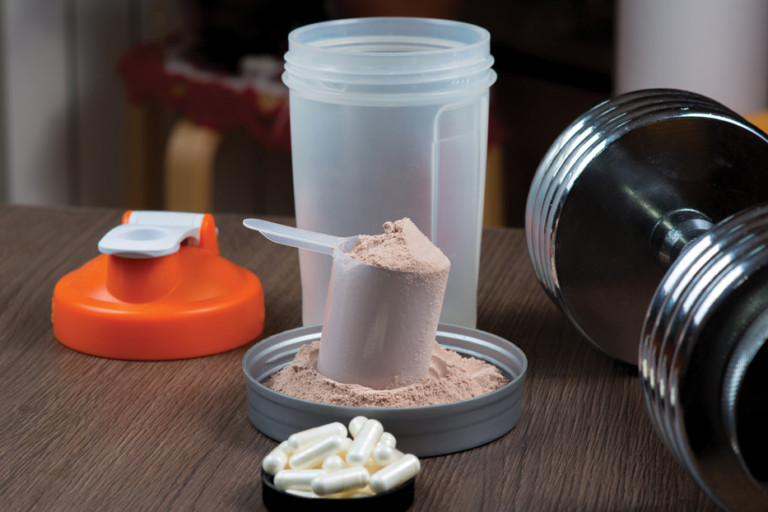
The article also stresses the power of protein in maintaining muscle mass. They noted that older men often experience anabolic resistance, which decreases their bodies’ ability to break down and synthesize protein. As a result, older men need to eat more protein. “A recent study in the journal Nutrients suggests a daily intake of 1 to 1.3 g of protein per kilogram of body weight for older adults who do resistance training.” The article also advises that older men focus on power, not just strength. According to Dr. Storer, “‘Doing quicker movements against resistance, like one’s own body weight, can be an effective means of developing power.’” All in all, as men age, they need to ensure that they consume enough protein, practice PRT and focus on both strength and power in order to preserve their muscles.
For more information, visit www.health.harvard.edu.
![[Extra! Extra!] Innovations for Active Nutrition Supplements](https://vitaminretailer.com/wp-content/uploads/2026/02/ActiveNutrition-295x300-1771620897.jpg)