

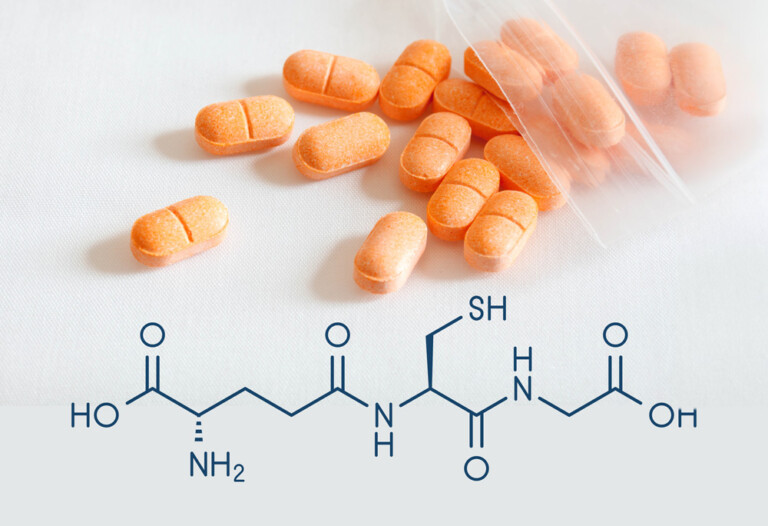
The antioxidant glutathione (GSH) is a tripeptide1,2 primarily synthesized in the liver and composed of the amino acids cysteine, glutamic acid and glycine.3,4 It may be argued that GSH is the most important tripeptide in the body, playing critical roles in the synthesis and repair of DNA and protein, as well as the synthesis of prostaglandins. It is likewise involved in the transport of amino acids, the metabolism of toxins and carcinogens, the function of the immune system, the prevention of oxidative cell damage and the activation of enzymes.5-7
Unfortunately, research suggests that GSH levels decline with age.8,9 This is particularly problematic since aging has also been characterized by a progressive decline in physiological function, often accompanied by elevated oxidative stress, mitochondrial dysfunction and various hallmarks of biological aging—and lack of GSH has been implicated in the pathogenesis of these age-related changes.10,11 This article will discuss the role of NAC and glycine in raising GSH levels and addressing these issues.
The Role of GSH in Aging
GSH acts as a potent antioxidant and detoxifier and plays a starring role in defending our cells against the ravages of time.12-15 Reduced synthesis and increased use of GSH leave our cells vulnerable to free radical attacks, toxin buildup and mitochondrial dysfunction—all hallmarks of cellular aging. However, the story does not end there. Research suggests we can be our own GSH champions. By fueling our bodies with precursor-rich foods or with specific supplements, we can support optimal GSH levels and empower our cells to face the challenges of aging with greater resilience. Therefore, strategies aimed at elevating GSH levels have emerged as potential avenues for promoting healthy aging.
An obvious approach for increasing GSH levels is to utilize a GSH supplement. Certainly, there are studies demonstrating that oral GSH is effective for various purposes as a dietary supplement. Nevertheless, the use of oral GSH may not actually be the best way to increase GSH levels in an aging population. Both preclinical and clinical studies indicate that supplementation with a combination of glycine and N-acetylcysteine (GlyNAC) may be more effective. Furthermore, supplementation with a GlyNAC in a BioSNEDS (self-emulsifying dietary delivery system) called GlyNACPro may be better yet—but more on that later. First, let’s examine clinical research on GlyNAC.
The Combination of Glycine and N-acetylcysteine in Clinical Research
A research review16 examined evidence from published rodent studies and human clinical trials to determine the effects of supplementation with a combination of glycine and N-acetylcysteine (GlyNAC) on age-associated defects and aging hallmarks. The researchers concluded that GlyNAC supplementation appears to reverse multiple aging hallmarks and could be effective in promoting healthy aging.
In a randomized clinical trial,17 24 older adults and 12 young adults received an oral supplement providing GlyNAC or placebo. Results were that, compared to young adults, older adults had GSH deficiency, oxidative stress, mitochondrial dysfunction, inflammation, endothelial dysfunction, insulin resistance, multiple aging hallmarks, impaired physical function, increased waist circumference and systolic blood pressure. GlyNAC (and not placebo) supplementation in older adults resulted in significantly improved GSH concentrations by 121 percent after two-weeks, and by 164 percent after 16-weeks. Furthermore, it improved/corrected these defects. In another study18 with 114 healthy older adults (average age 65 years), supplementation with GlyNAC increased GSH levels in older adults with high GSH demand.
Limitations With NAC alone
Research19 has demonstrated that supplementation with high doses of NAC (1,800-3,000 mg/day) was able to increase GSH levels. However, supplementing NAC alone does not provide the critically needed glycine, but GlyNAC provides both the glycine and NAC needed for GSH synthesis. In addition, orally delivered NAC undergoes extensive first-pass metabolism resulting in about 90 percent loss by enzymatic deacetylation to form cysteine in the small intestine.20 While immensely helpful in cases of severe GSH depletion, NAC by itself does not address the problem of supplementing GSH in cases of gradual depletion such as chronic illness or just simply getting older. By contrast, a study21 found that oral intake of GlyNAC led to a dose-dependent increase in glycine levels in the blood plasma of older adults, confirming good bioavailability.
GlyNACPro Research
As previously mentioned, GlyNACPro utilizes the BioSNEDS delivery system, which I discussed in the July 2024 issue of Vitamin Retailer. In short, BioSNEDS can mitigate nutraceutical breakdown in first-pass metabolism by promoting the transport of compounds via the lymphatic system instead of the circulatory system, thereby bypassing hepatic metabolism and increasing systemic exposure to active nutraceutical ingredients. The effectiveness of BioSNEDS has been confirmed using PAMPA and human pharmacokinetic (PK) studies. PAMPA refers to the Parallel Artificial Membrane Permeability Assay, which is a widely accepted and validated testing model used to confirm bioavailability used by the pharmaceutical industry. Specifically, it is a screening tool for the evaluation of nutrient permeability across various membranes—from the GI (gastrointestinal) tract to cells of the body. A PAMPA study22 demonstrated 12 times better permeability with BioSNEDS GlyNAC (GlyNACPro, Verdant Nature).
As a result of the improved bioavailability, on an active-to-active comparison, only 50 mg of NAC with glycine from GlyNACPro is equivalent as an alternative to 600 mg of conventional NAC.
Conclusion
GSH levels decline with age which is problematic since it plays an important role in mitigating age-related decline in physiological function, often accompanied by elevated oxidative stress, mitochondrial dysfunction and various hallmarks of biological aging. While NAC can increase GSH levels, GlyNAC can do a better job and help reverse multiple aging hallmarks and healthy aging. Due to enhanced bioavailability, GlyNACPro, which utilizes the BioSNEDS delivery system allows for considerably lower doses: 50 mg vs. 600 mg of NAC.VR
References:
1 Franco R, Schoneveld OJ, Pappa A, Panayiotidis MI. The central role of glutathione in the pathophysiology of human diseases. Arch Physiol Biochem. 2007 Oct-Dec;113(4-5):234-58.
2 Forman HJ, Zhang H, Rinna A. Glutathione: overview of its protective roles, measurement, and biosynthesis. Mol Aspects Med. 2009 Feb-Apr;30(1-2):1-12.
3 Anderson ME. Glutathione: an overview of biosynthesis and modulation. Chem Biol Interact 1998;24;111-112:1-14.
4 Lu SC. Regulation of hepatic glutathione synthesis: current concepts and controversies. FASEB J 1999;13:1169-83.
5 Lomaestro BM, Malone M. Glutathione in health and disease: pharmacotherapeutic issues. Ann Pharmacother 1995;29:1263-73.
6 Powers SK, Hamilton K. Antioxidants and exercise. Clin Sports Med 1999;18:525-36.
7 Hong SY, Gil HW, Yang JO, Lee EY, Kim HK, Kim SH, Chung YH, Hwang SK, Lee ZW. Pharmacokinetics of glutathione and its metabolites in normal subjects. J Korean Med Sci. 2005 Oct;20(5):721-6.
8 Zhu Y, Carvey PM, Ling Z. Age-related changes in glutathione and glutathione-related enzymes in rat brain. Brain Res. 2006 May 23;1090(1):35-44.
9 Tong J, Fitzmaurice PS, Moszczynska A, et al. Do glutathione levels decline in aging human brain? Free Radical Biology and Medicine. 2016; 93:110-17.
10 Somasundaram I, Jain SM, Blot-Chabaud M, et al. Mitochondrial dysfunction and its association with age-related disorders. Front Physiol. 2024;15:1384966. Published 2024 Jul 2. doi:10.3389/fphys.2024.1384966.
11 Sekhar RV. GlyNAC Supplementation Improves Glutathione Deficiency, Oxidative Stress, Mitochondrial Dysfunction, Inflammation, Aging Hallmarks, Metabolic Defects, Muscle Strength, Cognitive Decline, and Body Composition: Implications for Healthy Aging. J Nutr. 2021;151(12):3606-3616. doi:10.1093/jn/nxab309.
12 Liska D, Lynon M, Jones DS. Detoxification and Biotransformational Imbalances. In: Jones DS, Ed. Textbook of Functional Medicine. Gig Harbor, WA: Institute for Functional Medicine; 2006:275-298.
13 Glutathione, Reduced (GSH) Monograph. Altern Med Review. 2001;6(6):601-7.
14 Lomaestro BM, Malone M. Glutathione in health and disease: pharmacotherapeutic issues. Ann Pharmacother 1995;29:1263-73.
15 Hong SY, Gil HW, Yang JO, Lee EY, Kim HK, Kim SH, Chung YH, Hwang SK, Lee ZW. Pharmacokinetics of glutathione and its metabolites in normal subjects. J Korean Med Sci. 2005 Oct;20(5):721-6.
16 Sekhar RV. GlyNAC Supplementation Improves Glutathione Deficiency, Oxidative Stress, Mitochondrial Dysfunction, Inflammation, Aging Hallmarks, Metabolic Defects, Muscle Strength, Cognitive Decline, and Body Composition: Implications for Healthy Aging. J Nutr. 2021;151(12):3606-3616. doi:10.1093/jn/nxab309.
17 Kumar P, Liu C, Suliburk J, et al. Supplementing Glycine and N-Acetylcysteine (GlyNAC) in Older Adults Improves Glutathione Deficiency, Oxidative Stress, Mitochondrial Dysfunction, Inflammation, Physical Function, and Aging Hallmarks: A Randomized Clinical Trial. J Gerontol A Biol Sci Med Sci. 2023;78(1):75-89. doi:10.1093/gerona/glac135.
18 Lizzo G, Migliavacca E, Lamers D, et al. A Randomized Controlled Clinical Trial in Healthy Older Adults to Determine Efficacy of Glycine and N-Acetylcysteine Supplementation on Glutathione Redox Status and Oxidative Damage. Front Aging. 2022;3:852569. Published 2022 Mar 7. doi:10.3389/fragi.2022.852569.
19 Tirouvanziam R, Conrad CK, Bottiglieri T, Herzenberg LA. High-dose oral N-acetylcysteine, a glutathione prodrug, modulates inflammation in cystic fibrosis. PNAS. 2006; 103(12):4628-4633.
20 Olsson B, Johansson M, Gabrielsson J, Bolme P. Pharmacokinetics and bioavailability of reduced and oxidized N-acetylcysteine. Eur J Clin Pharmacol. 1988;34(1):77-82. doi:10.1007/BF01061422.
21 Lizzo G, Migliavacca E, Lamers D, et al. A Randomized Controlled Clinical Trial in Healthy Older Adults to Determine Efficacy of Glycine and N-Acetylcysteine Supplementation on Glutathione Redox Status and Oxidative Damage. Front Aging. 2022;3:852569. Published 2022 Mar 7. doi:10.3389/fragi.2022.852569.
22 N-Acetyl-L-Cysteine vs BioNAC™ based on PAMPA results. Analysis conductd at Poznan University of Medical Sciences Department of Pharmacognosy. Verdant Nature. 3/2023.
Gene Bruno, MS, MHS, Professor Emeritus of Nutraceutical Science, is writer, educator and a nutraceutical scientist with more than 45 years of experience educating natural product retailers and health care professionals and formulating natural products for dozens of dietary supplement companies. He has written articles on nutrition, herbal medicine, nutraceuticals and integrative health issues for trade, consumer magazines and peer-reviewed publications. Bruno also hosts “The Vitamin Professor Podcast” brought to you by VRM Media. He can be reached at [email protected].
![[Extra! Extra!] Emphasizing Health Span Vs. Lifespan for Aging](https://vitaminretailer.com/wp-content/uploads/2024/12/Healthy-Aging-feature-293x300-1735231797.jpg)