



Prebiotics, probiotics and postbiotics dominate the digestive health market—here’s how to keep up.
You may be hard-pressed to find a customer in your store who has not heard about probiotics. What an auspicious opportunity to expand their knowledge about the beneficial bacteria! The gut microbiome and its relationship to health, as well as prebiotics that nourish the probiotics and postbiotics, is an emerging area of R&D.
In the viewpoint of Jenna Nelson, marketing director for EpiCor, Cargill (Minneapolis, MN), there are a couple of key factors fueling the growth of pre-, pro- and postbiotics. First, she pointed out, there is more widespread awareness about the interconnectivity between the gut microbiome, digestive health, immunity and overall well-being. A 2022 study by FMCG Gurus found 79 percent of consumers recognize the link between digestive and overall health, up 10 percentage points since 2018. Further, the consumer research firm noted that gut health is a leading area of interest for consumers, with “building immunity” a key reason behind this focus.
Another energetic factor Nelson noted is the unprecedented access to health information and supplement research for the consumers who are taking proactive approaches to their health. They are seeking well-researched ‘biotic products that can improve their health, from traditional supplements to the new wave of functional food and beverages.
“The final piece of the puzzle is familiarity,” she said. “We continue to see awareness for ‘biotics climb, and find consumers associate these ingredients with a raft of positives, including microbiome support, gut health and immunity.”
Elizabeth Cooper, technical advisor for ADM Protexin (Miami, FL), cited compelling market research describing the accelerating growth of the market. The global digestive health market is continuing to grow year on year, and probiotics are playing a significant part in this growth, with a projected valuation of $94.48 billion by 2027, according to some sources.
Meanwhile, she said, prebiotic sales have also seen expansion, with the market valued at just over $6 billion in 2021 and expecting to grow at a compound annual growth rate (CAGR) of almost 15 percent between 2022 and 2030, according to a report by Fortune Business Insights.
“An emerging area of interest alongside probiotics and prebiotics is postbiotics. In fact, marketing insights suggest that postbiotics have become the fastest growing area in terms of gut health related Google searches, with a nearly 1,300 percent increase in the last two years,” she related. “Therefore, it’s hardly surprising that, although accounting for a much smaller share of the digestive health market, the postbiotics market is expected to grow at a CAGR of 10.1 percent between 2022 and 2029, reaching over $24 million.”
And consumers know that probiotic products are becoming more sophisticated and targeted and are seeking specific values. Brian Terry, director of sales, retail, Nordic Naturals, California, observed, “consumers are seeking higher potency, condition-specific pre-, pro- and postbiotics that target health benefit categories supporting digestive and immune health, healthy gut biodiversity, regularity, women’s urinary tract health and immune system function.”
The rise in gut-related disorders is believed to be driving this growth in sales of pre-, pro- and postbiotics, according to Cooper. Digestive disturbances are common and affect up to 40 percent of people and, according to a 2020 Lancet study, about two-thirds of these individuals will have chronic, fluctuating symptoms.
There is also a growing awareness among consumers about the gut-brain-axis, or the impact of the gut microbiome on mental health. “However, consumer education in this area continues to be relatively untapped,” she asserted. In a 2022 consumer survey by Nutrition Business Journal, 75 percent of participants said they were either not at all knowledgeable or not very knowledgeable about gut and digestive health.
Who Is Buying Biotics?
Perhaps the question may be more easily answered by saying who isn’t?
According to Nelson, the team at Cargill recently partnered with C+R Research to gather insights from more than 1,000 consumers, 941 of which currently use, or have used, probiotics. “This proprietary research confirms that 64 percent of all respondents first tried probiotics within the last five years, highlighting the continued growth of the category,” she commented.
Of all probiotic users, 49 percent reported actively searching for a probiotic, while 51 percent acknowledged they weren’t actively searching, but they saw or heard something that created interest, either from online sources, friends and family, or health care professionals.
Nelson added, “While there are a variety of reasons consumers purchase ‘biotics, most of them fall into one of two categories: health benefits or emotional reasons. Whether consumers are purchasing ‘biotics for health benefits (good for gut health rising to the top at 59 percent) or emotional reasons (feel more positive about my health, 45 percent), we saw that most users (83 percent) incorporate the product into their long-term routine.”
According to Terry, consumers who are concerned about stress, aging and managing well-being are buying probiotics. “Consumers who are seeking overall health support and managing factors like stress, aging, diet, environmental toxins, medications and a sedentary lifestyle can lead to less abundant bacteria and diversity.”
Cooper agreed, the “biotic-sphere is not solely attracting customers with GI (gastrointestinal) conditions. Some of the key consumer populations include children and infants, as growing recognition about their nutritional requirements is thought to be increasing demand for children’s supplements. “While the pandemic may seem to be a part of the past, it has fundamentally changed many parents’ way of thinking when it comes to their children’s immune health. As the longer-term repercussions of the pandemic for children’s health have become more apparent, parents have started to focus more on proactive preventative health strategies, such as supporting gut health with probiotics.”
She further explained that creating an optimum microflora balance is especially important in infants and children to give them a sturdy beginning for health as they grow. There is a critical window in the first 1,000 days of life (from conception to around the age of 2 years) that can significantly affect the development of a child’s immune system. Because approximately 70 percent of immune cells are produced and housed within the gut, their development in infants is strongly influenced by gut bacteria. “Probiotics are considered safe for infants of all ages, and supplementation is reported to positively influence the infant’s gut flora balance and support the developing immune system,” Cooper assured. “It’s therefore perhaps unsurprising that the children’s probiotic market is booming.”
Understanding the New Biotics
It is human nature to jump aboard something that is popular or has a great buzz about it. The world of ‘biotics is similar. Many people may be buying probiotic products simply because they hear such great things about them—and who doesn’t want to feel better than they do today?
“Our proprietary research suggests consumers are most familiar with probiotics and prebiotics, but awareness and interest in postbiotics is growing rapidly,” said Nelson. “This latest survey found nearly half of all consumers are aware of postbiotics, and a similar number are open to purchasing products made with them—a remarkable feat considering that a scientific consensus definition for ‘postbiotics’ was only published in May 2021.”
Although there remains a strong need for continual education about postbiotics (as well as pre-, pro- and syn-), Nelson observed that it’s clear that many consumers already have a broad understanding of the benefits of postbiotics. Cargill’s proprietary 2022 research found gut health was the top reason for consumer interest in postbiotics, while balancing bacteria in the digestive system, boosting the immune system, feeling more positive about health and aiding in digestion were secondary factors for interest in the category.
Synbiotics may be confusing to consumers. The combination of probiotic strains with prebiotics may be simple on the surface. But, according to a panel at the International Scientific Association for Probiotics and Prebiotics, that simple definition may suppress innovation. So, in 2019, they redefined a synbiotic as “a mixture comprising live microorganisms and substrates selectively utilized by host microorganisms that confers a health benefit on the host.” This extends the basic definition to include a product with both a probiotic and prebiotic being able to provide separate and unrelated health benefits, according to the panel.
The newest sub-segment is postbiotics which, like synbiotics, carries some ambiguity. The key distinction is that postbiotics are not alive, so … how could they possibly work? The International Scientific Association of Probiotics and Prebiotics created a definition of postbiotics in 2021: “Postbiotics are a preparation of inanimate microorganisms and/or their components that confers a health benefit on the host.”
Cooper elaborated, “Essentially dead microorganisms and/or their components (e.g., cell walls, membranes, exopoly-saccharides), some postbiotics may also retain substances created by the microorganism during growth and fermentation, known as metabolites (e.g., organic acids, bioactive peptides, enzymes). However, purified metabolites no longer containing microorganisms, or their cell components do not fall within the definition of postbiotic.”
EpiCor postbiotic is inspired by a real-life health discovery story, Nelson related. In 1998, it was noted that factory employees at the founding company’s animal feed manufacturing facility were taking fewer sick days than their office-bound co-workers. To understand why, the company commissioned pilot studies and learned that its fermented feed product was unknowingly supporting the immune health of the workers exposed to the product. Following this discovery, the company embarked on years of clinical research to show the safety and efficacy of this postbiotic for people, leading to the creation of EpiCor.
EpiCor is made through a proprietary fermentation process of Saccharomyces cerevisiae (baker’s yeast). The resulting unique, inanimate ingredient has been studied in human clinical trials. More than a dozen published studies suggest EpiCor supports immune health and may positively modulate gut microbiota.
Postbiotics are being researched for condition-specific benefits. For example, ADM’s postbiotic BPL1 postbiotic has human clinical research showing that it can positively affect metabolic health factors such as promoting reduction of body fat and waist circumference.
“Our recent proprietary research found nine out of 10 probiotic users would consider adding a postbiotic to their daily routine,” Nelson reported.
Biotics to Consider
BeLive probiotic from New Jersey-based Nat4Life America Inc., is a sugar-free, shelf-stable gummy supplement targeted to sustain long-term digestive health, according to Senior Marketing Manager Oriana Sengos. The gummies contain Bacillus coagulans, a spore-forming probiotic species that research has shown may improve digestion, support immune system function and target potentially harmful bacteria. “Each serving (two gummies) of BeLive Probiotic contains 5 billion CFUs, which provides the optimal level of healthy bacteria,” she said. “Our gummies are also designed to survive stomach acids as they pass through the GI tract. BeLive probiotics are vegan, gluten free, free of GMOs (genetically modified organisms), heat-resistant, and suitable for kids and adults.”
BeLive synbiotic is a prebiotic and probiotic blending a fiber prebiotic with B. coagulans. According to Sengos, Nat4Life America’s BeLive digestive health gummies are formulated to provide a high-potency serving of the probiotic along with inulin, a prebiotic fiber with many health benefits that feed and maintain the beneficial bacteria. “The benefit of our probiotic and synbiotic gummies is that they are suitable for the entire family and easy to use on the go,” commented Sengos. “We promote BeLive gummy vitamins through social media and plan to continue to use social media and digital advertising to promote various retailers carrying our products.”
Nordic Naturals provides three Nordic Flora probiotic supplements. Probiotic Immune Health is a blend of 15 probiotic strains with 60 billion cultures to support immune function and respiratory wellness by targeting nutrient absorption and the body’s defense against harmful molecules and bacteria, Terry explained. Probiotic Immune Health promotes a healthy immune response through enhancing intestinal barrier function and promoting immune cell responsiveness.
Probiotic Maximum Care is a blend of 11 probiotic strains with 90 billion cultures providing high CFU support for a healthy immune response and digestive function. “The Maximum Care probiotic positively affects the immune system by alleviating intestinal bloating while promoting gastrointestinal comfort and regularity,” Terry said.
Nordic Naturals’ Flora Probiotic Women’s Balance is a blend of 12 probiotic strains, including what Terry described as “the highly researched Lactobacillus acidophilus NCFM, which can help maintain a healthy vaginal microbiome and supports microbes naturally present in the gut. Additionally, Probiotic Women’s Balance has 60 billion CFU per capsule which helps promote gastrointestinal comfort and regularity.”
ADM Protexin’s Bio-Kult Infantis contains seven strains, including two (Bifidobacterium infantis and Bifidobacterium breve). that are found predominantly in the microbiomes of healthy infants along with vitamin D3, omega-3 fatty acids and Preplex prebiotics. Bio-Kult Saccharomyces boulardii, a probiotic yeast, has a long history of use in the prevention of GI symptoms associated with travelling and antibiotic associated diarrhea, and is combined with Preplex and vitamin D, according to Cooper.
“In addition,” she reported, “we have a number of postbiotic products in development, which include heat-treated-Bifidobacterium animalis subsps. lactis BPL1 (HTBPL1) and heat-treated Bifidobacterium longum ES1 (HTES1), both ADM strains.”
Results of a study on HTES1 were consistent with the anti-inflammatory and gut-barrier protective effects observed for its live form. The HTES1 strain has also been shown to have preserved the capacity to protect against oxidative damage, as well as inhibiting bacterial colonization by activating pathways related to innate immune function.
“Interestingly, a double-blind, randomized, placebo-controlled trial administering HTBPL1, BPL1 or placebo to 135 abdominally obese individuals for three months found that with the exception of BMI, the greatest reductions in anthropometric biomarkers were observed in the HTBPL1 group,” she added.
Some probiotics may have sports nutrition applications. For example, Blis Technologies of New Zealand recently announced publication of a study looking at the effect of its Streptococcus salivarius K12 (BLIS K12) in healthy adults engaging in high-intensity training (HIT). The participants consumed either the probiotic or placebo daily for 30 days. After this period, all participants performed a graded exercise test and five HIT sessions within three days. Saliva samples were collected at several points to quantify immunoglobulinA levels, secretion rate and flow. The study found that short-term supplementation with S. salivarius K12 increased sIgA levels and secretions in those engaging in heavy, demanding exercising such as HIT.
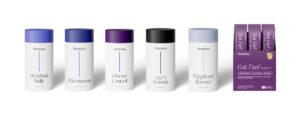
Another probiotic aimed at the sports nutrition/fitness community is a new blend Biotis Fermentis Uplift powder sticks by FrieslandCampina Ingredients, which combine fermented whey protein and Biotin galactooligosaccharides, a prebiotic that supports gut function.
Probiotics, prebiotics, synbiotics and now postbiotics will become part of the common vernacular in years to come. Consider that when probiotics (mainly Lactobacillus acidophilus) were only found in the refrigerated cases in health food stores in the 1990s, to the multifarious products purchased by consumers in nearly every outlet today, there may not seem room to grow, but there is. Cooper noted that studies of probiotics leaped from 212 in 2000 to 5,899 in 2022. She opined, “This depth of evidence-based knowledge may well be one of the main reasons why probiotics are possibly the most well-known of all the digestive supplements.” VR
For More Information:
ADM/Protexin, www.protexin.com
Biotis/FrieslandCampina Ingredients, www.biotis.com
Blis Technologies, www.probi.com
EpiCor, Cargill, www.cargill.com
Nat4Life America Inc, www.belivestore.com
Nordic Naturals, www.nordic.com