



OK, maybe not 100 percent bulletproof, but able to deflect and dodge projectiles galore! In the midst of a serious viral outbreak, people can feel overwhelmed and vulnerable, but there are so many ways we can help protect ourselves and the ones we love through nutrient interventions. Whether it’s the basics like vitamin D, or the extraordinarily unusual, like propolis, there are clinically studied interventions that can make a real difference in susceptibility to infection.
I have often been asked the question: when is the best time to start an elite immune protection nutrient regimen? The answer is: last year or even earlier! However, when is the second best time? Right now!
When I am talking to folks, I illustrate this point with a story. Imagine if you sit on a couch all year and all you eat is junk food, beer and sugary sodas. You will gain a bunch of weight and lose muscle tone. After a year or more of immobility and dietary neglect, you suddenly realize that it is bikini season next week! Does anyone realistically believe that you can start eating right, taking vitamins and working out for a week and be at your physical best? It is going to take much longer to lose the excess weight and exercise to have the body you think looks best on the beach. What would have been the best time to start to get into bikini shape? Last year. But the second-best time is right now!
People are surprised to find out that building bulletproof immunity does not happen overnight. Like the story above, it is a daily practice of healthy movement, clean eating, right-sizing body weight, and optimal levels of the right nutrients. Does that mean we should we give up if we are not where we want to be? Absolutely not!
There are shortcuts we can use to boost immunity, the foremost of which is the intelligent use of nutrients that can offer protection and immune strengthening starting on day one.
Immune system strength will improve over time. The longer you work at it, the stronger it will be. So, let’s get started.
Elderberry
Elderberry (Sambucus nigra) is one of the most powerful clinically studied herbs for fighting viral illnesses like colds and influenza (the flu). Elderberry interferes with the ability of the virus to latch on to a host cell, which prevents viral replication and worsening of infection. It can also boost the body’s ability to fight off infection in the first place. Research thus far has been found elderberry to be effective against 13 different bacteria and viruses, including Streptococcus pyogenes and Escherichia coli. Further research has found it be especially effective when combined with the mineral zinc and vitamin C.
A recent study found that taking elderberry while traveling dramatically reduces the risk of colds or the flu. Scientists recruited 312 economy-class passengers on a flight from Australia to Europe. Half received a clinically studied elderberry called Haschberg and the other half received placebo. All passengers were evaluated for cold and flu symptoms before, during and after their flights. The elderberry group had 50 percent fewer illnesses (cold or flu) compared to the placebo group, and if people in the elderberry group did become ill, they recovered 34 percent faster and had much lower severity of symptoms.
Propolis
Many people are familiar with the clinically proven benefits of honey, bee pollen and royal jelly, but propolis is not as well known. Propolis is gathered by bees from plants, carried back to the hive, mixed with some enzymes and beeswax, and used to protect the hive from infection by sealing openings and sensitive areas. Propolis is effective against bacteria, viruses, and even fungal infections.
In a published study looking at propolis’ power against various pathogens, including drug resistant bacteria, the results were impressive. The bacteria and fungi tested included Staphylococcus pyogenes, candida species (yeast), and methicillin-resistant Staphylococcus aureus (MRSA). Propolis was able to significantly decrease the bacterial and fungal replication in all tested species. Furthermore, propolis was able to show bactericidal (bacteria killing) and fungicidal (fungi killing) for all of the bacteria and fungi except for VRE (vancomycin-resistant enterococci).
Propolis is a great natural medicine for viral infections. However, crude propolis has many impurities and is usually about 65 percent beeswax, which interferes with absorption and utilization. Researchers have developed a patented purification process that eliminates beeswax and debris to create a much more potent propolis extract. This shows that not all propolis is created equal, so it is best to supplement with a purified propolis and one that has scientific validation.
Vitamin D
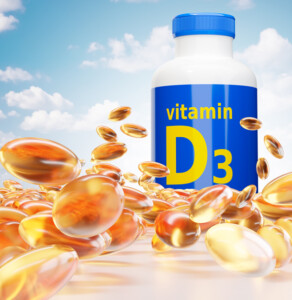
Vitamin D is not always recognized as an immune system powerhouse, but it is one of the most important foundations of the entire immune system. There are two forms of vitamin D, called D2 (ergocalciferol) and D3 (cholecalciferol). Make sure you choose vitamin D3, because it is far more effective and the form your body uses.
Vitamin D has been shown in several studies to potentially be useful in preventing/ameliorating viral infections, including COVID-19 infections. In a human study of vitamin D versus placebo for prevention of respiratory infections during the winter, the placebo group had double the number of days with symptoms (runny nose, sneezing, cough) than the vitamin D group.
In evaluating large numbers of individuals infected with COVID-19, researchers found that people with the highest levels of vitamin D have the lowest level of mortality. It also appears that vitamin D protects against cytokine storms—the overactivation of the immune system that causes severe lung damage and death in COVID-19 patients. It is inexpensive and easy to take—there are even some chewable forms. Adults should take up to 5,000 IU daily, but some individuals working with a health care practitioner may have inherited difficulties utilizing vitamin D and are prescribed much higher levels.
Andrographis
Andrographis has been used in ayurvedic medicine for thousands of years, and modern science has confirmed its extraordinary benefits for heart, liver and immune health. It contains compounds called andrographolides that are responsible for the majority of the herb’s immune system activity. Most research has been done on andrographis standardized to contain 80 mg of andrographolide in each dose.
The science on this herb is growing every year. Researchers have found that it helps prevent the common cold and reduce the intensity of symptoms, especially sore throat and runny nose.
In a clinical study, andrographis relieved the intensity of key symptoms (fatigue, sore throat, runny nose, sleeplessness) in just two days.
In another clinical study of 223 patients with a viral infection (cold), andrographis was compared to placebo. The results were about the same for the first two days, but on the third day, the andrographis group experienced a dramatic decrease in cough, headache, sore throat and disturbed sleep, while the placebo group experienced no improvement, or actually had their symptoms worsen.
In-vitro studies of andrographis have also shown viral inhibition for a variety of pathogens, including dengue virus, influenza A virus, H5N1 (avian flu) virus, chikungunya virus, human immunodeficiency virus (HIV), and Epstein-Barr virus (EBV).
Keep Building Your Immune System!
It is never too late to improve your immune health. It is important to avoid excessive sugar and processed foods, get good sleep at night, and keep active. But there are also nutrients that will help you quickly and become even more effective over time as you deal with our ever-changing world of viruses and bacteria. VR
References:
Roxas M, Jurenka J. Colds and influenza: a review of diagnosis and conventional, botanical, and nutritional considerations. Altern Med Rev. 2007 Mar;12(1):25-48.
Krawitz C, Mraheil MA, Stein M, Imirzalioglu C, Domann E, Pleschka S, Hain T. Inhibitory activity of a standardized elderberry liquid extract against clinically-relevant human respiratory bacterial pathogens and influenza A and B viruses. MC Complement Altern Med. 2011 Feb 25;11:16.
Tiralongo E, Wee S, Lea RA. Does elderberry benefit intercontinental air travelers? Presented at the 21st Annual International Integrative Medicine Conference in Melbourne; July 17-19, 2015.
Vitamin D. In: Hendler SS, ed. PDR for Nutritional Supplements. 2nd ed. Montvale, NJ: Physician’s Desk Reference; 2008:669-678.
Frieri M, Valluri A. Vitamin D deficiency as a risk factor for allergic disorders and immune mechanisms. Allergy Asthma Proc. 2011 Nov-Dec;32(6):438-44.
Berry DJ, Hesketh K, Power C, Hyppönen E. Vitamin D status has a linear association with seasonal infections and lung function in British adults. Br J Nutr. 2011 Nov;106(9):1433-40. Epub 2011 Jun 6.
Prescott S, Nowak-Węgrzyn A. Strategies to prevent or reduce allergic disease. Ann Nutr Metab. 2011;59 Suppl 1:28-42. Epub 2011 Dec 21.
Di Pierro F, Zanvit A, Colombo M. Role of a proprietary propolis-based product on the wait-and-see approach in acute otitis media and in preventing evolution to tracheitis, bronchitis, or rhinosinusitis from nonstreptococcal pharyngitis. Int J Gen Med. 2016;9:409-414.
Marchisio P, Esposito S, Bianchini S, et al. Effectiveness of a propolis and zinc solution in preventing acute otitis media in children with a history of recurrent acute otitis media. Int J Immunopathol Pharmacol. 2010;23(2):567-575.
Carr RR, Nahata MC. Complementary and alternative medicine for upper-respiratory-tract infection in children. Am J Health Syst Pharm. 2006;63(1):33-39.
Al-Hariri M. Immune’s-boosting agent: Immunomodulation potentials of propolis. J Family Community Med. 2019;26(1):57-60. doi:10.4103/jfcm.JFCM_46_18.
Kurek-Górecka A, et al. Structure and antioxidant activity of polyphenols derived from propolis. Molecules. 2013 Dec 20;19(1):78-101.
Miguel MG, Antunes MD. Is propolis safe as an alternative medicine? J Pharm Bioallied Sci. 2011; 3(4): 479–495.
Popova M, Bankova V, Naydensky C, Tsvetkova I, Kujumgiev A. Comparative study of the biological activity of propolis from different geographic origin: A statistical approach. Maced Pharm Bull. 2004;50:9–14.
Bachevski D, Damevska K, Simeonovski V, Dimova M. Back to the basics: Propolis and COVID-19. Dermatol Ther. 2020 Jun 7:e13780.
Marti J, López F, Gascón I, Julve J. Propolis nasal spray effectively improves recovery from infectious acute rhinitis and common cold symptoms in children: a pilot study. J Biol Regul Homeost Agents. 2017 Oct-Dec;31(4):943-950. Mărghitaş LA, Dezmirean DS, Bobiş O. Important Developments in Romanian Propolis Research. Evid Based Complement Alternat Med. 2013; 2013: 159392.
Cohen HA, Varsano I, Kahan E, Sarrell EM, Uziel Y. Effectiveness of an herbal preparation containing echinacea, propolis, and vitamin C in preventing respiratory tract infections in children: a randomized, double-blind, placebo-controlled, multicenter study. Arch Pediatr Adolesc Med. 2004 Mar;158(3):217-21.
Hussain RM, Razak ZNRA, Saad WMM, Mustakim M. Mechanism of antagonistic effects of Andrographis paniculata methanolic extract against Staphylococcus aureus. Asian Pac J Trop Med. 2017 Jul;10(7):685-695.
Gupta S, Mishra KP, Ganju L. Broad-spectrum antiviral properties of andrographolide. Arch Virol. 2017 Mar;162(3):611-623. doi: 10.1007/s00705-016-3166-3. Epub 2016 Nov 28.
Cáceres DD, Hancke JL, Burgos RA, Sandberg F, Wikman GK. Use of visual analogue scale measurements (VAS) to assess the effectiveness of standardized Andrographis paniculata extract SHA-10 in reducing the symptoms of common cold. A randomized double blind-placebo study. Phytomedicine. 1999 Oct;6(4):217-23.
Saxena RC, Singh R, Kumar P, et al. A randomized double blind placebo controlled clinical evaluation of extract of Andrographis paniculata (KalmCold) in patients with uncomplicated upper respiratory tract infection. Phytomedicine. 2010 Mar;17(3-4):178-85.
Chandrasekaran CV, Thiyagarajan P, Sundarajan K, et al. Evaluation of the genotoxic potential and acute oral toxicity of standardized extract of Andrographis paniculata (KalmCold). Food Chem Toxicol. 2009;47(8):1892-902.
Kongyingyoes B, Priengprom T, Pientong C, et al. 3,19-isopropylideneandrographolide suppresses early gene expression of drug-resistant and wild type herpes simplex viruses. Antiviral Res. 2016 Aug;132:281-6.
Priengprom T, Ekalaksananan T, Kongyingyoes B, Suebsasana S, Aromdee C, Pientong C. Synergistic effects of acyclovir and 3, 19-isopropylideneandrographolide on herpes simplex virus wild types and drug-resistant strains. BMC Complement Altern Med. 2015 Mar 11;15:56.
Sornpet B, Potha T, Tragoolpua Y, Pringproa K. Antiviral activity of five Asian medicinal pant crude extracts against highly pathogenic H5N1 avian influenza virus. Asian Pac J Trop Med. 2017 Sep;10(9):871-876. doi: 10.1016/j.apjtm.2017.08.010. Epub 2017 Sep 14.
Mishra K, Dash AP, Swain BK, Dey N. Anti-malarial activities of Andrographis paniculata and Hedyotis corymbosa extracts and their combination with curcumin. Malaria Journal. 2009;8:26. doi:10.1186/1475-2875-8-26. Uttekar MM, Das T, Pawar RS, et al. Anti-HIV activity of semisynthetic derivatives of andrographolide and computational study of HIV-1 gp120 protein binding. Eur J Med Chem. 2012 Oct;56:368-74.
Reddy VL, Reddy SM, Ravikanth V, et al. A new bis-andrographolide ether from Andrographis paniculata nees and evaluation of anti-HIV activity. Nat Prod Res. 2005 Apr;19(3):223-30.
Calabrese C, Berman SH, Babish JG, et al. A phase I trial of andrographolide in HIV positive patients and normal volunteers. Phytother Res. 2000 Aug;14(5):333-8.
Cheryl Myers is an integrative health nurse, author, and an expert on natural medicine. She is a nationally recognized speaker who has been interviewed by the New York Times, Wall Street Journal and Prevention magazine. Her many articles have been published in such diverse journals as Aesthetic Surgery Journal and Nutrition in Complementary Care, and her research on botanicals has been presented at the American College of Obstetrics and Gynecology and the North American Menopause Society. Myers is the head of scientific affairs and education for EuroPharma, Inc.