

Experts discuss a range of issues affecting the natural products industry.
Panelists:
Jim Emme, CEO, NOW Foods, Bloomingdale, IL, www.nowfoods.com
Jonathan Emord, President, Emord & Associates, Clifton, Virginia, www.emord.com
Daniel Fabricant, PhD, President and CEO, Natural Products Association (NPA), Washington, D.C., www.npanational.org
Karen Howard, CEO and Executive Director, Organic and Natural Health Association, Washington, DC, www.organicandnatural.org
Mark LeDoux, Chair and CEO, Natural Alternatives International (NAI), Carlsbad, CA, www.nai-online.com
Steve Mister, President and CEO, Council for Responsible Nutrition (CRN), Washington, D.C., www.crnusa.org
Marge Roman, Manager, Stay Healthy!, Las Vegas, NV, www.stayhealthylasvegas.com
Steven Shapiro, Of Counsel Rivkin Radler, New York, NY, www.rivkinradler.com
Scott C. Tips, President, National Health Federation (NHF), Monrovia, CA, www.thenhf.com
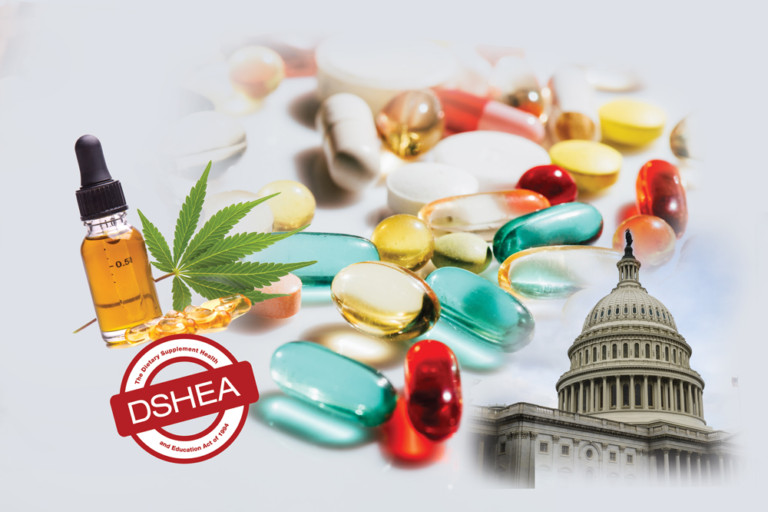
Oct. 15, 2019, marked the 25th anniversary of DSHEA, the Dietary Supplement Health and Education Act (DSHEA). So, we turned to a panel of industry experts to break down a whole range of issues, from CBD to DSHEA 2.0, from mandatory product registries to personalized nutrition, and from state actions to predictions for 2020.
VR: As we are about to begin a new year, what should we remember about DHSEA and what do we need to do to protect it (and consumers) going forward? Roman: I think we need to remember how we fought for DSHEA, and how close we came to losing the freedom to sell dietary supplements.
LeDoux: There has been a lot of discussion about how improvements could be made to this 25-year-old law. While I believe that some improvements can be made through regulatory efforts by the agency tasked with implementation of the legislation, there should also be a robust discussion on how to include the attributes of 21 CFR 111 down to the raw material supplier. That said, I think enforcement by the agency is warranted, and has been spotty.
This may be rectified by more resource allocation to the ODS (Office of Dietary Supplements), and could also be bolstered by issuance of appropriate Import Alerts associated with goods that attempt to copy-cat NDI (new dietary ingredient) status from responsible industry participants.
The entire mess of CBD which is now widespread and technically illegal when presented in a food source or dietary supplement modality screams for enforcement. Failure to enforce the law does not make the underlying fact that products which are illegal, per se, are granted ‘safety’ status by inaction by the agency, albeit this is a total embarrassment for the industry and for the regulatory community.
Fabricant: The goal of DSHEA was to balance consumer protection with consumer access. It’s achieved that goal for the most part, but that doesn’t mean the system is perfect. We have to continue working with all branches of government, legislative, judicial and executive agencies, like the FDA [U.S. Food and Drug Administration]. This only makes our system even stronger, especially on robust enforcement for new dietary ingredient filings and setting a safe level for CBD consumption.
Tips: We need to remember that as good as DSHEA has been for us, it was a compromise bill with flaws in it. One of the major compromises made in order that DSHEA could pass unanimously is that legislators picked the very arbitrary date of October 15, 1994 as the watershed date dividing grandfathered-in ingredients from New Dietary Ingredients.
This dividing line has no basis in science, is not related in any way to supplement safety or even efficacy, and the date should be moved forward in time to a more reasonable one, especially since GMPs (good manufacturing practices), reporting requirements for adverse events, and other consumer protections have been imposed on the industry to ensure safety.
I would move the date forward to at least Jan. 1, 2010, or my real preference: reframe the distinction altogether so that NDIs can be introduced more easily and as originally intended. After all, safety has never really been an issue in the supplement industry.
Emme: DSHEA was passed at a time when FDA was somewhat suspicious of the dietary supplements industry and the products we sell. It provided a regulatory framework that ensured consumers would have the right to access nutritional products that met specified quality standards via GMP compliance. Although implementation of the law was slow, some manufacturers actively stepped forward to meet and exceed what was required.
For example, when NOW passed its first GMP inspection in the year 2000, it wasn’t the FDA that did the inspection because they didn’t have the guidelines in place yet. We went through the GMP program set up by the NPA, then called the NNFA (National Nutritional Foods Association), to demonstrate commitment to doing things right. Companies that I think of as the responsible core of the industry continue to exceed the minimum requirements to protect the future of the industry and their businesses.
Throughout the past 25 years, the industry has continued efforts to build upon DSHEA by pushing back against proposed legislation that would limit consumer access to supplements and supporting improvements such as mandated adverse event reporting.
Shapiro: The passage of DSHEA is testament to the major industry players at the time who were able to mobilize an enormous public letter writing campaign (no e-mail!) to Congress and the bipartisan cooperation of Republican Senator Hatch and Democrat Senator Harkin to put together a unanimous legislative vote. We need to remember the importance of continually reminding our legislative representatives, whether in the form of an invitation for a facility visit or attendance at a “lobby day” in Washington D.C. or a state capitol, that our industry provides the products that Americans take to make sure they get enough essential nutrients and to maintain or improve their health, and that dietary supplements are an important adjunct to health care overall.
Howard: We need to remind ourselves that when DSHEA was passed it happened with enormous consumer support and tens of thousands of letters, the old-fashioned kind you mail, to Congress. The prospect of launching a full-frontal assault on the law is slight. No one wants to see us activate the now 75 percent of U.S. citizens who take dietary supplements into action to save their vitamins. That said, we can’t get too comfortable. The industry is being constantly derided by its critics.
In addition, while we all work diligently to man the barricades for DSHEA, sister laws and regulations are taking a beating. Compound pharmacy has been branded dangerous. FDA has put homeopathy on notice, and the industry must now operate under a risk-based model of enforcement. Approval of continuing medical education hours (under the purview of the AMA [American Medical Association]) for integrative and functional medical professionals is being denied. The new rules permitting biological engineering paves an easy path for synthetic biology in the food and supplement supply chain.
None of this is accidental and we would be foolish to believe we are untouchable. Now is the time to create a bigger tent. We won’t be small if we partner this industry and its consumer champions with the practitioners, and the environmental interests that support health of planet and people.
Mister: The philosophy that underlies all of DSHEA is the balance the law brought between protecting consumer safety and providing consumer access to a broad range of beneficial products. Moving forward, it’s important to remember that DSHEA is not stuck in time and it was never intended to lock the industry into a regimen as it existed in 1994. Since DSHEA was signed into law, additional safety measures have already been enacted to enhance the original law.
CRN also recognizes how the industry has changed since DSHEA and how the law needs to evolve with it. For example, when DSHEA first passed, the internet was new and did not have nearly the kind of impact and range of use as it does today. The internet has given companies the ability to come to market quickly with less barriers, so it is critical that DSHEA adapts to reflect this changing market.
DSHEA has benefitted from amendments in the past and the industry will continue to find new ways to protect the marketplace while still preserving the balance between consumer safety and access to products that promote better health and wellness for the 77 percent of Americans taking dietary supplements each year. VR: What do people mean when they say DSHEA 2.0? It always used to be said that we should be very careful about opening up DSHEA, because, once it is opened up, it can easily be compromised or weakened. Does DSHEA itself need to be “updated” or does the FDA need to update its application of the law or its enforcement priorities?
Emord: The entire Food, Drug and Cosmetic Act ought to be revamped because it creates artificial distinctions between, for example, foods and supplements and drugs, predicated solely on intended uses when, in the real world, many of what are deemed foods and, supplements by FDA are variously understood to be therapeutic.
So, for example, telling the public the truth on labels and in labeling of prune juice that it helps relieve chronic constipation (a disease, according to FDA) ought not result in the artificial removal of a common food from the food category to the drug.
Likewise, alerting the public in labeling to the fact that a certain dietary supplement lowers blood sugar levels, cholesterol, or blood pressure (often critical health information for those already on drugs that do the same) should not transform the supplement into a drug.
Yet the archaic regulatory regime of the FDA has those effects, which deny consumers access to truthful and helpful information on the basis of a legal fiction.
Mister: The answer is yes and yes. CRN believes that to move forward, it’s necessary to have a combination of both updating DSHEA itself and having FDA update its application of the law and enforcement priorities. CRN has learned over the last 25 years that FDA doesn’t have a window into the marketplace to see what products are out there and to move quickly enough when there is a trend of products coming into the market.
That is one of the reasons why CRN supports a mandatory product listing that would allow FDA to have a more complete view of the marketplace. A mandatory listing would give the agency the visibility it needs to enhance existing regulations and foster increased enforcement efforts against criminal activity.”
Shapiro: I do not believe that it is necessary to “update” DSHEA. I think that the law as currently written should work extremely well.
We have seen the industry grow exponentially with many beneficial products coming on to the market. I do have concerns in those instances where FDA does not take advantage of the abilities to enforce what it already has in place. For example, putting import alerts in place for new dietary ingredients that have not been the subject of notification submitted to the agency.
I also believe that a mandatory label registry creates an enormous burden for legitimate industry with little, if any, corresponding benefit. Is the thought that FDA is actually going to review the thousands and thousands of labels that are going to be submitted?
If the idea is simply to have the ability to create a violation against a company for its failure to submit labels, that seems like a waste of time and money for legitimate industry with very little upside in terms of enforcement.
If anything, FDA should consider better use of the current requirement to file 30-day letters when companies market products with structure/function claims. This requirement already applies to the vast majority of products, as almost all products are marketed with such claims, yet the agency rarely, if ever, takes action against the numerous companies that do not comply with the notification process.
Why create another administrative burden on legitimate industry that scofflaws will certainly ignore given FDA’s historic failure to enforce the 30-day notification part of the law?
Howard: I’ve never been to a hearing on the topic of FDA when industry hasn’t jumped up and down to assist FDA in garnering increased enforcement funding. They have the tools they need to do the job consumers are entitled to. To rid the shelves of contaminated and illegal products. To issue guidance and rules that support consumer access to quality products. I can’t envision a successful legislative policy effort that will result in a better outcome at the agency. I would be curious to see how increased funds might be used to stop the proliferation of counterfeits and contaminants at our borders.
LeDoux: DSHEA 2.0 really is something of a “technical document fix,” which would extend the provisions of providing safety and identity requirements in the supply chain down to the actual producers of the raw materials in question. At the current time, only the producers of finished products or own-label distributors are required to create and undertake the provisions of cGMP requirements to assure product integrity, and this burden needs to be expanded appropriately to the underlying supply chain.
Before we have any conversations about DSHEA 2.0 or “modernization,” we should be talking about what the FDA can do right now. For example, the FDA doesn’t need any additional authority to create a safe level for CBD consumptions and a path for supplement makers and retailers to enter the CBD business responsibly. Tips: The FDA needs to listen to industry more and cease trying to force its own anti-supplement agendas upon an industry that has already proven itself to be conscientious and safe. The FDA has become a rogue agency in that it ignores clear Congressional intent when it comes to legislation, such as DSHEA, and this agency must be reined in. They think they make the law, but they do not. This cannot be allowed to continue.
Fabricant: There’s also much discussion of introducing a mandatory product listing or introducing user fees like you see for the pharmaceutical industry. In both cases, I think there are many details yet to be worked out and we need to get to a place where there’s value to consumers as well as the employers who make and sell supplements. Also, without state pre-emption I fear that any new statutory aspects will only be twisted by plaintiff bar cases in states. We have to get serious as an industry in taking on the plaintiff’s bar and getting one set of federal uniform laws for our industry.
There’s also the issue of funding from Congress. That’s why NPA is asking Congress to appropriate $100,000 for the FDA to perform a health hazard evaluation (HHE) for CBD. The process would follow the same precedent as red yeast rice, which allows a natural product to contain a level of an active pharmaceutical ingredient that the FDA has determined to be safe.
Emme: The world is very different than it was when DSHEA was written, and it may make sense to update specific aspects. For example, the third-party literature component doesn’t make sense in the age of the internet. And today the body of science researching nutritional ingredients is far more vast than it was, but much of it can’t be shared with consumers because it may step over the drug/disease claim threshold. These are a few of the components that the industry is discussing as being potential areas to update.
Roman: I don’t know if we should open up DSHEA without an action plan to strengthen it.
VR: Vitamin Shoppe recently launched Only Me, a subscription-based personalized nutrition service. And this is not the only company to enter the emerging personalized nutrition space. The nexus of Big Data and a fully mapped human genome is attracting strong interest, but what should marketers and retailers keep in mind as this nascent category begins to take shape?
Tips: First and foremost, marketers and retailers need to keep in mind that their customers will want to be sure that their personal data is protected, both from misuse by the companies as well as hacking by third parties. Privacy of personal data will come increasingly to the forefront as a concern of consumers. The company that gets ahead of the wave on this particular concern will have a definite marketing (and legal) advantage.
Fabricant: I’m excited to see where personalization and science continue to take the dietary supplement industry. It also brings interesting challenges as brands and retailers offer personalized solutions while maintaining compliant claims. Even if nutrition is personalized, dietary supplement claims must maintain compliance.
Emord: As with all things FDA, retailers have to be mindful that the speech police at the agency will watch carefully to interdict and enforce against those instances where the information exchange involves an express or implied representation that the nutrition in question treats, mitigates, or prevents disease, deeming the products in question illegal thereupon.
Emme: Personalized nutrition has a lot of potential, but as with a lot of new concepts and technology, it may take a while to get the bugs out. At some point there will be consensus on how to measure what a person may need to supplement, but we’re not quite there yet.
LeDoux: There is clearly promise in personalized nutrition, but without tying in the medical and testing community with bona fide scientific veracity that the purported shortages in the diet are personalized to the particular client, and then demonstrating the value proposition by follow-up clinical evaluations of blood and tissue studies when warranted, lends this area to significant mischief.
Mister: Personalized nutrition is an exciting area for the industry. As science emerges, industry is discovering that not everyone needs the same amounts of the same nutrients, and so there is an opportunity to customize regimens that are more carefully tailored to the individual needs of consumers. Personalized nutrition also fits into a larger cultural trend where consumers want to have their needs addressed, whether that’s with supplements, meals or their computer settings. They want to feel that their products are personalized to reflect their lifestyle, and the supplement industry is at a point where science is allowing us, and encouraging us, to do that to better support individualized nutrition needs.
VR: Critics of dietary supplements seized on the Annals of Internal Medicine dietary recall study that came out in May of 2019, which purported to show no benefit of dietary supplements and a supposed increased risk of cancer with higher levels of calcium supplementation. However, there appeared to be many confounding factors, including an aging group of participants who were more likely to have been developing cancer for decades. Comments?
Fabricant: The study spreads misleading information and confusion, ignoring strong science that supports the use of nutritional supplements. The first line of defense against disease is a balanced healthy lifestyle, and supplements are important for the vast majority of Americans who may not receive the recommended daily nutrients from diet alone.
Poor diet in those already diagnosed with cancer in the past was a major confounder in the study. The participants were more likely to be cancer survivors, smokers, physically inactive, diabetic, and in poor general health. The trend toward higher risk of death with an increasing number of supplements was not statistically significant in the sample size of 30,000. Furthermore, the use of vitamin E supplements in combination with multivitamins was associated with lower risk of death.
LeDoux: Having been in this industry for 44 years, it is clear there are two camps when it comes to dietary supplements. First, there is the skeptic camp, populated by many professionals who have great disdain for this industry, because it presumably does not follow sound scientific requirements to prove efficacy. This is really something of a stretch, when one peels back the meta-analytical means of sifting through large chunks of data. If one remembers the study suggesting calcium intake was of limited or no value, it might have been helpful to share the other seminal point that in the meta-analysis conducted, there was no taking into consideration the fact that many in the study were taking calcium supplements anyway, essentially rendering the meta-analysis moot on multiple points.
Roman: Retailers need to dedicate themselves to education, so when we want to challenge anti-supplement views we come from an informed stance.
VR: And if the anti-supplement media blitz were not enough, even a respected publication like Scientific American published a massive hit piece in May 2019, titled “Are Nutritional Supplements a Waste of Money?” Sadly, the article misses the point and the science: science strongly supports that dietary supplements improve the health of all Americans and complement an often nutritionally compromised American diet. Comments?
Roman: Again, education is key. We need to not be only defensive. As retailers, we need to curate our inventory so that we can carry products that provide transparency and proof of their claims.
LeDoux: Media bias against the use of dietary supplements is historic and largely driven by economic conditions and parameters. If the population of the U.S. were to embark on proper supplementation to help alleviate the potential onset of diseases of aging, including obesity, sarcopenia, prostatic anomalies and a host of other conditions including musculo-skeletal mass, the outcome would necessarily be a reduction in incidences of invasive surgical or medical interventions to correct the symptoms of disease states that could be largely prevented.
Tips: Studies such as those referred to by Scientific American and JAMA are always ones that have been conducted using the lowest and least-effective form of supplements, usually improperly controlled subjects, and with a timeline for completion of the study that is tailor-fitted to end at the exact moment that will show the worst possible results. Not to mention that fit study subjects that have robustly benefitted from the supplements are often summarily pushed aside out and out of consideration by the study’s researchers. It’s junk science at is best.
VR: On Oct. 23, officials from Mississippi held a press conference “warning the public on the dangers of all CBD products available for purchase in the state.” More recently, on Nov. 14, New Jersey introduced a resolution calling for “Congress and the President of the United States to establish a safe daily level of consumption of cannabidiol through legislation.” Comments?
Roman: CBD will continue to be an issue. Retailers need to vet the companies they carry, and demand quality products. Also, stay involved in your state and community. If we stress quality and transparency, there will be less safety issues for the government to complain about.
Emord: The industry would do well to invest in safety studies and thereafter meet to agree upon safe dosing levels. I would much rather see the industry police itself than the state or federal governments divine a political solution acceptable to major competing stakeholders, like the major drug companies that sell opioids and NSAIDs.
Emme: The CBD category is in a regulatory grey area which needs to be resolved so that products will be manufactured with specific quality requirements. Too much remains unknown, and quality can be widely variable since there is no legal requirement to meet specific criteria or follow set manufacturing guidelines. Our main view continues to be around one question: Where is the science to support the claims of these products and also to be transparent to consumers? This still remains unclear and has yet to be answered.
LeDoux: This is actually a welcome step by states which are seeking oversight and governance by the federal government in setting standards for CBD. The FDA is already on record stating CBD as a component of foods or dietary supplements is illegal, yet the marketplace is replete with tinctures, gummies and other preparations of orally ingestible CBD.
One purported outcome of the analysis presumably being conducted within the agency would be to follow the model associated with red yeast rice and the natural concentration of statins in that product versus the synthetic equivalent found in prescribed drugs.
There seems to be a peaceful coexistence of these products in the marketplace. The bigger issue here is the lack of GMP oversight of finished products in this space.
Howard: Where there is a void, it will be filled. We know consumers have access to bad products and good. FDA’s reluctance, or inability, depending on your point of view, is doing great damage to this market and the ability to provide quality, safe and effective products to consumers.
Amazon doesn’t sell CBD? Search results indicate otherwise, though consumers are being defrauded with the purchase of primarily hemp seed oil products on the site. In the meantime, quality, labeled and tested products can’t be sold. Without a clear pathway, an understanding of the science, and knowledge of what these products are and can do, of course states will take steps to protect their residents.
The genie is out of this bottle and it simply can’t be put back in. Quality companies need to stand together and promote the highest standards possible. This is no time for us to shirk our responsibility for transparency and traceability.
VR: Should dietary supplement companies be forced to register the products they have on the market with FDA? Some believe that mandatory product listing in some central registry would increase transparency for the industry and give the FDA a better picture of the industry and its products, although there is a danger it could be misused as a type of premarket approval system. Comments?
Fabricant: As we look at the prospect of a mandatory product listing, there’s quite a bit of activity in the states that would influence this, and we want to prevent having listings at both the state and federal level if possible. I’d also like to see more discussion of what exactly it will achieve for the industry and how it would benefit consumers.
LeDoux: With the proliferation of internet commerce, this seems to me to be a most logical way to help police the industry from a responsibility standpoint, and should cut down on the presence of economically adulterated or illegally labeled dietary supplements which contain undisclosed active pharmaceutical ingredients such as analogs to Sildenafil or Tadalafil.
Mister: CRN is currently lobbying on Capitol Hill for a mandatory product registry to allow FDA to see for the first time the breadth and extent of the supplement marketplace. Implementing this law would make it easier for the agency to identify disreputable actors who would ignore the registry requirements and exert greater regulatory enforcement. FDA would be able to determine who is using a particular ingredient, what claims are being made on the label, and whether the contact information for reporting an adverse event is properly provided. A mandatory product listing would help to create a safer dietary supplement marketplace.
Shapiro: I believe that there would be little benefit to a mandatory registry and tremendous ‘make work’ for companies with many SKUs. DSHEA already requires that companies submit notification letters, which include a statement of ingredients within the first 30-days of marketing products with structure/function claims.
For compliant companies, now we are saying we have to have a further submission. This may not be much of an effort for company with a few products, but what about the companies with hundreds or even thousands of different labels?
The existing file of 30-day letters should provide FDA with a tremendous resource, yet FDA does not seem to use it as such and with no enforcement of the requirement, many companies do not even bother to send the letters. I wonder why FDA does not use this resource.
Emord: I see no shortage of federal and state enforcement action against dietary supplement companies. As Thomas Jefferson wrote, “I am not a friend to a very energetic government, it is always oppressive.” Because there is no pressing need for such lists, and government mischief abounds, I oppose the establishment of [them].
VR: What is your big natural products industry prediction for 2020?
LeDoux: My prediction is that we will see some amazing things happen in our space in the next year. Once the CBD mess gets sorted out and once research concludes that shows remarkable promise in retarding the diseases associated with aging, I think we are going to enter a new era of preventive health care. For those companies who place significant resources in compliance with GMP requirements, and who are willing to do the right thing from a regulatory perspective, there is great promise—especially given the aging demographics of the American, Japanese and European theaters of commerce.
Fabricant: The industry will continue to grow. I see 2019 as the year CBD gained overwhelming visibility having been used by one in three people, and I’m hopeful we’ll look back on 2020 as the year we set strong consumer safety standards for CBD allowing it to continue in popularity but without any further health tragedies from bad actors making these popular products. 2019 has also brought good things for the prospect of HSAs and FSAs being modernized to include supplements as medical expenses. Earlier this month we worked with several U.S. Senators and Congressmen who called on the IRS to allow Americans this cost savings when they use supplements to support their health. I’m hopeful 2020 will be the year this gets done.
Howard: It’s an election year. Having expectations for the development of comprehensive policy changes that benefit the industry will only lead to unnecessary suffering. I’m banking on the story being CBD, and that the story will be owned by consumers. I predict increased testing of CBD products, the emergence of various legislative and regulatory initiatives, and strong consumer response. The response will be dependent on the ability of quality products to assert the traceability, transparency, use of continual quality improvement in manufacturing, and the legality of the products produced. Shapiro: Good or bad, something epic is going to happen concerning CBD. The current situation is just untenable. VR