

Increasing interest from consumers and retailers spurs new areas of application, along with a demand for quality.
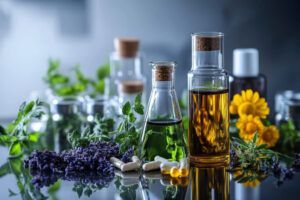
Herbs and botanicals are now one of the most popular and innovative supplement categories.
In its 2024 Herb Market Report, the American Botanical Council (ABC) reported U.S. consumers spent $680 million more on herbal supplements in 2024 compared to 2023—a 5.4 percent increase and the second consecutive year of growth. Retail sales of herbal dietary supplements reached a record $13.231 billion in 2024.1
Further, according to Grand View Research, the global herbal supplements market is expected to reach $90.24 billion by 2033, growing at a compound annual growth rate of 8.89 percent from 2025-2033. This growth is driven by rising consumer health consciousness, a growing preference for natural and plant-based remedies and increasing awareness of preventative health care.2
According to Jodi Schneider, national educator at Vibrant Health (Shelton, CT), the herbal supplement industry is undergoing a major transformation as science is evolving rapidly.
“Gone are the days of single-herb capsules paired with vague claims and minimal transparency. Today’s leading brands are embracing sleek packaging, clinically informed formulations, and advanced delivery systems—all designed to deliver measurable results,” Schneider said. “Today’s supplement users are no longer passive buyers—they are educated, curious and intentional. They read labels, research ingredients and expect proof of both safety and efficacy.”
Innovations and Trends
According to Loick Fenaux, vice president, Americas at U.K.-based Phynova, the botanical supplement space is going through a shift where the source of knowledge is found in “traditional herbs” and expanding to high-tech, clinically positioned and function-specific ingredients.
“The most interesting innovations aren’t just new plants, but how they’re extracted, formulated and positioned,” Fenaux said. “Advances in extraction technology, for instance, are allowing manufacturers to isolate and concentrate specific bioactive compounds in ways that weren’t commercially viable even a decade ago, fundamentally changing what’s possible from a formulation standpoint. At the same time, consumer expectations are evolving rapidly, with a growing segment actively seeking out products that can point to clinical evidence.”
Beth Lambert, CEO of Herbalist & Alchemist (Washington, NJ) observed a growing recognition of botanical complexity, which used to be limited to clinical herbalists and botanical scientists. There is also growing recognition that whole-plant extracts often provide broader activity than isolated compounds.
“The focus on identifying single ‘active constituents’ is a more allopathic approach, but as additional phytochemicals are being identified and their roles better understood, this limitation becomes clearer. This has led to renewed interest in full-spectrum extracts and traditional preparations, which more closely reflect how these plants have been used historically,” Lambert said. “There is also continued growth in research supporting traditional herbs, alongside expansion into new areas of application. Widely used botanicals, such as turmeric, ashwagandha and medicinal mushrooms, continue to be studied for both traditional and novel effects.”
Kathryn Kelly, marketing manager at Texas-based Lily of the Desert, said the herbs and botanicals category is no longer niche and is one of the fastest growing and most innovative supplement segments. It is now outpacing vitamins and minerals in annual growth.3
“This momentum is being driven by a shift toward preventative, daily-use wellness routines rather than reactive solutions. Consumers are moving away from a ‘fix it when it breaks’ mindset and instead incorporating botanicals into everyday habits like morning smoothies and supplement regimens. Ingredients like aloe vera, long known for digestive support, are evolving from occasional remedies into foundational wellness staples,” Kelly said.
Hank Ramsey, co-founder and general manager of Florida-based Elevate Organic, said there is a clear shift toward clinically studied ingredients and formulas backed by human data, not just traditional use.
“Consumers and retailers are asking more questions about efficacy, sourcing and transparency. There’s also growing interest in regenerative agriculture and how ingredients are grown, not just what they are. Adaptogens continue to be a major focus, but the expectation is that they deliver real, noticeable results, not just label claims,” Ramsey said.
Retailer Rosanne Reinartz, co-owner and general manager of Wayne & Mary’s Nutrition Centers in Sioux Falls, SD, said adaptogens are still highly requested in her stores. Customers are looking for ongoing support for adrenal health and cortisol balance as they deal with continued stress.
“Red ginseng, rhodiola, maca and eleuthero remain popular among customers and medical practitioners in our area,” Reinartz said. “We’ve seen some interesting new products from Natural Factors and Enzymedica addressing cortisol and sleep, including ingredients like Maizinol and Relissa. It’s been great to see continued clinical research on herbs and botanicals, which reinforces the efficacy of centuries-old remedies.”
“I’ve noticed a lot more formulas with clinical research. It used to be more formulas built around one clinically researched ingredient, now it seems more formulas are getting some research behind the whole formula,” added Retailer Travis Lemon, co-owner and herbalist at Tulsi at the Market in Huntington, WV.
For Consumers
Schneider said customers are focused on not only alleviating acute conditions, but healthy individuals are now focused on longevity—not just living longer but living better. They are seeking supplements that support both physical vitality and cognitive health well into their later years.
Transparency has also become non-negotiable. Consumers want clearly labeled ingredients with exact dosages, clinically relevant and effective amounts, and clean formulations without unnecessary fillers.
According to Reinartz, for customers familiar with herbs and botanicals, quality is the top priority. They want pure products they can trust to meet their needs. For those who are unfamiliar with specific herbs, but with a health goal in mind, efficacy is the primary concern.
“Some herbal products that have been popular lately at our stores is Anxiocalm by Terry Naturally—a great support for managing stress, anxiety and sleep, and safe for kids 4-plus. Another is mullein for lung support. Customers rave about how mullein supports the respiratory system,” Reinartz said.
Lemon said he tends to suggest standardized herbs much of the time and looks for third-party tested and researched ingredients at functional potencies.
“We have seen a steady demand for stress and adrenal health herbal formulas, as well as immune supporting formulas and inflammatory support supplements. The brain health category seems to be gaining interest as well,” Lemon said.
Challenges for the Market
According to Lambert, significant challenges, such as supply chain volatility, tariffs, transportation costs and fluctuations in raw material availability, have put strain on both imported and domestic botanicals.
“Many companies have had to increase inventory levels in advance of policy changes, which ties up capital and delays other operational investments,” Lambert said. “Even domestically grown herbs are affected, as growers face higher costs for labor, equipment and fuel. Certain botanicals can only be cultivated in specific climates, which further limits sourcing flexibility and increases vulnerability to price fluctuations.”
Adulteration and quality inconsistency are also ongoing concerns, particularly in a globalized supply chain.
“Materials that lack clear chain-of-custody documentation present a higher risk of substitution, contamination or economic adulteration,” Lambert explained. “Addressing this requires rigorous identity testing, validated analytical methods, and strong relationships with growers and suppliers. Sustainability is also a growing consideration, including responsible harvesting practices and long-term resource management.”
Fenaux agreed with Lambert, adding other issues include variability in quality and lack of standardization, “uneven” clinical evidence and rapid commoditization.
“In addition, supply chain volatility tied to agricultural dependence introduces risks around availability and traceability, while many botanicals struggle to deliver clear, ‘felt’ benefits, making it harder to drive consumer adherence,” Fenaux said. “Finally, there is often a disconnect between scientific research and finished products, where dosing, formulation or usage fail to align with clinical evidence, ultimately reducing real-world effectiveness.”
Fenaux added adulteration remains a persistent issue whether through species substitution or dilution with fillers. Traceability remains difficult as raw materials often need to pass through multiple intermediaries before reaching a finished goods manufacturer. Wild harvesting can also add ecology and sustainability dimensions.
“On the consumer side, many botanicals work through cumulative, systemic mechanisms rather than producing immediate, perceptible effects, which leads to high dropout rates before any real benefit is realized and makes building long-term loyalty difficult even when the underlying science is sound,” Fenaux explained. “For brands that are doing things right, this is perhaps the most frustrating aspect of the market: responsible operators investing in quality sourcing, rigorous formulation, and third-party verification are routinely competing against lower-quality alternatives that face none of the same standards.”
Brian Upton, co-founder and chief revenue officer at Elevate Organic, said one of the biggest challenges is sourcing high-quality, clinically studied ingredients at scale while maintaining organic and regenerative standards.
“Not every ingredient is available at that level yet, which can limit formulation options. There’s also inconsistency across the market in terms of quality and validation, which can make it harder for consumers and retailers to know what works. On the sustainability side, regenerative sourcing requires long-term commitment and alignment across the supply chain,” Upton said.
According to Kelly, one of the biggest challenges is navigating the balance between “trendy” ingredients and time-tested botanicals with real staying power.
“The category is seeing an influx of new, fast-moving products driven by social media and consumer curiosity, but not all are supported by meaningful research or long-term efficacy. This is where clinically supported, well-established botanicals like aloe vera stand apart,” Kelly explained. “Rather than chasing trends, there is a growing emphasis on ingredients with a history of use, supported by research and manufactured with integrity. As the category becomes ‘shinier’ and more crowded, the real opportunity lies in brands that prioritize transparency, quality and science.”
Manufacturing and Formulating
According to Schneider, a brand must look for ingredients from reputable suppliers. Brands should look for correct plant species, proper plant parts, traceable sourcing, comprehensive testing from potency verification to contaminant screening, and making sure effective supplements remain stable over time.
“The future of herbal supplements is smarter, cleaner, and more effective. For retailers, success in this evolving landscape depends on choosing brands that prioritize science, transparency and consumer education,” Schneider said.
Lily of the Desert specializes in aloe-based products. Kelly explained the company starts with the integrity of the plant itself. For aloe vera, that entails careful cultivation, proper harvesting and processing methods to preserve its natural occurring beneficial compounds.
“We prioritize minimal processing, consistent standardization, and clean formulations that reflect how consumers use botanicals today. Format also matters; it should be easy to incorporate into a daily routine. Ultimately our goal is to deliver products that stay true to the plant, while supporting real, everyday wellness, after all, our motto is ‘Retaining the Quality that Nature Created,’” Kelly said.
Ramsey said Elevate Organic focuses on ingredients that are clinically studied and proven to deliver results. Organic and non-GMO (genetically modified organism) standards are non-negotiable, and the company prioritizes regenerative sourcing whenever possible.
“We also look at how ingredients work together, using combinations that support absorption and overall effectiveness. Clean formulations, quality sourcing, and real science guide every product we develop,” Ramsey said.
Phynova focuses on developing botanical extracts with consistent standardization of key active compounds to ensure efficacy for every batch.
“We value a strong mechanistic understanding (how the ingredient works), good bioavailability, allowing us to build robust human clinical data. This means working closely with growers and suppliers from the ground up, ensuring traceability and quality control long before an ingredient reaches a formulator’s hands,” Fenaux said. “We look for clear differentiation and commercial relevance. In a market crowded with undifferentiated commodity ingredients, that means identifying botanicals where the science is genuinely compelling and the consumer need is real and growing.”
Lambert said effective formulation is grounded in “experience, traditional knowledge and scientific validation.” It is not sufficient to combine ingredients based solely on individual studies—the interaction between herbs is crucial.
Synergistic formulations can enhance efficacy and improve tolerability while poorly designed combinations may offer limited benefit. Historical use provides valuable guidance in identifying combinations that have demonstrated consistent results over time. Modern research increasingly supports traditional frameworks.
“Quality control is equally critical. This includes correct botanical identification, evaluation of sensory characteristics, and sourcing from appropriate growing environments and trusted suppliers. Extraction methods that preserve the full phytochemical profile of the plant, including mineral content where relevant, are what we follow at Herbalist & Alchemist. This approach ensures that the product reflects the complexity of the original plant material,” Lambert explained.
Retail Sales and Education
According to Kelly, manufacturers play a key role in simplifying education for both retailers and consumers. Botanicals like aloe vera can be incredibly versatile, but that versatility needs to be clearly communicated whether for digestive support, nutrient absorption or daily wellness.
“Providing strong, benefit-driven messaging, easy-to-understand usage occasions, and approachable formats helps retailers tell that story on shelf and online. When manufacturers connect traditional ingredients like aloe to modern routines, it creates a more compelling and accessible entry point for today’s consumer,” Kelly said.
Lambert added manufacturers support retailers by serving as educational partners rather than solely product suppliers. Providing detailed information about ingredient selection, formulation strategy and proper use enables retailers to guide customers more effectively. This includes accessible educational resources, technical support and ongoing training opportunities.
Since 2012, Herbalist & Alchemist’s president, David Winston, RH(AHG), has offered a free monthly educational session on specific health topics for wholesale customers, retailers and practitioners. He begins with an overview of the issues and discusses herb combinations—elaborating on what each herb does, how they work together, and then answers questions submitted by attendees, Lambert explained.
“In addition, consistent product quality and transparent communication build trust at the retail level. Retailers rely on manufacturers to deliver products that meet defined standards for identity, potency and purity. Clear labeling, well-documented sourcing practices, and a commitment to quality assurance allow retailers to make informed recommendations with confidence,” Lambert said.
“Retailers are looking for products that are differentiated and easy to understand. Clear positioning, strong education around ingredients, and proof of efficacy help drive sell-through,” Upton said. “It’s also important to provide a consistent story around sourcing, quality and results so retailers can confidently recommend products. When products deliver noticeable results, that drives repeat purchases and long-term success at retail.” Both Reinartz and Lemon elaborated on how they educate their customers about herbal and botanical products.
“We often start with the customer’s primary goal to drive the conversation. Then, we look for products that will support their body towards that goal. To do this, providing resources to our staff is imperative,” Reinartz explained. “Ongoing training, up-to-date reference materials, and more empower our staff to share pertinent information with customers. For example, many herbs can aid sleep, but understanding the differences in their characteristics and actions can significantly improve the customer’s experience of those herbs.”
“We try to talk with them on the sales floor and offer them as many brochures as we can to help them choose the right product or products for their needs. I also write a biweekly wellness column in our local paper that hopefully helps our customers understand what herbs and supplements may be helpful for them,” Lemon explained. “It is very helpful when supplement brands offer staff training for independent retailers like us. In-person trainings, webinars, online training modules. It all helps keep our staff stay educated and our customers and staff all appreciate that.”VR
References
1 www.herbalgram.org/news/press-releases/2025/us-sales-herbal-supplements-2024-increase.
2 www.grandviewresearch.com/industry-analysis/herbal-supplements-market.
3 www.newhope.com/market-data-and-analysis/analyst-s-take-the-evolving-consumer-preference-in-botanical-supplements.
For More Information:
Elevate Organic, www.elevateorganic.com
Herbalist & Alchemist, www.herbalist-alchemist.com
Lily of the Desert, www.lilyofthedesert.com
Phynova, www.phynova.com
Vibrant Health, www.vibranthealth.com
![[Extra! Extra!] Industry Educator Discusses Latest Herbal and Botanical Innovations](https://vitaminretailer.com/wp-content/uploads/2026/05/Herbs-Botanicals-300x294-1779896009.jpg)