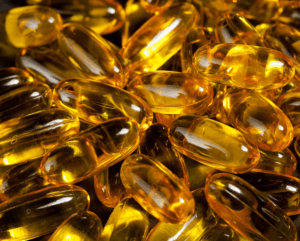




Omega-3 fatty acid supplements may help ease anxiety symptoms in people diagnosed with a range of physical and mental health problems, according to authors of a meta-analysis published in JAMA Network Open.
The authors sought to determine changes in severity of anxiety symptoms after omega-3 supplementation. The study analyzed findings from 19 different trials.
The researchers analyzed 1,203 middle-aged adults taking omega-3 EFA supplementation and 1,037 middle-aged adults taking placebo, and found an association between clinical anxiety symptoms among participants with omega-3 EFA treatment compared with placebo. Subgroup analysis showed that the association of treatment with reduced anxiety symptoms was significantly greater in subgroups with specific clinical diagnoses than in subgroups without clinical conditions. The anxiolytic effect of omega-3 EFAs was significantly better than that of controls only in subgroups with a higher dosage (at least 2,000 mg/d) and not in subgroups with a lower dosage (less than 2,000 mg/d).
The authors concluded, “This systematic review and meta-analysis of clinical trials conducted on participants with clinical anxiety symptoms provides the first meta-analytic evidence, to our knowledge, that omega-3 PUFA treatment may be associated with anxiety reduction, which might not only be due to a potential placebo effect, but also from some associations of treatment with reduced anxiety symptoms. The beneficial anxiolytic effects of omega-3 PUFAs might be stronger in participants with specific clinical diagnoses than in those without specific clinical conditions. Larger and well-designed clinical trials should be performed with high-dose omega-3 PUFAs, provided as monotherapy and as adjunctive treatment to standard therapy.”
Reference:
Su, et al. “Association of Use of Omega-3 Polyunsaturated Fatty Acids with Changes in Severity of Anxiety Symptoms: A systematic Review and Meta-analysis” JAMA Netw Open. 2018;1(5):e182327.

![[Extra! Extra!] Gnosis Discusses What Retailers Should Know About Stress Relief Products](https://vitaminretailer.com/wp-content/uploads/2026/03/Stress-Anxiety-300x285-1774638246.jpg)