


Two of the major mood issues with which many people struggle are anxiety and depression. I have already done an in-depth column on stress called “Anxiety: Friend or Foe? Sometimes Both!” (http://vitaminretailer.com/anxiety-friend-foe-sometimes/). I’d like to switch gears in this article and cover depression, dysphoria and unhappiness.
While we all like to believe that we (our consciousnesses) are in the driver’s seat, that is not always the case. The chemical soup in which our brain floats exerts an inordinate amount of influence on our sadness, joy, optimism and pessimism. It affects our urge to gamble. To eat candy. To spend money. To ask someone out on a date.
Our brain is a flesh and blood organ that uses sensory data to make sense out of the world and to formulate our reactions. Some compare it to a computer, but it is far more sophisticated. However, I can share with you that I spilled coffee on my computer. It damaged some circuits and didn’t work right. When I used the keyboard, it didn’t record all the characters I typed. I thought it might get better as it dried out, but it did not and I had to take it in to a professional to fix it, to restore its inner workings to an optimal state of function. I am sensing an analogy in this somewhere.
We all experience darker moods of sadness, hopelessness, grief and psychic pain. After all, suffering is part of the human condition. The problem arises when that is all we experience!
When people struggle with depression, their sensory input is colored by the brain dysfunction that depresses mood. You’ve heard of the expression regarding a cockeyed optimist that she sees the world through “rose-colored glasses”? This is the exact opposite. The world is seen through upsetting and disturbing lenses.
There are many psychological interventions for depression, including cognitive behavioral therapy, which can be very useful. If you or someone you love is struggling, I hope you will avail yourself of these services. Exercise has been proven to reduce depressive symptoms, so a course of physical activity can be crucial.
From a physiological standpoint, three of the biggest physical issues we see in the brains of people with depression are high levels of inflammation, disrupted neurotransmitter function and decreased levels of neurogenesis (the creation of new brain cells).
There are also dietary supplements that can make a tremendous difference in the brain factors that influence depression.
Curcumin
Curcumin is a concentrated extract of the spice turmeric, and one of the most clinically investigated natural medicines in the world. There has been excellent research on the use of curcumin for major depressive disorder (MDD). In fact, one enhanced absorption curcumin called BCM-95 Curcumin, which is a blend of curcumin and turmeric essential oil, has four published clinical trials on MDD. All the results showed significant improvement in depression within six to eight weeks. In one study, this curcumin was compared to fluoxetine, the generic of the prescription antidepressant Prozac, and was found to work as well as the drug but without the side effects.
Researchers believe the reason curcumin is so effective is because it addresses three brain factors involved with MDD. Curcumin significantly reduces brain inflammation, which allows neurotransmitters to rebalance, reduces oxidative stress and potently stimulates neurogenesis. There has not yet been another natural medicine found that increases neurogenesis as effectively as curcumin.
Saffron
Often touted as the most expensive spice in the world, it takes more than 1,000 crocus flowers to make a single ounce of saffron. Saffron extracts are highly useful in influencing neurotransmitter levels and balance. It has been clinically studied in depression and has been found to provide benefits in a relatively short period of time—two to four weeks.
Another interesting aspect of saffron extract is that it can reduce stress eating. Eating sweets and other snacks stimulates dopamine response in the brain. This is pleasurable. When mood is low, people crave ways to self-medicate to feel better, and that might include cookies, chips and ice cream. Many people struggling with depression also struggle with weight gain.
In a published human study using saffron extract, between meal snacking was reduced by 50 percent or more compared to placebo, and the saffron group lost a pound or two during the course of the study. So, while I would not regard this as a weight-loss product, it can certainly help in individuals who are struggling with healthy weight maintenance related to mood or stress eating.
Red Panax Ginseng
Depression and fatigue usually go hand in sluggish hand. People with MDD struggle with tackling tasks because they lack both mental and physical energy. Many people with depression also suffer from anhedonia, an inability to experience pleasure. That also greatly reduces motivation. Why struggle to get up and get dressed to meet your friend for coffee if you don’t derive pleasure from the experience? It is a self-defeating cycle that feeds on itself.
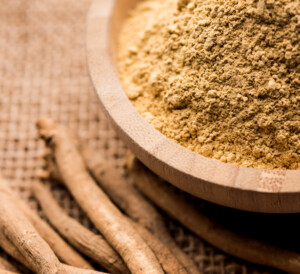
Red ginseng contains compounds called noble ginsenosides that can increase mental energy and mood. Long known for its ability to improve strength and stamina, the impact of this herb on mental function is equally impressive.
In a very interesting study of women who still had residual symptoms of depression even after medical treatment, ginseng was shown to significantly improve mood, energy, as well as reduce stress over eight weeks of use. Improvements were noted early in the clinical trial and continued to improve weekly over the course of the study.
More Impressive Natural Medicines
I would be remiss if I didn’t mention the impact of the healthy omega-3 fatty acids DHA (docosahexaenoic acid) and EPA (eicosapentaenoic acid) in improving brain health and alleviating depressive symptoms. St. John’s wort has a long history of use to improve depression. Rhodiola and ashwagandha—important adaptogens—are also well studied. Iodine can be useful if suboptimal thyroid function is suspected. In fact, some experts believe that suboptimal thyroid function is an underlying issue in nearly 50 percent of people with depression, so it is important to consider this essential mineral.
Depression is a serious and sometimes life-threatening illness. It is not a character flaw or weakness—it is a physical disability in the brain that must be addressed. There is so much that the natural world can offer to help people struggling with depression. VR
References:
Shafiee M, Arekhi S, Omranzadeh A, Sahebkar A. Saffron in the treatment of depression, anxiety and other mental disorders: Current evidence and potential mechanisms of action. J Affect Disord. 2018;227:330–337.
Akhondzadeh S, Tahmacebi-Pour N, Noorbala AA, et al. Crocus sativus L. in the treatment of mild to moderate depression: a double-blind, randomized and placebo-controlled trial. Phytother Res. 2005 Feb;19(2):148-51.
Mazidi M, Shemshian M, Mousavi SH, et al. A double-blind, randomized and placebo-controlled trial of Saffron (Crocus sativus L.) in the treatment of anxiety and depression. J Complement Integr Med. 2016 Jun 1;13(2):195-9. doi: 10.1515/jcim-2015-0043.
Georgiadou G, Tarantilis PA, Pitsikas N. Effects of the active constituents of Crocus sativus L., crocins, in an animal model of obsessive-compulsive disorder. Neurosci Lett. 2012 Oct 18;528(1):27-30. doi: 10.1016/j.neulet.2012.08.081. Epub 2012 Sep 7.
Hosseinzadeh H, Sadeghnia HR. Protective effect of safranal on pentylenetetrazol-induced seizures in the rat: involvement of GABAergic and opioids systems. Phytomedicine. 2007 Apr;14(4):256-62. Epub 2006 May 16.
Gout B, Bourges C, Paineau-Dubreuil S. Satiereal, a Crocus sativus L extract, reduces snacking and increases satiety in a randomized placebo-controlled study of mildly overweight, healthy women. Nutr Res. 2010;30:305–313.
Talaei A, Hassanpour Moghadam M, Sajadi Tabassi SA, Mohajeri SA. Crocin, the main active saffron constituent, as an adjunctive treatment in major depressive disorder: a randomized, double-blind, placebo-controlled, pilot clinical trial. J Affect Disord. 2015 Mar 15;174:51-6. doi: 10.1016/j.jad.2014.11.035. Epub 2014 Nov 26.
Lopresti AL, Drummond PD. Efficacy of curcumin, and a saffron/curcumin combination for the treatment of major depression: A randomised, double-blind, placebo-controlled study. Journal of Affective Disorders. 2017;207:188-196.
Tabeshpour J, Sobhani F, Sadjadi SA, et al. A double-blind, randomized, placebo-controlled trial of saffron stigma (Crocus sativus L.) in mothers suffering from mild-to-moderate postpartum depression. Phytomedicine. 2017 Dec 1;36:145-152.
Sanmukhani J, Satodia V, Trivedi J, Patel T, Tiwari D, Panchal B, Goel A, Tripathi CB. Efficacy and Safety of Curcumin in Major Depressive Disorder: A Randomized Controlled Trial. Phytother Res. 2013 Jul 6. doi: 10.1002/ptr.5025.
Lopresti AL, Maes M, Maker GL, Hood SD, Drummond PD. Curcumin for the treatment of major depression: a randomised, double-blind, placebo-controlled study. J Affect Disord. 2014;167:368-75.
Xu Y, Ku B, Tie L, Yao H, Jiang W, Ma X, Li X. Curcumin reverses the effects of chronic stress on behavior, the HPA axis, BDNF expression and phosphorylation of CREB. Brain Res. 2006 Nov 29;1122(1):56-64.
Huang Z, Zhong XM, Li ZY, Feng CR, Pan AJ, Mao QQ. Curcumin reverses corticosterone-induced depressive-like behavior and decrease in brain BDNF levels in rats. Neurosci Lett. 2011;493(3):145-8.
Sanmukhani J, Anovadiya A, Tripathi CB. Evaluation of Antidepressant Like Activity of Curcumin and its Combination with Fluoxetine and Imipramine: an Acute and Chronic Study. Acta Pol Pharm. 2011 Sep-Oct;68(5):769-75.
Lopresti AL, Maes M, Maker GL, Hood S, Drummond PD. Curcumin and major depression: A randomized, double-blind, placebo-controlled trial investigating the potential of peripheral biomarkers to predict treatment response and antidepressant mechanisms of change. European Neuropsychopharmacology. Dec. 5, 2014
Ong WY, Farooqui T, Koh HL, Farooqui AA, Ling EA. Protective effects of ginseng on neurological disorders. Front Aging Neurosci. 2015 Jul 16;7:129.
Jin Y, Cui R, Zhao L, Fan J, Li B. Mechanisms of Panax ginseng action as an antidepressant. Cell Prolif. 2019 Nov;52(6):e12696. Review.
Jeong HG, Ko YH, Oh SY, Han C, Kim T, Joe SH. Effect of Korean Red Ginseng as an adjuvant treatment for women with residual symptoms of major depression. Asia Pac Psychiatry. 2015 Sep;7(3):330-6.
Zhang L, Chen X, Cheng Y, et al. Safety and antifatigue effect of Korean Red Ginseng: a randomized, double-blind, and placebo-controlled clinical trial. J Ginseng Res. 2019;43(4):676–683.
Kim HS, Kim MK, Lee M, Kwon BS, Suh DH, Song YS. Effect of Red Ginseng on Genotoxicity and Health-Related Quality of Life after Adjuvant Chemotherapy in Patients with Epithelial Ovarian Cancer: A Randomized, Double Blind, Placebo-Controlled Trial. Nutrients. 2017;9(7):772.
Cheryl Myers is an integrative health nurse, author, and an expert on natural medicine. She is a nationally recognized speaker who has been interviewed by the New York Times, Wall Street Journal and Prevention magazine. Her many articles have been published in such diverse journals as Aesthetic Surgery Journal and Nutrition in Complementary Care, and her research on botanicals has been presented at the American College of Obstetrics and Gynecology and the North American Menopause Society. Myers is the head of scientific affairs and education for EuroPharma, Inc.