


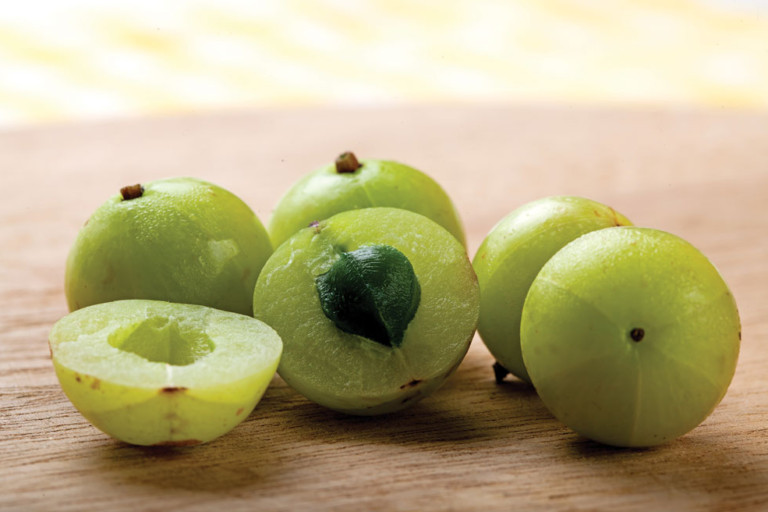
Distributed throughout tropical and subtropical India, wild or planted, Indian gooseberry (Phyllanthus emblica L. syn. Emblica officinalis), is a deciduous tree, commonly known as amla in India. It yields a fleshy fruit more than 1.5 cm in diameter, light greenish-yellow, and quite smooth.1 It has played an important medicinal role for centuries in ayurveda, with the fruits of the plant being recommended as a rasayana, which promotes health and longevity by increasing defense against diseases, arresting the aging process and revitalizing the body in debilitated conditions.2 Indian gooseberry is used for the treatment of liver disorders, indigestion, stomach ulcers, diabetes, inflammatory diseases, inhibition of tumor growth and in geriatric complaints. It also functions as a potent antioxidant agent.3 Indian gooseberry is also highly nutritious and could be an important dietary source of vitamin C, amino acids, and minerals. The plant also contains phenolic compounds, tannins, phyllembelic acid, phyllembelin, rutin, curcuminoids and emblicol.4
Modern clinical research on Indian gooseberry validates much of its traditional use, particularly for cardiometabolic issues—a combination of metabolic dysfunctions which include impaired glucose tolerance, dyslipidemia and hypertension. This article will focus on studies that have been conducted on a specific Indian gooseberry extract called Capros (by Natreon) which is standardized to 60 percent low molecular-weight hydrolysable tannins Emblicanin-A, Emblicanin-B, Punigluconin and Pedunculagin.
Cardiometabolic Studies on Indian Gooseberry
A randomized, double-blind, placebo-controlled study5 was conducted to compare the effects of Indian gooseberry extract (Capros by Natreon) versus those of atorvastatin (a cholesterol lowering statin medication) and placebo on endothelial dysfunction and biomarkers of oxidative stress in 80 patients with type 2 diabetes. Four groups of patients received either Indian gooseberry extract 250 mg twice daily, Indian gooseberry extract 500 mg twice daily, atorvastatin 10 mg in the evening and matching placebo in the morning, or placebo twice daily for 12 weeks. The results were that treatment with both doses of Indian gooseberry extract or atorvastatin 10 mg produced significant reductions after 12 weeks of treatment in the reflection index, suggesting improvement in endothelial function compared with baseline as well as the placebo. (Note: reflection index can be used as a non-invasive measure of arterial stiffness). Similarly, both doses of Indian gooseberry extract, and atorvastatin produced a mean decrease in high sensitivity C-reactive protein (an inflammatory marker) of 44.56 percent (250 mg twice daily), 63.16 percent (500 mg twice daily), and 64.9 percent, respectively, compared with placebo. There was also a significant improvement in biomarkers of oxidative stress compared with baseline and placebo. Further, the treatments significantly improved the lipid profile levels compared with baseline and placebo (see chart on pg. 54).
In addition, treatment with 500 mg BID dose of Indian gooseberry extract and atorvastatin significantly improved glycosylated hemoglobin (HbA1c) (a marker for long-term glucose control), and significantly increased nitric oxide levels in patients with type 2 diabetes compared with placebo. All treatments were well tolerated.
A second 12-week, randomized, double blind trial, placebo-controlled study6 was conducted to evaluate the effect of Indian gooseberry extract (Capros by Natreon) 250 mg twice daily and 500 mg twice daily, and placebo on endothelial dysfunction in 59 subjects with metabolic syndrome (aged 30-68 years), having endothelial dysfunction and metabolic syndrome. Results showed that treatment with both doses of Indian gooseberry extract showed significant reduction in reflection index (p<0.001 compared to placebo), suggesting improvement in endothelial function. Likewise, treatment with Indian gooseberry extract showed significant percentage change in nitric oxide (+ 41.89 percent, + 50.7 percent), glutathione (a powerful antioxidant, + 24.31 percent, + 53.22 percent) and MDA (a marker for oxidative stress, -21.02 percent, -31.44 percent), and C-reactive protein (-39.68 percent, -53.77 percent) (p < 0.001) at 12 weeks with 250 mg and 500 mg twice daily dosage respectively. In addition, both respective doses of Indian gooseberry extract resulted in significant percentage change at 12 weeks with total cholesterol (-7.71 percent, -11.11 percent), HDL-cholesterol (+ 7.33 percent + 22.16 percent, p < 0.05), LDL-cholesterol (-11.39 percent, -21.8 percent) and triglycerides (-9.81 percent, -19.22 percent). Indian gooseberry extract 500 mg twice daily was significantly more efficacious than the 250 mg twice daily and placebo.
Stress and Cardiovascular Research on Indian Gooseberry
Acute and chronic stress is a risk factor for the development and progression of coronary artery disease. Increased arterial stiffness is an independent marker for cardiovascular disease. The cold pressor test is known to be associated with substantial activation of the autonomic nervous system, which also occurs during stress. To evaluate the effect of Indian gooseberry extract (Capros by Natreon) on cold pressor stress test-induced changes on cardiovascular parameters and aortic wave reflections in 12 healthy human subjects, a double blind, placebo-controlled, crossover study7 was conducted. Participants were randomized to receive either Indian gooseberry extract, 500 mg twice daily or placebo twice daily for 14 days. After a washout period of 10 to 14 days, subjects crossed over to the other treatment and the same test procedure was repeated so that both groups had the chance to use both treatments. The results were that, compared to baseline and placebo, Indian gooseberry extract produced a significant decrease in average percent change for measures of arterial stiffness (augmentation index, radial and aortic blood pressure). There was an increase in marker of myocardial perfusion (sub-endocardial viability ratio) with cold pressor test, but the blood pressure response to the test was reduced after two weeks of treatment with Indian gooseberry extract, contributing to a decrease in average systolic and diastolic blood pressure compared to baseline and placebo. Both treatments were well tolerated, and no serious adverse events were reported. In conclusion, Indian gooseberry extract decreased the cold pressor stress test-induced changes on aortic wave reflections, suggesting the beneficial effects of this formulation in reducing stress induced cardiovascular changes.
Similarly, this randomized, double-blind, placebo-controlled, crossover study8 was undertaken to evaluate the effect of Indian gooseberry extract (Capros by Natreon) versus placebo on mental stress induced changes in cardiovascular hemodynamic parameters and arterial wave reflection properties in healthy human subjects (arterial wave reflections were measured as Augmentation Index (AIx) and Augmented Pressure of the central (aortic) pressure waveform). Twelve participants received either two capsules of Indian gooseberry extract 250 mg or placebo daily for two weeks, as per prior randomization schedule. After a two-week washout, participants crossed over to receive the other treatment. Results were that, compared to baseline, Indian gooseberry extract produced a statistically significant decrease in Aortic augmentation pressure (p< 0.01) and in Augmentation Index AIx (p< 0.05). There was a reduction in radial and aortic systolic and diastolic pressures. These results indicate that acute mental stress caused a temporary increase in arterial stiffness and wave stiffness, and Indian gooseberry extract decreased the mental stress induced changes on aortic wave reflections in normal healthy subjects. Essentially, Indian gooseberry extract mitigated the effects of stress, thereby reducing the risk of acute cardiovascular morbidity.
Platelet Aggregation and Indian Gooseberry
Platelet aggregation, the clumping together of platelets in the blood, is part of the sequence of events leading to the formation of a thrombus (blood clot). In turn, this can lead to cardiovascular events. This randomized open label crossover study9 of 10 type 2 diabetic patients was undertaken to examine the interactions of Indian gooseberry extract (Capros by Natreon) with clopidogrel and ecosprin (pharmaceutical inhibitors of platelet aggregation, aka, blood thinners). The dosage schedules were either single dose of 500 mg Indian gooseberry extract or 75 mg clopidogrel or 75 mg ecosprin or 500 mg Indian gooseberry extract +75 mg clopidogrel or 500 mg Indian gooseberry extract +75 mg ecosprin. After single dose study and washout period, patients received either 500 mg Indian gooseberry extract extract twice daily or 75 mg clopidogrel or 75 mg Ecosprin once daily or combinations for 10 days. Platelet aggregation was measured at baseline and at the fourth hour of treatment after single and multiple dose study along with recording of bleeding and clotting time. The results were that there was a statistically significant decrease of platelet aggregation compared to baseline after single and multiple-dose administration of the three treatments and with combinations. Furthermore, the percentage of platelet aggregation inhibition was significant, when compared between single and multiple doses of Indian gooseberry extract. All treatments were well tolerated.
A similar study10 was conducted with Indian gooseberry extract (Capros by Natreon) 500 mg twice daily for 12 weeks (with no other medications) to determine the effect on cardiovascular disease (CVD) risk factors in overweight adult human subjects from the U.S. population. The study design included two baseline visits followed by 12 weeks of supplementation, and then two weeks of washout. Results were a significant decrease in calculated LDL-cholesterol and total cholesterol/HDL cholesterol when compared to baseline. Also, C-reactive protein levels were significantly decreased, and two different measures of platelet aggregation showed significant inhibition of platelet aggregation. Overall, the study suggests that oral Indian gooseberry extract supplementation may provide beneficial effects in overweight/obese adults by lowering multiple global CVD risk factors.
Indian Gooseberry Research on Smokers
In a randomized, double-blind, placebo-controlled pilot study,11 Indian gooseberry extract (Capros by Natreon) was evaluated for cardio-respiratory and antioxidant status in human volunteers with a long smoking history. Group I consisted of 20 subjects receiving 250 mg of Indian gooseberry extract twice a day for 60 days and Group II consisted of 10 subjects receiving 250 mg of placebo twice a day for 60 days. The study evaluated subjective parameters, including mouth hygiene, cough with expectoration, shortness of breath on exertion, loss of appetite, feelings of impending doom, palpitation, sleep deprivation, irritability, heart burn and tiredness at 0 (baseline), 30 and 60 days. Objective parameters were also evaluated, including hemogram, lipid profile, cardiovascular risk factors, genotoxicity, antioxidant status and pulmonary function at days 0 (baseline) and 60 of the study. Results were that the Indian gooseberry extract treated group showed a significant improvement compared to the placebo group in all the subjective and objective parameters tested with no reports of adverse events. This pilot study provides some further evidence of the protective effect of Phyllanthus emblica in cardio-respiratory and antioxidant status of volunteers with chronic smoking history.
The Antioxidant Power of Indian Gooseberry
Most people are aware of the value of antioxidants for human health. But how do you measure the antioxidant power of any given nutraceutical? One common way to do so is via oxygen radical absorbance capacity (ORAC) tests which quantify antioxidants in a material. ORAC tests measure antioxidant scavenging activity against oxygen radicals that are known to be involved in the pathogenesis of aging and common diseases.
The original ORAC analysis only tested the antioxidant capacity of on the peroxyl radical. The newer Oxygen Radical Absorbance Capacity for Food and Nutrition, ORAC 5.0, consists of five types of assays that evaluate the antioxidant capacity of a material against five primary reactive oxygen species (ROSs, commonly called “oxygen radicals”) found in humans: peroxyl radical, hydroxyl radical, superoxide anion, singlet oxygen and peroxynitrite. While the peroxyl radical is the most abundant free radical in the human body, other types also contribute toward oxidative damage. The hydroxyl radical is highly reactive and cannot be eliminated by our endogenous enzymes (such as SOD and glutathione). It can damage virtually all types of macromolecules: carbohydrates, nucleic acids, lipids and amino acids. In the skin, hydroxyl radicals are created by UV exposure. Peroxynitrite radicals are reactive nitrogen species that are particularly harmful to proteins. They have been implicated in the development of certain cancers, hepatitis, and chronic inflammation. In the skin, peroxynitrite contributes to the breakdown of vitamin proteins, such as collagen. In the skin, singlet oxygen is generated by UV exposure. In vivo, it is linked to the oxidation of LDL cholesterol and cardiovascular disease; singlet oxygen is highly unstable and durable. Superoxide anions are precursors of all other reactive oxygen species. It is highly toxic and contributes to lipid and DNA damage. Antioxidants that scavenge superoxide anions also help prevent the formation of radicals such as hydrogen peroxide and hydroxyl. Superoxide anions have been linked to hypertension and cardiovascular damage.12
So, what does this all have to do with Indian gooseberry? Just this: Indian gooseberry extract (specifically Capros by Natreon) happens to have one of the highest ORAC 5.0 scores of any nutraceutical. In fact, the score is 47,110 µmole TE/gram (aka, ORAC units).13 To give some perspective on the significance of this number, consider that an average serving of fruit and vegetables combined is about 1,570 ORAC units. Therefore, one gram (1,000 mg) of Indian gooseberry extract provides the antioxidant equivalent of about 30 servings of fruit and vegetables (47,100 ÷ 1,570 = 30). That’s fairly impressive antioxidant power!
Conclusion
Indian gooseberry has played an important medicinal role for centuries in ayurveda. Modern clinical research on Indian gooseberry extract (Capros by Natreon) validates traditional use, particularly for cardiometabolic issues. Human clinical trials have demonstrated effectiveness in improving endothelial function, decreasing inflammation, decreasing oxidative stress, decreasing total cholesterol and LDL cholesterol (the “bad” cholesterol), increasing HDL cholesterol (the “good” cholesterol), decreasing triglycerides, improving long-term glucose control, increasing nitric oxide (which promotes circulation), decreasing measures of stress, decreasing platelet aggregation, and providing a powerful source of antioxidant. Collectively, these clinical effects have significant implications in the treatment of cardiometabolic issues. VR
References:
1 Jantan I, Haque MA, Ilangkovan M, Arshad L. An Insight Into the Modulatory Effects and Mechanisms of Action of Phyllanthus Species and Their Bioactive Metabolites on the Immune System. Front Pharmacol. 2019 Aug 7;10:878.
2 Satyavati GV, Raina MK, Sharma M. Medicinal Plants of India. Indian Council of Medical Research. New Delhi; 1976.
3 Ghosal S, Bhattacharya A, Bhattacharya SK. Antioxidant effects of Emblica officinalis and their biological consequences. In: Majumder DK, Goel JN, Singh VK (eds). Recent progress in medicinal plants, vol 8. Phytochemistry and Pharmacology. Houston: Tech Pub; 2002.
4 Krishnaveni M, Mirunalini S. Therapeutic potential of Phyllanthus emblica (amla): the ayurvedic wonder. J Basic Clin Physiol Pharmacol. 2010;21(1):93-105.
5 Usharani P, Fatima N, Muralidhar N. Effects of Phyllanthus emblica extract on endothelial dysfunction and biomarkers of oxidative stress in patients with type 2 diabetes mellitus: a randomized, double-blind, controlled study. Diabetes Metab Syndr Obes. 2013 Jul 26;6:275-84.
6 Usharani P, Merugu PL, Nutalapati C. Evaluation of the effects of a standardized aqueous extract of Phyllanthus emblica fruits on endothelial dysfunction, oxidative stress, systemic inflammation and lipid profile in subjects with metabolic syndrome: a randomised, double blind, placebo controlled clinical study. BMC Complement Altern Med. 2019 May 6;19(1):97.
7 Fatima N, Pingali U, Pilli R. Evaluation of Emblica officinalis extract on cold pressor induced cardiovascular changes in healthy human subjects. Pharmacognosy Res. 2014 Jan;6(1):29-35
8 Usharani P, SudhaRani E, KranKishore K, Raveendranath P. Evaluation of the effect of a standardized aqueous extract of the fruits of Embilica officianalis on mental stress induced cardiovascular changes in healthy human subjects. IJPSR, 2017; Vol. 8(10): 4138-4146.
9 Fatima N, Pingali U, Muralidhar N. Study of pharmacodynamic interaction of Phyllanthus emblica extract with clopidogrel and ecosprin in patients with type II diabetes mellitus. Phytomedicine. 2014 Apr 15;21(5):579-85.
10 Khanna S, Das A, Spieldenner J, Rink C, Roy S. Supplementation of a standardized extract from Phyllanthus emblica improves cardiovascular risk factors and platelet aggregation in overweight/class-1 obese adults. J Med Food. 2015 Apr;18(4):415-20.
11 Biswas TK, Chakrabarti S, Pandit S, Jana U, Dey SK. Pilot study evaluating the use of Emblica officinalis standardized fruit extract in cardio-respiratory improvement and antioxidant status of volunteers with smoking history. J Herb Med. 2014;4:188-194.
12 The Complete ORAC 5.0 Analysis: ORAC 5.0 and Why All 5 Radicals Matter. Brunswick Laboratories. Retrieved May 27, 2014 from http://www.brunswicklabs.com/Portals/153979/docs/ORAC50-and-Why-5-Radicals-Matter.pdf.
13 Brunswick Labs report. Certificate of Analysis for Capros (Phyllanthus emblica) Powder, CA1101123. Batch no. B-11794a. 11/21/2001.
Gene Bruno, MS, MHS, the dean of academics for Huntington University of Health Sciences, is a nutritionist, herbalist, writer and educator. For more than 30 years he has educated and trained natural product retailers and health care professionals, has researched and formulated natural products for dozens of dietary supplement companies, and has written articles on nutrition, herbal medicine, nutraceuticals and integrative health issues for trade, consumer magazines and peer-reviewed publications. He can be reached at [email protected].
![[Extra! Extra!] Gnosis Discusses What Retailers Should Know About Stress Relief Products](https://vitaminretailer.com/wp-content/uploads/2026/03/Stress-Anxiety-300x285-1774638246.jpg)