


I have to admit that in my college years and early in my health care career, I knew nothing about the rich medicinal history of Cannabis sativa, or the use of the plant for food, building materials, rope, clothing and fuel.
It wasn’t until I was working with cancer and AIDS patients in the early 1990s that I started to gain visibility to the medicinal uses of cannabis (as marijuana) for pain, anxiety and nausea. However, even as mainstream medicine grudgingly started to accept that there might be a use for this plant in medical care, how it worked and why it was beneficial was not investigated. There was little research on this amazing botanical.
As it has become more socially acceptable to discuss the medicinal applications of Cannabis sativa, whether as marijuana or hemp stalk oil containing CBD and other cannabinoids, research has blossomed. We now better understand the endocannabinoid system and its role as an integral regulator of a vast array of physiological processes. Augmenting the body’s own endocannabinoids with plant-based cannabinoids, called phytocannabinoids, can yield some incredible health benefits, for anxiety, stress, immune function, cancer recovery, digestion and pain. The richest source of cannabinoids is the cannabis plant.
Is It Hemp or Marijuana?
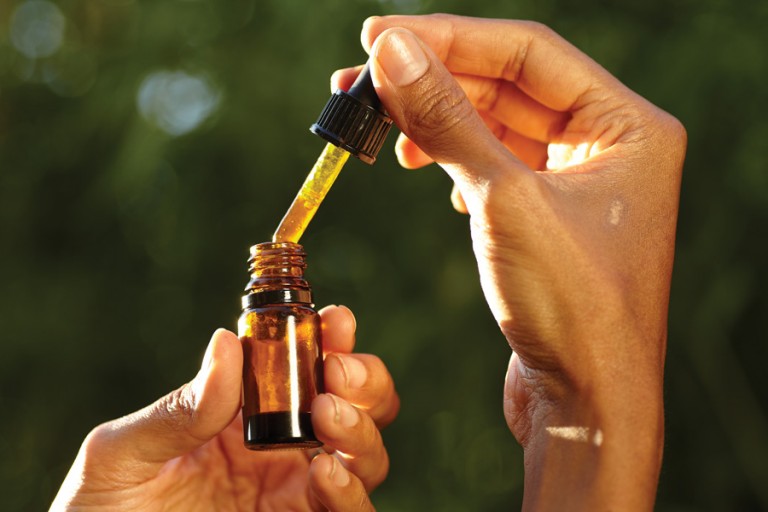
There remains a lot of confusion regarding the differences between hemp and marijuana. Even though they are both derived from Cannaibis sativa, they are not the same thing. Both marijuana and full spectrum hemp stalk oil contain compounds called cannabinoids, each of which yields specific systemic activity. In marijuana, the dominant cannabinoid is delta-9-tetrahydrocannabinoil (THC) which is responsible for its mind-altering effects, also known as getting high. In full-spectrum hemp oil from the stalk of industrial hemp, the most plentiful cannabinoid is cannabidiol, or CBD.
By law, hemp supplements can only have 0.3 percent (or less) of THC. Anything over that, and the product is considered a marijuana product, and all the marijuana laws apply. That is one reason it is important to make sure if you decide to use a hemp product, it is evaluated each batch and documented to have less than 0.3 percent THC.
Mature Adults Are Increasingly in Pain
One of the most interesting aspects of using hemp is for pain relief. As we age, we are generally more prone to painful conditions. The Centers for Disease Control and Prevention (CDC) estimates that up to 40 percent of American adults deal with chronic pain. Numerous surveys have shown that pain most commonly affects adults that are between the ages of 50 and 65. This age group has persistent pain that can range up to 80 percent of adults. Not only do mature adults have more pain in general, their pain also has a much higher frequency of affecting more than one area of the body.
Dangerous Pain Relievers
Conventional pain management options include prescription pain relievers, like opioids. The horrific opioid crisis has taught us that safer pain management options are vitally important. The CDC reported that opioids were implicated in 47,600 of the drug overdose deaths in 2017—which equals 67.8 percent of the overdose deaths that occurred in 2017.
Over-the-counter drugs used for pain, called non-steroidal anti-inflammatory drugs, or NSAIDs, are associated with more than 17,000 deaths a year in the United States alone. Drugs, such as ibuprofen and naproxen sodium, sold under various brand names, can cause stomach and intestinal damage, gastric bleeding, ulcers, perforated ulcers resulting in peritonitis, decreased kidney function, hypertension and a doubling and tripling of the risk for heart attack and stroke. Adverse effects skyrocket with age. These are not acceptable risks.
Hemp as a Natural Pain Option
Natural options to treat pain are highly desirable because of their safety and efficacy. Hemp has been utilized for a very long time as a pain reliever, including a history of use that spans thousands of years. There is even evidence that a Chinese physician in the year 190 AD gave a hemp mixture to patients prior to abdominal surgery. A medical text from the ninth century, Old English Herbarium, stated hemp’s use for topically for wounds and internally for pain relief.
Fortunately, we now have the ability to investigate these pain-relieving effects in a more controlled setting. Clinical trials are emerging that demonstrate hemp and its constituents (like CBD) are viable options for treating pain. CBD has been clinically studied in humans for its effects on neuropathic pain, cancer-related pain, and pain associated with multiple sclerosis. Other scientific research has alluded to hemp’s spectrum of beneficial cannabinoid’s ability to relieve pain from osteoarthritis and other forms of joint pain. CBD also has anti-inflammatory and antioxidant properties, which may contribute to its pain relieving abilities.
Aging also can have an impact on mood. According to the World Health Organization, about 15 percent of adults over the age of 60 have a mental health disorder. Women over the age of 50 can be more susceptible to mood disorders, specifically depression, as they transition into menopause due to the fluctuation in hormones. Unfortunately, there is a relationship between pain and mood disorders.
Medical professionals speculate that some of the underlying mechanisms for pain are similar to those that create mood disorder, and include abnormally low levels of systemic endocannabinoids and/or dysfunction in the ability of the cannabinoid to attach to the cannabinoid receptor.
The pain-relieving properties of hemp oil are a function of more than 120 cannabinoids, including CBD. There is preliminary evidence that the full spectrum of cannabinoids is far more powerful than CBD isolated and given on its own. Additionally, the FDA has clearly stated that it is illegal to sell single-ingredient CBD. They consider CBD claims as drug claims.
However, a full and natural spectrum of cannabinoids, as they occur in hemp stalk oil, is a different matter. It may be that CBD occurs in the hemp oil, but it is within its natural and legal matrix as a component of an agricultural, not drug, product.
Currently, there are more than 500 clinical trials at various phases that involve hemp cannabinoids listed on the clinicaltrials.gov website. Of those studies, 50 involve pain related to cancer, low back pain, and both acute and chronic pain. Hopefully in the near future, we will have an even better understanding of the use of the hemp cannabinoid family for both pain and mood disorders. In the meantime, using a quality full-spectrum hemp oil may be an excellent choice with a much better safety record for adults in search of lasting pain relief. VR
References:
Bidaut-Russell M, Gabriel SE. Adverse gastrointestinal effects of NSAIDs: consequences and costs. Best Pract Res Clin Gastroenterol. 2001 Oct;15(5):739-53. Review.
Crippa JA, et al. Neural basis of anxiolytic effects of cannabidiol (CBD) in generalized social anxiety disorder: A preliminary report. J. Psychopharmacol. 2011;25:121–130.
Dahlhamer J, et al. Prevalence of Chronic Pain and High-Impact Chronic Pain Among Adults — United States, 2016. MMWR Morb Mortal Wkly Rep. 2018;67:1001–1006. DOI: http://dx.doi.org/10.15585/mmwr.mm6736a2
Dalal PK, Agarwal M. Postmenopausal syndrome. Indian J Psychiatry. 2015 Jul;57(Suppl 2):S222-S232.
Drug Overdose Deaths. Centers for Disease Control and Prevention. Available at: www.cdc.gov/drugoverdose/data/statedeaths.html. Last updated December 19th, 2018. Accessed January 15, 2019.
Fusar-Poli P, et al. Distinct effects of {delta}9-tetrahydrocannabinol and cannabidiol on neural activation during emotional processing. Arch Gen Psychiatry. 2009 Jan;66(10:95-105.
Gibson SJ, Lussier D. Prevalence and Relevance of Pain in Older Person. Pain Medicine. 2012 April 1;13(2):S23-S26.
Linge R, Jimenez-Sanchez L, Campa L, et al. Cannabidiol induces rapid-acting antidepressant-like effects and enhances cortical 5-HT/glutamate neurotransmission: role of 5-HT1A receptors. Neuropharmacology. 2016 Apr;103:16-26.
McPartland JM, Duncan M, Di Marzo V, Pertwee RG. Are cannabidiol and THCV negative modulators of the endocannabinoid system? A systematic review. Br J Pharmacol. 2015 Feb;172(3):737-753.
Mental health of older adults. World Health Organization. www.who.int/news-room/fact-sheets/detail/mental-health-of-older-adults. Updated December 12th, 2017. Accessed January 15th, 2019.
Miller RJ, Miller RE. Is cannabis an effective treatment for joint pain? Clin Exp Rheumatol. 2017 Sep-Oct;35 Suppl 107(5):59-97.
Nugent SM, et al. The Effects of Cannabis Among Adults with Chronic Pain and an Overview of General Harms: A Systematic Review. Ann Intern Med. 2017 Sep 5;167(5):319-331.
Pain S. A potted history. Nature. 24 September 2015;525:S10-S11.
Patel KV, Guralnik JM, Dansie EJ, Turk DC. Prevalence and Impact of Pain among Older Adults in the United States: Findings from the 2011 National Health and Aging Trends Study. Pain. 2014 Dec 1;154(12):10.1016/j.pain.2013.07.029.
Sachs J. Safety and Toxicology of Cannabinoids. Neurotherapeutics. October 2015;12(4):735-746.
Trelle S, Reichenbach S, Wandel S, et al. Cardiovascular safety of non-steroidal anti-inflammatory drugs: network meta-analysis. BMJ. 2011;342:c7086. Published 2011 Jan 11. doi:10.1136/bmj.c7086
Zhornitsky S, Potvin S. Cannabidiol in Humans – The Quest for Therapeutic Targets. Pharmaceuticals (Basel). 2012 May;5(5):529-552.
Cheryl Myers is an integrative health nurse, author, and an expert on natural medicine. She is a nationally recognized speaker who has been interviewed by the New York Times, Wall Street Journal and Prevention magazine. Her many articles have been published in such diverse journals as Aesthetic Surgery Journal and Nutrition in Complementary Care, and her research on botanicals has been presented at the American College of Obstetrics and Gynecology and the North American Menopause Society. Myers is the head of Scientific Affairs and Education for EuroPharma, Inc.

![[Extra! Extra!] The Science of Terry Naturally Curcumin Products](https://vitaminretailer.com/wp-content/uploads/2025/06/PainInflammation-300x281-1750958156.jpg)