

Inflammation may be behind your pain—physical and psychological. Curcumin may be the answer to both.
That the lurking behind that pain you’re experiencing is uncontrolled inflammation is no surprise. That that same inflammation is behind your psychological pain comes as a big surprise. Emerging evidence is pointing to inflammation as an important factor in depression.
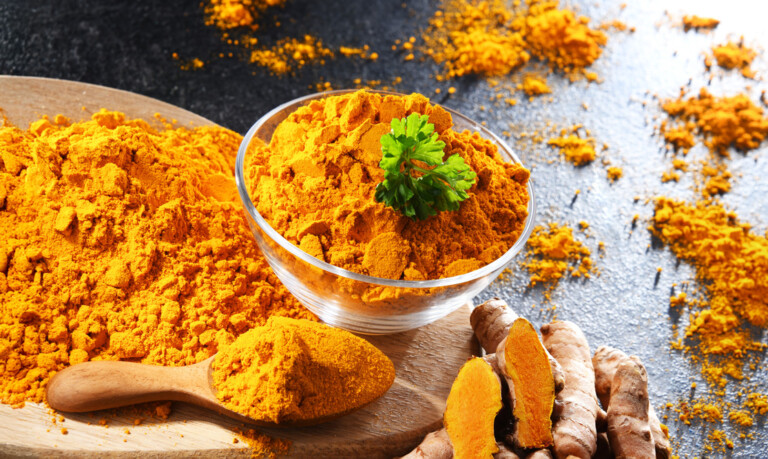
Curcumin may be your answer to both problems. The active ingredient in the herb turmeric, curcumin is powerfully anti-inflammatory. Recent research has identified it as a powerful painkiller and antidepressant.
Curcumin Extinguishes Inflammation
How effective is curcumin as an anti-inflammatory? A new systematic review and meta-analysis of 32 controlled studies set out to answer that question. It found that curcumin’s effect on mediators of inflammation was consistent and broad. Curcumin reduced several important anti-inflammatory markers, including C-reactive protein, interleukin-6 and tumor necrosis factor α. It also increased the anti-inflammatory interleukin-10. These results show the powerful anti-inflammatory effects of curcumin.1
Curcumin for Arthritis
One of the most common causes of pain that affects quality of life is arthritis. A massive new meta-analysis of 30 controlled studies examined all the evidence for the power of curcumin over several types of arthritis.
When it came to rheumatoid arthritis, there was significant improvement in disease activity for curcumin versus controls.
Curcumin was significantly better for improving inflammation. Rheumatoid factors are proteins that attack healthy tissue that are associated with autoimmune diseases like rheumatoid arthritis. Compared to controls, curcumin significantly reduced rheumatoid factor.
The results were just as encouraging for osteoarthritis. Curcumin was significantly superior to controls for reducing pain and stiffness and for improving physical function. Again, curcumin was significantly better for reducing inflammation. It also significantly reduced free radical damage. Curcumin is better than placebo and as good as non-steroidal anti-inflammatory drugs (NSAIDs) but safer. When added to drugs, curcumin adds to their effect without adding to their side effects.2
Curcumin for Osteoarthritis
An impressive body of research is emerging that supports curcumin as one of the most important treatments for osteoarthritis. Curcumin has proven itself superior to a long list of popular osteoarthritis drugs.
It’s better than ibuprofen. While 80.4 percent of people are satisfied with ibuprofen, the number soars to 91 percent with curcumin.3 And curcumin is not only better, it’s safer.4
When you swap NSAIDs, the result is the same. An unblinded study compared curcumin to diclofenac. Improvement in the severity of pain and improvement on the Knee Injury and Osteoarthritis Outcome Score were the same in both groups. But because significantly fewer people suffered adverse events on curcumin, it was superior. NSAIDs cause GI (gastrointestinal) bleeding and ulcers, and 28 percent of the diclofenac group required H2 blocker antacid medication. No one in the curcumin group needed it. In fact, curcumin demonstrated a significant anti-ulcer effect.5
A recent double-blind study compared curcumin to acetaminophen for knee osteoarthritis. Improvement on the WOMAC Index was equivalent, but inflammatory markers improved more on curcumin. There was significant improvement in total score, pain, stiffness and function with curcumin. Eighteen percent of people on curcumin had more than 50 percent improvement in pain and function/stiffness and 3 percent got more than 70 percent improvement: no one in the drug group accomplished that level of improvement. And the turmeric was safer than the drug.6
Another recent curcumin study gave ibuprofen one more chance. It lost again. The treatments were equally effective for clinical efficacy, but curcumin was significantly better for joint mobility, inflammation and safety. In fact, the researchers commented that curcumin had “a remarkable safety profile.”7
What happens when you put all the research together? A review of 15 osteoarthritis studies showed that curcumin improves pain, physical function and quality of life while reducing the need for painkillers.8 And a systematic review and meta-analysis of all controlled studies of curcumin for osteoarthritis found that 1 g a day significantly reduces pain, significantly improves the WOMAC osteoarthritis index and that it is as effective as pain meds.9
The latest evidence comes from two systematic reviews and meta-analyses. The first included 10 studies that compared curcumin to placebo for osteoarthritis of the knee. Curcumin was significantly better for pain relief and functional improvement.10
The second included 15 controlled studies. Curcumin was superior to placebo for improving pain, function and stiffness on the WOMAC osteoarthritis index. Compared to NSAIDs, curcumin was superior because it was as effective but significantly safer. Adding curcumin to NSAIDs was also more effective than NSAIDs alone.11
Curcumin for Back Pain
Musculoskeletal pain is way too common, especially for people who exercise. It can strike the back, neck, shoulders, knees and many other places. Combining curcumin with boswellia may be the answer for you. Sixty-six percent of people taking the herbal combination had a positive response after only six hours. Seventy-three percent of people taking acetaminophen did. But by days 3 and 7, the treatments were equally effective. The herbs were 8.57 times better at improving the “unpleasantness and emotional aspects” of acute pain.12
As that study suggests, the herbal combination is as fast as it is effective. Want more proof? A double-blind study found that six hours after a single dose, there was a 97.85 percent improvement in pain intensity compared to 2.46 percent in the placebo group. Ninety-nine percent of people given the herbs had noticeable pain relief at 68.5 minutes, and 96 percent had meaningful pain relief at 191.6 minutes. That noticeable pain relief came 4.98 times faster than with placebo, and the meaningful pain relief was 1.87 times faster.13
The newest study adds lower back pain to curcumin’s resume. Lower back pain is so common that around 80 percent of adults will suffer from it at some point. For around 23 percent, the pain is chronic. In the first ever study of the curcumin-boswellia combination for chronic lower back pain, the herbs were compared to placebo in 90 people with moderate lower back pain. The herbal combo was significantly better than placebo for pain and disability, according to the Descriptor Differential Scale and Oswestry Disability Index, and there was significant reduction in inflammatory markers. Quality of life scores improved greatly in the herb group. The herbal combination was well tolerated and safe.14
Curcumin for Depression
Managing inflammation may be important for managing depression. Several studies show that inflammation is a causative factor in depression. A new study has shown that diets that contribute to inflammation are associated with depression.15 So, for the same reason curcumin conquers physical pain, it can conquer mental pain.
Recent research has shown curcumin to have advantages over antidepressant drugs. One study gave people with depression 1 g of curcumin, 20 mg of Prozac or both for six weeks. There was no significant difference between the treatments on the Hamilton Depression Scale: the Prozac group improved by 12.6 points, the curcumin group by 14 points and the combination group by 14.8 points. Patients’ treatment ratings were not significantly different, but the herb did better than the drug: 70.5 percent of those on Prozac said their treatment was good or excellent compared to 75 percent on curcumin and 83.3 percent on the combination.16
A meta-analysis of curcumin and depression included six studies that added curcumin or placebo to therapy. There was a significant improvement in depression on curcumin compared to placebo. It worked better on middle-aged people than on older people, and it worked better with longer durations.17
Recent research also shows that curcumin improves the efficacy of antidepressants. When 108 adults added 1 g of curcumin or placebo to their meds for six weeks, the curcumin significantly improved the antidepressant effect.18
Advantage Over Pharmaceuticals
Pharmaceutical antidepressants and curcumin are both used to treat both depression and physical pain. But a recently published systematic review of 26 studies on antidepressants and 22 different pain conditions found that none provided high certainty evidence that they were effective. A few conditions found low to moderate certainty of efficacy, but even for these conditions the actual clinical significance is unclear. For most conditions, antidepressants were not effective, or the evidence was inconclusive.19
And that gives the advantage to curcumin. Curcumin is safe and effective for both pain and depression.VR
References:
1 Nutr Rev 2021 Aug 9;79(9):1043-1066.
2 Front Immunol. 2022; 13: 891822.
3 J Altern Comp Med 2009;15:891-7.
4 Clin Intrerv Aging 2014;9:451-8.
5 Trials 2019;20(214.
6 Trials 2021 Jan 30;22(1):105.
7 Altern Ther Health Med. 2022 Apr 22;AT7425.
8 Drug Des Devel Ther 2016;10:3029–3042.
9 J Food Med 2016;19(8):717-29.
10 Phytother Res. 2021 Nov;35(11):5921-5935.
11 Biosci Rep 2021;41(6): BSR20210817.
12 Medicine (Baltimore) 2020;99(28):e20373.
13 Medicine (Q). 2022 Sep 2;101(35):e30144.
14 Explore. Jan-Feb 2025;21(1):103099.
15 J Affect Disord Feb 2023:323:257063.
16 Phytother Res 2014;28:579-85.
17 Phytother Res 2016;30:175-183.
18 J Clin Psychopharmacol 2015;35:406-10.
19 BMJ 2023;380:e072415.
Linda Woolven is a master herbalist, acupuncturist and solution-focused counsellor with a virtual practice in Toronto, ON, Canada. Woolven and Ted Snider are the authors of several books on natural health. You can see their books at www.thenaturalpathnewsletter.com. They are also the authors of the natural health newsletter The Natural Path. The Natural Path is a natural health newsletter specifically designed to help health food stores increase their sales by educating their customers. The Natural Path contains no advertising and never mentions a brand name. Retailers can provide The Natural Path Newsletter to their customers. For more information, contact Snider at [email protected] or (416) 782-8211.