

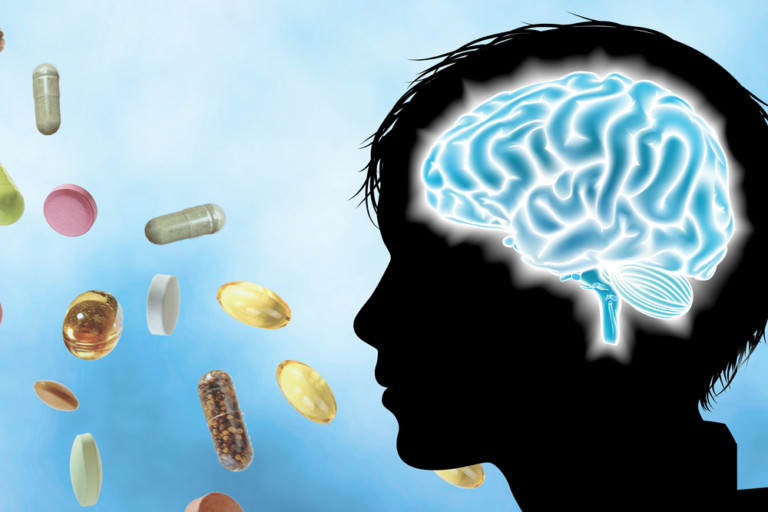
Opportunities for retailers to help customers feel in mental control have never been better.
Here’s a data nugget from Nutrition Business Journal’s 2021 Condition Specific Report: In 2020, vitamin D experienced a significant sales spike not for immunity but for mental health, notching a 162.1 percent sales gain in this sector.
In the brain/cognitive/mental support category, fish oils dominated with an estimated $286 million in sales in 2020 but dropped to an estimated $268 million for 2021. The biggest gain is seen in “other specialty” which is estimated to grow 39 percent from last year to this year. The overall category growth jumps rather modestly from $1.038 billion to $1.08 billion from 2020 to 2021.
“The cognitive support market has remained strong throughout the pandemic, with stress and anxiety related products taking the lead, and acuity products following closely behind,” observed Kelly Rosa, RD, LDN, chief scientific officer, New York-based Health Thru Nutrition. Claire Barnes, technical advisor and nutritionist, ADM Protexin, Florida, elaborated that previous to the pandemic, the cognitive support supplement market was growing at a rate of 7 percent annually, while this growth rate has declined very slightly, it is still expected that this market will see a strong 5 percent growth rate, according to Euromonitor research, “Cognitive Performance Remains Top of Mind for Consumers.”
Barnes also noted that the report asserts that in contrast to other health condition markets, such as bone or heart health, which appears to predominantly concern consumers over the age of 60, consumers under the age of 45 seem to be more concerned with memory issues having a moderate or severe impact on their current health than consumers older than 45.
She commented, “While cognitive decline is typically associated with individuals over 60 years, early on-set neurodegeneration is also a growing problem, and many lifestyle factors such as stress and poor sleep can affect cognitive function at any age. In addition, those with a family history of cognitive decline or neurodegeneration may be particularly concerned to take preventive steps to safeguard their future cognitive health.”
In agreement is Kurt Cameron, CMO, Diem Direct (Omne Diem), Michigan, who noted that cognitive support is a multi-generational market driven by different motivators by demographic. Younger consumers are attracted to “nootropic” supplements to optimize brain function for learning and performance enhancement, such as for gaming. Middle-aged consumers want supplements to seek support to maintain mental function and protect against cognitive decline, while older people look to restore acuity and to maintain mental function.
Sébastien Bornet, vice president, global sales and marketing at Horphag Research, New Jersey, said that interest and growth in this sector is rooted in consumers being more proactive about their mental/brain health and knowing that the earlier they start taking care of their cognitive health, the better cognitive performance they will have throughout their life. He remarked, “cognitive health is a concern that cuts across groups, worrying consumers of all ages. The anxiety of the pandemic and the long-awaited conversation on mental health is further fueling consumer interest and market growth of cognitive support supplements.”
Cognitive function overarchingly encompasses several abilities—memory, learning, reasoning, concentration, problem solving and decision making, as well as resistance to stress, pointed out Barnes.
Attention: Concentrate and Focus
But within this invigorated market lies a spirited but confusing set of benefits—“attention,” “focus” and “concentration.” Are there differences here and how do retailers confidently and correctly steer consumers in the right direction to provide the solutions they seek? Rosa asserted that while these words are often used interchangeably, there are subtle differences between them. She explained, “One needs to have attention to concentrate and subsequently focus on a single aspect. For example, imagine you’re assembling a cabinet, you need to pay attention so you don’t mix up your boards, you need to concentrate on raising the shelves into the correct place, and focus on where to put that nail. For many, it all starts with attention—you need to give yourself the time and space, shutting out unnecessary distractions, so you can ultimately concentrate and focus.”
Sustaining concentration is an issue for other customers, while focus can cause others to stumble. Rosa explained that here, individuals can pay attention and concentrate on the task at hand, but they cannot focus on the one problem and instead bog down by all the surrounding components. “For success, one must have all three, attention, concentration and focus,” she said.
Bornet agreed, stating, “focus, attention and concentration work together to define optimal brain function.”
More formally, according to Cameron, researchers, clinicians and regulators look at cognitive assessments by functional domains under which focus, attention and concentration are included. “Focus refers to the ability to hone one’s attention to a narrow center of interest, while concentration refers to the ability to hold that focus while faced with distractive stimuli. Both focus and concentration are elements within the all-inclusive term attention, which is non-specific and relates to the general ability to control and direct our awareness,” he elaborated.
In Barnes’ viewpoint, concentration refers to the ability to give attention or thought to a single object or activity, such as focusing on a lecture without being distracted by your smartphone. Concentration is essential for accumulating knowledge and is fundamentally an act of exclusion, meaning, not getting distracted by something else. According to PEDIAA, the word “focus” can be used interchangeably with ‘concentration’ when it is used to refer to close and narrow attention. Focus can also refer to the center of interest or activity. “Attention on the other hand, is all-inclusive, nothing is excluded. Unlike concentration, which is needed to build up knowledge, attention flows from one moment to the next.”
The Stress Factor
The engine driving many to seek brain/cognitive support supplements is stress. According to Rosa, stress impedes duration of attention, as well as the ability to concentrate and focus; studies have shown how stress impacts the brain’s ability to process information, ultimately reducing cognitive performance.
During a high stress scenario that releases a shot of cortisol, the amygdala will take precedence over other brain regions responsible for such activities as memory, she explained. Prolonged stress may make this division of labor in the brain more permanent, reducing the ability in the parts of the brain used for higher functioning/logic skills while increasing those used for primitive survival. “Outside stress increases the cortisol levels in the body, leading to inflammation, which causes cell damage such as that associated with Alzheimer’s,” she noted.
A study published earlier this year in Current Psychiatry Reports, asserts that epidemics and pandemics lead to widespread fear. The study occurring during COVID-19 found that this type of fear can cause a specific stress-related disorder that encompasses not only the fear of infection, but also fear relating to socio-economic impacts, compulsive checking and reassurance-seeking and pandemic-related stress symptoms.
Another study published in 2021 in Canadian Journal of School Psychology of more than 2,000 12-18-year-old students from Canada assessed their self-reported pandemic-related stress and their behavior and cognitive functioning during their first few weeks returning to school. Student stress levels were above critical thresholds for 25 percent of the sample, and females and older adolescents (15-18 years) generally reported higher stress indicators as compared to males and younger (12-14 years) adolescents. Analysis of the results showed that stress indicators were significantly associated with self-reported behavioral concerns, such as conduct problems and cognitive issues/inattention.
This is an important consideration in the cognitive support sector. “When we are stressed, our ability to control our attention is reduced as our attention resources are allocated to the potential threat, allowing intrusive thoughts and avoidant thinking that appear in response to stressful situations,” Barnes explained. While moderate stress may enhance cognitive performance in many individuals, high (overwhelming) stress is associated with a decline in performance. And chronic stress may negatively impact neuroplasticity and learning, according to some studies.
“Stress management has always factored into cognitive health and has become magnified during the global pandemic over the past 18 months,” said Bornet. “People have experienced many disruptions to their daily lives since the pandemic began, including increased distractions at home and work that have heightened stress levels.”
According to Cameron, science is just now beginning to adequately explain what occurs in the body when we experience stress-related “brain fog.” Authors of a 2019 meta-analysis in the International Journal of Psychophysiology, reviewed 48 human studies and determined that acute stress can result in transient vascular endothelial dysfunction. “This means that stress impacts the blood vessels, reducing vasodilation and therefore blood flow to and within the brain,” he explained. “Studies show this can last for up to four hours after a single incident of acute stress. Consider, then, the potential impact of prolonged stress and/or repeated acute stress events.
Supplements to Think About
“People across the board are asking for help with cognitive support, “observed retailer Tim O’Brien, owner of The Healthy Place, based in Wisconsin. He explained, “Many have no idea that higher levels of stress contribute to adrenal fatigue and adrenal fatigue leads to brain fog. Strengthening the adrenals plays a profound role with both reducing stress and increasing mental clarity.”
He related that when he asks customers if stress has been a problem this past year, almost 100 percent of the time the customer erupts in laughter. That aside, over the years O’Brien said he has found that most customers in this category want to increase their memory ability, as well as mental clarity and extend focus. His personal favorite supplements to recommend are Adrenal Boost by Lively Vitamin Company, an adaptogenic formula, as well as Chill Pill (also by the Lively Vitamin Company), which he said balances cortisol and “helps minimize obsessive/anxious thoughts, as well as uplift the mood.”
Health Thru Nutrition offers KSM-66, a heavily clinically studied ashwagandha for complete cognitive support, according to Rosa, who noted that KSM-66 ashwagandha root has been clinically shown to reduce stress and anxiety, enhance memory and cognition and increase energy and strength, all major factors in mental wellness and cognitive performance.
Omne Diem Brain Support supplies citicoline, a dinucleotide that acts as a rate-limiting factor in brain energy metabolism, according to Cameron, who noted that citicoline is one of the few supplemental compounds that crosses the blood-brain barrier to work directly within the brain itself. He explained that citicoline is a precursor to acetylcholine, phosphatidylcholine (PC) and other phospholipids including phosphatidylserine (PS), and is a more efficient strategy for enhancing brain phospholipids than direct supplementation of PC or PS. These phospholipids are vital to maintaining the integrity of endothelial tissues within the brain’s vascular network. Citicoline also converts in part to cytidine, which in turn converts to uridine, thereby boosting ATP, norepinephrine and dopamine, all of which contribute to mental energy and cognitive function.
“Among the many products available for cognitive support, none has been more widely studied than citicoline,” he commented. “It has been the subject of more than 900 clinical studies, while the specific form of citicoline featured in our Brain Support supplement (sodium citicoline) has been used in over 100 human clinical trials. In fact, sodium citicoline is considered an API (active pharmaceutical ingredient) in over 60 countries around the world, where it is often used as a first-line intervention for acute events.”
He added that citicoline supplementation is experiential, meaning your customers will know that its working because they can feel it and notice the impact within just a few days of use.
Pycnogenol French maritime pine bark extract from Horphag Research is, Bornet described, a powerful antioxidant shown to boost blood circulation and act as a natural anti-inflammatory. Specifically, mechanism of action studies have shown that Pycnogenol helps endothelial cells produce more nitric oxide (NO), which has multiple beneficial effects on brain function. Initially, NO increases blood flow, which improves oxygenation and the transport of nutrients to brain cells. NO regulates neuronal functions and thus contributes to processing signals inside the brain. In addition, NO helps modulate key neurotransmitters such as dopamine, serotonin and norepinephrine.
Bornet pointed to several studies showing a wide range of benefit in the cognitive/brain support space. For example, a 2018 study found Pycnogenol to improve symptoms of mild cognitive impairment (MCI), a potential risk factor for dementia and other degenerative cognitive conditions. This research showed that supplementing with Pycnogenol resulted in an 18 percent improvement of Mini-Mental State Examination (MMSE) scores.
A 2015 study found Pycnogenol was able to improve attention span, decision making, memory and overall cognitive function for Baby Boomers (older than 55 at the time). Another study published in 2015 found Pycnogenol to help improve overall cognitive function in the workplace, including mental performance, sustained attention and mood in people aged between 35 and 55. For younger adults, Pycnogenol was found to improve memory and test scores in college students in a 2011 study.
Bio-Kult Mind from ADM/Protexin is a probiotic multi-action formulation targeting cognitive function via the gut-brain axis, according to Barnes. It contains the live bacteria strain Bacillus subtilis PXN 21, bioavailable flavonoids from grape and wild blueberry extracts, and zinc.
She explained, “Emerging evidence suggests that the gut microbiome may play an important role in influencing brain health and cognitive function, communicating with the host through the microbiota-gut-brain axis. Recent studies have demonstrated an association between changes in the gut microbiota and cognitive function. Neuroinflammation is a theory linked to the onset of cognitive decline and more recently linked to the gut. Recent research suggests that Bacillus subtilis PXN 21 may help prevent and even reverse toxic protein mis-folding and accumulation in the brain, offering potential protective effects against neurodegeneration.”
Oxidative stress caused by free radicals is associated with cognitive decline and antioxidants are believed to help protect cells from oxidative stress and have been studied for the prevention and treatment of cognitive decline. Grapes and blueberries are high in polyphenols well known for exhibiting strong antioxidant and anti-inflammatory properties and are associated with improved cognitive function. Barnes related that consuming both grape and blueberry extracts together in the Bio-Kult Mind formulation has been shown to provide a fivefold increase in absorption compared to single extract administration. A published double-blind randomized crossover study using the blueberry and grape formulation in Bio-Kult Mind was performed on 30 healthy students and assessed their cognitive function for one hour using various tasks 90 minutes after taking the product or placebo. Their findings suggested that consumption of the blueberry and grape formulation may help to acutely improve working memory and attention during a sustained cognitive effort.
The brain contains the highest concentration of zinc in the body, levels of which are tightly regulated. Zinc is an essential micronutrient that can function as an anti-inflammatory and antioxidative agent and appears to be involved in numerous critical neurological functions.
As we head into a new year, and its attendant resolutions, retailers can promote the cognitive support category as a way to ensure a healthier, more successful year and a more effective way to combat emotional stress. Think about it—a healthier brain is a happier brain! VR
For More Information:
ADM/Protexin, www.bio-kult.com
Diem Direct (Omne Diem), www.diemnutrition.com
Health Thru Nutrition, www.htnnaturally.com
Horphag Research, www.pycnogenol.com
Lively Vitamin Company, www.livelyvitaminco.com

![[Extra! Extra!] Gnosis Discusses What Retailers Should Know About Stress Relief Products](https://vitaminretailer.com/wp-content/uploads/2026/03/Stress-Anxiety-300x285-1774638246.jpg)