


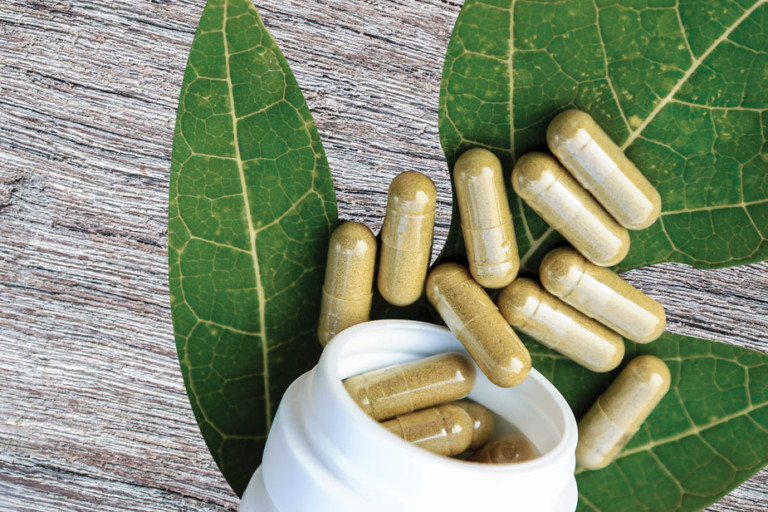
Herb and botanical supplement brands are anticipating exciting times ahead.
It’s no surprise, but as more people are turning to preventative and more natural measures when it comes to their health, the reliance on herbal and botanical supplements continues to soar. In fact, the global herbal and botanical supplements market is expected to reach $8.5 billion by the year 2025.
“Direct sales take the lead with 4 billion in sales, almost half the market with nearly 11 percent growth,” said Ted Parker, president of Connecticut-based Vibrant Health. “This is the most substantial growth this category has seen in 15 years.”
While it hasn’t necessarily been a smooth journey, experts believe a number of factors are contributing to the boom. One of the biggest being the rise of purchasing power for a newer generation.
“Millennials are more trusting of all-natural alternative solutions then their older demographics and they are eager to ‘share’ their experiences to the world through their social outlets,” said H.R. Payne, senior advisor of strategic marketing and business development for Texas-based Quantum Nutrition Labs. “With this, and the fact they are the largest buying population suggests the herb and botanical channel are coming upon exciting times.”
Whether it’s issues with sleep, weight, digestion, gut health or the plethora of other health concerns supplements can help support, more consumers are turning to herbs and botanicals for their needs.
Popular Ingredients
There are a head-spinning amount of ingredients and combinations that are currently available on the market in the herbs and botanicals supplement category. With that, the ingredients that shine from year to year tend to fluctuate in correlation with other wellness trends. Below are a handful of current favorites:
Flaxseed
High in omega-3 fatty acids, flaxseed supplements may reduce inflammation, improve heart health, fight aging, aid with both constipation and diarrhea as well as believed to help reduce cancer cell growth. Flaxseed can be taken in a number of forms including crushed, as oil in liquid or capsule form and in powder form.
CBD
Surprise, surprise! The CBD craze is literally everywhere including in the herbs and botanical supplements space. To keep up with demands, more manufacturers are offering supplements with CBD added. “Raw, whole food hemp is trending as an ingredient in functional formulas, where the synergistic relationship between hemp and other ingredients is leveraged to create highly beneficial products,” said Judy K. Gray, founder and CEO of Illinois-based North American Herb and Spice (NAHS).
CBD is touted for having anti-inflammatory and antioxidant properties that can support a variety of needs including the immune system, help with insomnia and stress relief. “CBD is what all the talk is about,” said Payne of Quantum Nutrition Labs. “It is being reported that CBD is up 60 percent in sales from the previous year at $238 million and is not expected to slow down anytime soon. At this current trajectory, experts predict it at $2,824 billion by 2023, and everyone wants a piece of the pie.”
Ginger
Ginger tends to be thought of as a superfood because it is packed with a variety of nutrients including zinc, magnesium and vitamin B6. The list of health benefits is quite extensive including anti-inflammatory properties, lower cholesterol, improves brain function, fights infections, aids with chronic indigestion and ginger is believed to lower blood sugars.
Turmeric
There is a lot of research available to support the health benefits of turmeric. Thanks to curcumin, the main active ingredient, turmeric contains anti-inflammatory and antioxidant properties. As a result, turmeric is said to improve brain function, boost mood, lower risks for diseases and is even believed to lower an individual’s risk of cancer.
“If you want a therapeutic benefit from one or more of the attributes of the plant, you will use the extract form,” said Paige Parker, vice president and COO of Connecticut-based Vibrant Health. “Turmeric is an excellent example of this. The extract curcuminoids will provide better anti-inflammatory benefits than the whole turmeric plant.”
Lemon
The health benefits of lemon are believed to be linked to the bioflavonoids the fruit contains. Supplements that contain lemon can help boost the immune system, treat scurvy, aid with digestion, lower blood pressure and fight inflammation. Lemon is also believed to be a good way to help reduce an individual’s risk of developing kidney stones.
Lion’s Mane Mushroom
Named for the animal part this mushroom resembles, the bioactive substances contained in lion’s mane benefit brain, gut and heart health. More specifically the mushroom is believed to help boost the immune system, fight against dementia, calm anxiety, reduce risk of heart disease and reduce inflammation among other benefits.
Challenges
Remember that point about it not being a smooth journey? Despite the success herbs and botanical supplements are having, there are various challenges that date back a few decades to the U.S. Dietary Supplements Health and Education Act of 1994 (DSHEA), which loosened regulations on supplements. At the time, this likely led to concerns about quality for customers because supplements did not have the U.S. Food and Drug Administration (FDA) stamp of approval they may have been looking for. Although there are obviously many companies out there that work to provide the absolute best quality products, an ongoing challenge the industry faces is convincing consumers.
“The main obstacle the herbal industry must overcome is the oversaturation of marketing companies entering the industry,” said Gray of NAHS. “[They] lack quality control and manufacturing standards, compared to a research-driven company like NAHS, which has a history of making efficacious products for the consumer.”
This can present itself in a number of unfortunate scenarios, Payne of Quantum Nutrition Labs pointed out: “Toxic ingredients in nutritional products are now commonplace. In addition, manufacturer’s products are using ingredients that are simply too old or that have been poorly grown, irradiated, fumigated or contaminated with pesticide/insecticide residues. Unfortunately, for the manufacturers of our industry, this has led to our supply chain’s traceability being corrupted with deceitfulness and fraudulence, making it awfully difficult for dietary supplement manufacturers to achieve and assure the quality of their finished products.”
Issues like these just lead to more skepticism among consumers who want to ensure the products they are placing in their bodies are healthy ones.
“Quality control has become a real focus for the consumer in the herb market,” said Randy Buresh, founder and owner of Oregon’s Wild Harvest. “Customers are becoming more educated and want to know the origin of the herbs. They also want to know the different testing methods that are performed. A more diverse population of people are beginning to take herbs and they are hungry for more information.” The internet now gives people a plethora of information at their fingertips, but sorting through the noise can be just as challenging, if not more so. “Most Americans did not grow up using herbs to maintain their health or if they did it was limited to a few culinary herbs,” said New Jersey-based Herbalist and Alchemist CEO Beth Lambert. “The internet has opened up a whole new world of easy access to information. Some of it is accurate and unfortunately, some of it is not, which is where educated retailers can be helpful to their customers.”
Kris Wear, owner of World of Nutrition based in Idaho, said the overload of possibilities for consumers is something she sees on the ground as a retailer. “I think the biggest challenge is the large number of sources that customers can buy these products from,” she said, adding, “everywhere from their grocery store to the internet. It is a constant battle to let customers know the quality of products that are sold at [some] places are not up to industry standards.”
In addition to quality control concerns from the consumer side of things, managing supply issues is another challenge that manufacturers are well aware of. “Known issues include development of wild areas, fewer people being trained to farm or gather herbs as wild-crafters, and climate change, which is already having significant impact on herb supplies,” said Lambert.
The road to reassuring customers comes with the need to navigate another set of challenges. These obstacles include, “increased costs to pay for testing, lack of education from the farmer or supplier on supplement regulations, and the need to actively educate consumers to better help them understand the hidden costs that go into a quality product,” said Brittini Gehring, chief botanical officer at Utah-based RidgeCrest Herbals. That said, she argues it’s still worth it.
“The herbal industry is making a huge leap toward complete transparency from farm to finished product in order to provide the customer with the cleanest, safest, most effective product possible.”
Retailer Tips
Take Full Advantage
Did you know that many manufacturers offer a lot of support to retailers? Are you taking advantage of the help? You should be. From product trainings to a variety of literature available to address customers’ needs, the manufacturers you are working with are a wonderful resource.
Lambert from Herbalist and Alchemist offered a brief synopsis of ways her company supports retailers:
“One of the most important ways we support retailers is with education. Our retail customers have access to a special free monthly herbal Salon, which is an hour-long online education session on specific health concerns taught by David Winston. Our customer service staff and our herbalists can help with many questions, but when a customer’s question is really specific or medical in nature, we have a list of good resources for them, such as PubMed or the American Herbalists Guild.”
Knowledge is Power
The age-old quote from Sir Francis Bacon, “knowledge is power,” definitely applies when it comes to selling herbs and botanicals. Retailers should be knowledgeable in all aspects down to the basics, said Paige Parker of Vibrant Health. For example, could you explain to a customer the difference between herbs and botanicals? She noted:
“Herbs are plants such as rosemary, parsley, gingko, echinacea, which can grow in your garden. Herbs can be used for their flavor as well as for their medicinal qualities. Botanicals are plants or their component parts (flowers, leaves, seeds, stems, roots, etc.) They have been used for thousands of years throughout the world to prevent illness and promote healing.”
Having the knowledge and ability to really help customers, goes back to the point of building up trust in the industry. “Retailers have to effectively market their expertise in the products they are selling and aggressively merchandise their services,” said Gray of NAHS. She added, “They should know the ingredients in the products that they are presenting to the consumer and guide the consumer with the unique benefits of the products that they are recommending. Sell what works quickly and enhances overall health.”
Travis Lemon, owner and herbalist at Tulsi based in West Virginia, also emphasized the importance of education. “Our biggest challenge is keeping our staff and our customers educated on all the new products and new data supporting our herbal supplements.” Lemon added, “We make time to talk with our staff about new products as soon as the products come in and schedule education sessions with brand educators as much as possible. We try to pass that information along to our customers by encouraging them to ask questions in the aisles, and we also provide educational talks and demos as much as we can.”
Merchandising Matters
Having the killer combo of support and knowledge is not enough. Retailers have to actively work to draw customers to products—especially those that are new to the scene and may be completely new to the products. There are so many merchandising tips and tricks retailers should absolutely make use of. Below are a few suggestions:
• “Personal touches are always a must! Have your passionate team members write about their favorite products on a custom shelf-talker,” said Nichole Carver, marketing director for RidgeCrest Herbals. “Rotate them monthly, or at the very least, quarterly. Customers trust your opinion—they know you work in the industry and your excitement for a particular product can make a huge difference.”
• “Cross-market products by their structure-function statements when possible because a growing number of consumers are shopping by health concern first,” said Buresh of Oregon’s Wild Harvest. “Displaying shelf talkers, counter and floor displays and suggesting end caps are all great ways to boost sales.”
• “Have clear and effective signage,” said Ted Parker of Vibrant Health. “I would also recommend providing samples and product demonstrations for customers to try the product themselves. Having an educated staff will assist the customer in obtaining trustworthy information from a reliable source.”
• “As a business owner, it is critical for you to determine how you measure up today, where the industry is headed and how you can remain relevant to attract new customers and close the sale,” said Payne of Quantum Nutrition Labs. “Characterizing and relating to today’s customer is essential to understanding how they define wellness and what their motivations are that you can tap into.”
Product Spotlight
Here are a few highlights of the herb and botanical supplements offered by the manufacturers contacted for this article:
Vibrant Health
A combination of nutrient rich green supplements, Vibrant Health’s signature Green Vibrance product was designed to support the four foundations of health: nutrition, circulation, digestion and immunity. The product includes 25 billion probiotics, prebiotics, digestive enzymes, oat grass, goji berries, astragalus, holy basil, flaxseed powder, along with other ingredients. For an added bonus, there is a version of this product also available with a plus CBD oil powder to enhance the adaptogens and anti-inflammatory attributes of the formulas.
Herbalist and Alchemist
Herbalist and Alchemist recently introduced the product David Winston’s Metabolic Support to help with healthy blood sugar levels for those who fall within the normal range. The product includes a proprietary blend of bitter melon, cinnamon, fenugreek, olive, artichoke, holy basil and lycium. The company also has a variety of convenient kits, which include an assortment of related products, for those who would like a variety of support.
North American Herb and Spice
NAHS products are designed around the power of wild oregano. The company has recently expanded into children’s products to support immune health with a great taste. An example is the Kid-e-kare Gelcaps which include cumin oil, sage oil and ginger oil in addition to wild oregano oil. This product provides a variety of support including digestive aid, can promote weight loss and combat allergy symptoms. Oregon’s Wild Harvest
Oregon’s Wild Harvest recently introduced Lion’s Mane Plus. This vitamin-packed formula supports brain circulation and energy, as well as antioxidant activity and nerve health. Free from dairy, wheat, gluten, peanuts, soy and corn allergens, Lion’s Mane Plus includes a blend of vitamins and herbs and botanicals including holy basil, lemon and guava.
Quantum Nutrition Labs
Qultured Quantum Fermented Turmeric is an organic powder formula made to support liver, heart health and digestive health. The blend contains pre-digested, fermented organic turmeric rhizome with naturally occurring curcuminoids, and absolutely no added excipients such as magnesium stearate. In addition to organic fermented turmeric, the product also includes organic fermented ginger root and organic gum acacia.
RidgeCrest Herbals
One of RidgeCrest Herbals’ newest products includes DreamOn Zen, a natural sleep aid designed to both help you fall asleep and leave you feeling refreshed and energized in the morning. The product’s ingredients include black cohosh root, German chamomile flower, lemon balm, lupulin, passionflower herb and valerian root. RidgeCrest Herbals also plans to introduce new products for cognitive and digestive health this year. VR
For More Information:
Herbalist and Alchemist, www.herbalist-alchemist.com
North American Herb and Spice, www.northamericanherbandspice.com
Oregon’s Wild Harvest, www.oregonswildharvest.com
Quantum Nutrition Lab, qnlabs.com
Vibrant Health, www.vibranthealth.com