


In a world of packaged foods anchoring nutritionally bereft diets, whole and raw foods supplements may be more important than ever for consumers to enjoy enhanced vitality and well-being.
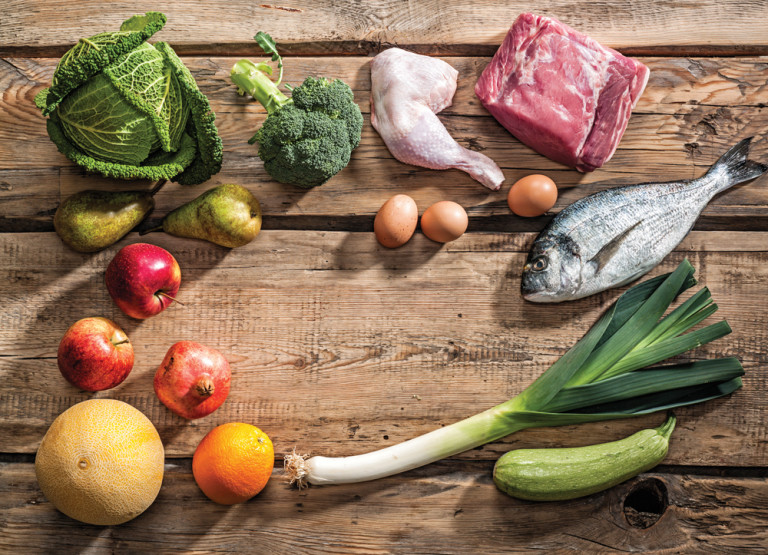
Paleo is still enjoying the spotlight as the diet du jour, it seems, but it isn’t for everyone. Although one cannot ignore the logic of its basis: eating the raw, natural and whole foods that our paleolithic ancestors consumed—meat, fish, vegetables and fruit, and not dairy or grain products and processed food leads to good, sound health. One can argue that paleo people did not live long, however, one can also assert truthfully that they mostly survived through brutally stressful environmental conditions, including times of near starvation.
The industrial revolution largely created modern lifestyles that have delivered many more chemical and atmospheric assaults, plus the stress of being instantly connected.
This is where whole and raw foods supplements become increasingly relevant. It is, at times, a broadly defined category with many opinions as to what constitutes “whole or raw foods supplements,” especially due to the increasing mainstream media attention given to the multiple benefits of healthy foods and lifestyle.
Whole food supplements made with whole fruits and vegetables, said Rafael Avila, director of research and development with New York-based Nature’s Plus (which originally launched its whole food multivitamin, Source of Life Tablets in 1986) contain numerous naturally occurring compounds that contribute to the absorption and/or activity of essential vitamins and minerals. “As consumer interest in whole-food nutrition has grown, so too has the availability of whole food ingredients that can be included in supplements,” he added. “Recently, there has been a surge of interest in certified organic whole foods that are rich in vitamins and minerals, as well as whole food cofactors.”
And although Avila noted that non-GMO (genetically modified organism) is one of the most significant trends in whole food supplementation, “we’ve noticed a negative side to this largely beneficial movement. Some manufacturers load their supplements with synthetic vitamins and minerals. While they may be free from GMOs, they are clearly not natural and wholesome.”
Mark Timon, formulator for Connecticut-based Vibrant Health, likewise expressed concern about what some companies in this category overall may offer. Consumers’ enthusiasm for what Timon called “maximum nutrition” has generated a common ready acceptance of new supplements that claim to be made from fresh, whole, raw foods, but likely may not be. “Avid marketing on the part of manufacturers has expanded awareness and driven acceptance of such products. However, the lack of industry consensus over clear definitions of the terms ‘whole foods’ and ‘raw foods’ calls into question the true wholeness and rawness of some of the products offered,” he related.
Much like the old commercial—”Is it live or is it Memorex?”—many consumers wonder how “raw” or “whole” a supplement can be if it’s basically made in a plant on an assembly line. They tend to equate “processing” with some sort of adulteration or impurity. If you or your staff receive such a sentiment, there are keen and true responses for customer edification.
For example, expressed Jeffrey Brams, vice president product development, Garden of Life, LLC, of Florida, when consumers purchase triple-washed spinach or milled spelt flour, or virgin coconut oil, they are buying foods that have some amount of processing. “That spinach is harvested, mechanically washed and then quickly dried by jets of steam and hot air. The coconut oil is lightly heated to transform it from a crystallized to a liquid state for packaging, and the spelt is mechanically ground, blended and packaged. Yet, these are all accepted—even embraced—as important staples in a raw, whole food diet.”
He added that Garden of Life’s raw/whole foods formulas are similarly treated with minimal processing to ensure both their safety and nutrient integrity.
Don Mills, ON, Canada-based Evergreen Juices’ marketing manager, Richard MacIntosh, said he believes, however, that it is rather tough to qualify “manufactured” across a wide range of products. Echoing Brams’ examples, MacIntosh stated that just like “organic cheese will require processing, that doesn’t mean it’s ‘manufactured.'” Conversely, he said, when you consider selling a product with a content list of 20 ingredients, “then you start to wonder how much processing is too much.”
Many phytonutrients, noted Avila, are delicate and do not survive the heat of processing. He cautioned to be wary of some brand marketers that oversimplify by stating that none of the ingredients in their products have been processed at all. However, he maintained, “this oversimplification leads to a reduced bioavailability and utilization of some foods that actually should be processed in order to liberate the phytonutrients within.”
The best example, he provided, is lycopene from tomatoes. A 2000 study showed that half of the lycopene in uncooked tomato passes right through the human digestive system, unabsorbed, because it remains bound to the insoluble fiber of the tomato. Meanwhile, cooking and processing tomatoes unbind the lycopene from the fiber, thereby doubling the amount available for absorption and use in the body.
Timon agreed, emphasizing that the drying and powdering plants for dietary supplements effectively break down their indigestible, cellulose-rich cell walls, freeing their contained nutrients for digestion and absorption. “If this can be achieved at low temperatures, presumably below 117 degrees Fahrenheit, then the cell walls have been broken down and the nutrients made available without ‘cooking’ the food. That food could then be legitimately used as a raw food supplement,” he explained.
There are distinctions between “whole” and “raw,” Timon added pointedly. “Whole” often brings to mind whole nutrition rather than a whole physical structure. For dietary supplements, “whole” implies that the entire edible portion of a plant has been reduced to a powder that is found in the supplement and that delivers all of its original content of macro and micro nutrients and its unique phytonutrients.
“The current presumed meaning of ‘raw’ means that a nutritional ingredient has been processed at 117 degrees Fahrenheit or lower,” he defined. “That temperature is, of course, the upper limit. Many botanical powders and whole plants are either freeze dried and powdered or dried and powdered at temperatures ranging from 40 to 90 degrees Fahrenheit.”
A related buzzword consumers will likely ask about is how “clean” are these whole/raw food supplements. And of course, this brings some challenges to the brand manufacturer that offers supplements in this arena.
Evergreen’s wheat grass juice, said MacIntosh, is organically grown, non-GMO wheat, rendering it more sensitive to changes in weather and other challenges that can easily be overcome by non-organic farming practices. Although it costs more to grow organic, MacIntosh knows that it is what consumers understand as healthier and cleaner (safer) for them to ingest.
“The term ‘clean’ is used prolifically in our industry,” stated Brams, questioning what exactly it means.
“We believe ‘clean’ means certified-organically grown and non-GMO verified as key starting blocks. Tested and confirmed ‘clean for sport’ is essential for protein powders and certified gluten free is an important ‘clean’ hallmark for many on restricted diets, as are kosher and vegan.”
In Timon’s viewpoint, organic may involve a conundrum. Bacterial contamination, he explained, is a common issue in using whole and raw foods in dietary supplements, especially if the plant material comes from organic soil because risk of bacterial contamination is significantly higher in organic materials. Steps that might prevent contamination include parboiling, steam sterilization of the plants or of the finished powders, or gamma radiation. “However, any one of these processes would prevent classification of the finished material as ‘raw,’ and may eliminate certain nutrients. If nutrients are lost, it would not be entirely accurate to thereafter call the finished material ‘whole.’”
Nature’s Plus supplements, said Avila, are audited and analyzed by organic certifier EcoCert and the analytical laboratory Intertek. He stated that the company believes that both certifications are necessary, due to the complexity of ensuring true non-GMO status. “Simply testing to ensure that an ingredient or finished product contains no detectable traces of genetic modification is not enough to eliminate GMOs,” he remarked. “That’s because it is possible to remove all traces of GMOs in certain foods such as oils.”
And because some countries allow such GMO-derived foods to carry the claim “non-GMO,” it behooves the manufacturer to conduct an audit to ensure that GMOs were not involved from seed to harvest to finished product, Avila noted. The USDA (U.S. Department of Agriculture) organic certifiers who certified the ingredients in all Nature’s Plus’ certified organic products routinely audit the producers, checking everything from the farm soil to the seeds, to finished crops, to ensure that there were no GMOs involved.
Further, “research shows that organic certification auditing is better at eliminating GMOs than the limits allowed by most non-GMO certifiers,” Avila stated. But since common but uncontrollable actions such as wind can blow GMO pollen many miles to infiltrate crops, polymerase-chain-reaction (PCR) DNA/RNA testing is necessary to truly ensure non-GMO purity. “PCR testing is so sensitive it can detect GMOs in a swimming pool containing only a drop of modified DNA,” he reported.
Shelf Options
Despite providing a wide range of organic produce and culinary spices, along with much healthier versions of packaged foods, many customers just prefer to concentrate on eating mostly the latter. Some customers just don’t want to cook or prepare meals that include fresh meats and produce from scratch.
However, they can obtain all the nutritional goodness from whole/raw foods supplements. Keep in mind, as well, that there are some customers who will eat a beneficial amount of fresh and raw foods but also want to enhance this healthy diet with supplementation.
For example, said MacIntosh, wheat grass is an excellent source of live chlorophyll. Evergreen’s juice is frozen, which preserves the enzymes and nutrients. And for convenience, it’s portioned in individual servings, making it easy to tote to the workplace or weekend activities. Evergreen’s wheat grass has a key distinction, he pointed out: it is grown organically outdoors as opposed to in trays indoors. “It’s not uncommon for mold to grow on the tray giving it a pungent aftertaste,” he explained. “In addition, growing our wheatgrass outdoors allows it to mature past the sprout stage into a vegetable. This means that the simple sugars (prevalent with indoor wheatgrass) mature into complex carbohydrates, giving our juice a much smoother taste.”
Vibrant Health uses many whole and raw food ingredients in quite a number of its products that also synergistically include botanical extracts, probiotics, and other materials for specific health benefit, according to Timon. One product he pointed out is 100 percent certified organic, certified raw, certified vegan, certified kosher and made entirely from whole foods—Field of Greens is a 14-ingredient purely green food that was brought to market many years ago by direct consumer requests for a superior green food that would meet the requirements of aficionados of wheatgrass powder or barley grass powder. “Since no single food, even among the green ones, provides a complete nutritional profile, we combined 14 certified organic green foods so that the nutritional strengths of one would compensate for the nutritional weaknesses of another. The result was a rich, purely green food with a more robust, synergistic balance of micronutrients,” Timon said.
Nature’s Plus has several whole foods lines—Organic Ultra Juice (90-ct. tablets, 90-ct. Ultra Juice Green in 90-ct. tablets, 30- and 60-day drinks, and 15 stick packs); Source of Life Garden (Bone Support, Calcium, Vitamin C, Vitamin D3, Vitamin K2, and Organic multis for men, women and pre-natal); and Spiru-Tein Puretrition shakes in French Vanilla, Dark Chocolate and Mixed Berry.
According to Brams, Primal Defense is an original Garden of Life whole foods formula that combined probiotics and organically grown grass juice powders, and, he said, was the first whole food probiotic formula. By 2009, the company began to focus more on certified USDA organic, non-GMO verified whole food ingredients because more consumers were seeking out such products, however, “in the supplement isles of the same store, there were virtually no options with these same qualities. We realized that our customers wanted something deeper and more significant than transparency—they wanted traceability. They were looking for products that were certified, verified and authenticated by respectable third parties.”
Garden of Life then launched proteins (RAW Protein, RAW Meal and RAW Fit), and greens powders (Perfect Food RAW & Organic), all certified organic, non-GMO, kosher, vegan, gluten free and clean for sport. The company more recently introduced mykind Organics line of real food vitamins as alternatives to what Brams noted as chemically-synthesized and isolated vitamin formulas. mykind Organics features Garden of Life’s patent-pending Clean Tablet Technology, which, said Brams, “created a new category of vitamin—the ‘Real’ Food Vitamin.'”
No matter what you select, the concept of increasing whole/raw foods intake—foods and the supplements—can be one that is fun to promote, and truly serve as the foundation to achieving extraordinary well-being. And once your customers begin to feel that, loyalty to you and your establishment quickly and organically grows. VR
For More Information:
Evergreen Juices, (905) 886-8090
Garden of Life, www.gardenoflife.com
Nature’s Plus, www.naturesplus.com
Vibrant Health, (800) 242-1835