


Capsaicin, the active ingredients in chili peppers, is widely recognized as effective natural ingredient for a variety of applications including topical pain management, cardiovascular support, and weight control. The benefits don’t stop there, but complications with the compound have restrained its potential. Until now.
What is phenylcapsaicin?
Phenylcapsaicin, commercially available as aXivite™, is an analog of capsaicin in which a naturally occurring phenyl group is used to stabilize nature-identical capsaicin. Introducing a triple bond within the phenyl group offers several benefits to the naturally occurring analog.
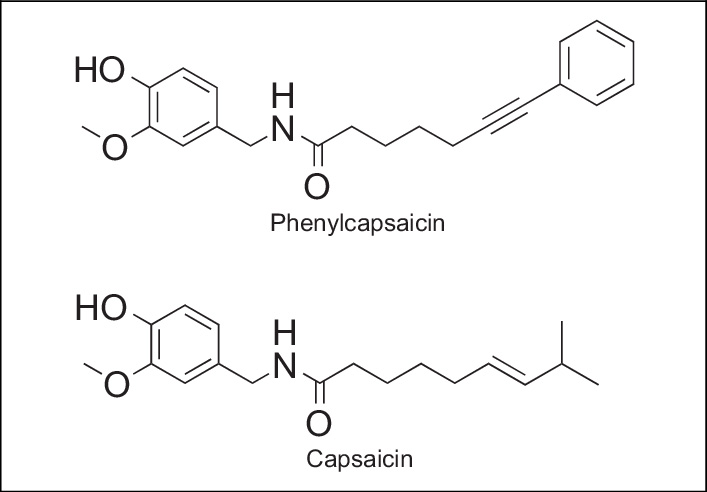
The resulting molecule displays higher activity as a TRPV1-agonist versus natural capsaicin and has been shown to exert other actions not observed with traditional capsaicin extracts, including quorum sensing inhibition and zonulin reduction, which are the focus of this paper.
What is Quorum sensing?
Bacteria become pathogenic and significantly increase in number through quorum sensing (QS). Quorum sensing is a cell-to-cell communication mechanism leading to differential gene expression in response to high population density. Via this process a particular species of bacteria form “colonies” in which the individual cells begin to act as one larger tertiary organism, a team. This communication between the bacteria is done via chemical messages carried by signaling molecules called autoinducers, which are produced in response to changes in cell-population density.
QS is responsible for the establishment of harmful bacterial populations that can interfere with the balance and integrity of the gut microbiome. Thus, it has been postulated that inhibiting QS among pathogenic bacteria can help restore balance, reduce inflammatory responses, and promote healthy GI comfort and function.
Phenylcapsaicin demonstrates QS-inhibiting properties
Recent research conducted by aXichem, makers of aXivite, demonstrated the ability of phenylcapsaicin to inhibit quorum sensing in the gut. The study focused on interfering with the QS system using small molecules to block the activation of the AHL receptor protein normally used as the autoinducer. Chromobacterium violaceum CV026 was used to identify QS inhibition.1
In this CV026 bacteria QS inhibition analysis, phenylcapsaicin was shown to be a QS inhibitor in a dose-dependent manner. Details of the study methods, protocols, and results remain under wrap as the paper awaits publication, but such specifics will be available upon release by the accepting journal.
This early report is intended only to celebrate the potential of a new, unanticipated effect of phenylcapsaicin, which elucidates the experiential success of aXivite supplementation and correlates with the clinical observations of previous research demonstrating reductions in inflammation and permeability markers along with weight loss.
It is hypothesized that these benefits combine with previously established mechanisms of action to produce benefits not achieved with common capsaicinoid compounds. By inhibiting the communication between the “bad bacteria,” inflammation can be arrested, dysbiosis can be overcome, and as metabolic activity is elevated, improvements in weight and body mass index can be realized.
What is Zonulin?
Zonulin is a protein involved in the regulation of intestinal permeability. Research shows that high serum levels of zonulin are correlated with increased intestinal permeability, disrupted gut barrier function, and altered immune response. Though a matter of some dispute with respect to methods of measure and analysis, zonulin is a recognized biomarker for intestinal barrier integrity.
A recently completed study undertaken to determine the body weight-reducing potential of aXivite phenylcapsaicin at various dosage levels, found another surprising benefit in the reduction of serum zonulin levels among those taking the supplement along with an assigned diet and exercise program, lending further credence to the superior results of this novel capsaicinoid.
Study shows reduction in weight, BMI and zonulin
Thirty-nine overweight but otherwise healthy men and women (26 females, 13 males) participated in this first-in-human pilot study conducted by the Center for Applied Health Sciences in Canfield, Ohio.2 The unpublished trial set the stage for multiple studies currently underway in both Europe and the US, intended for future publication.
Individuals were randomly assigned to a control group, a high-dose phenylcapsaicin group, and a low-dose phenylcapsaicin group in the eight-week, double-blind, parallel-group trial. All participants followed the same Zone-type diet and added 30 minutes of walking exercise to their regular activities three times per week throughout the course of the trial. Those in the low-dose group received 0.56mg of phenylcapsaicin each morning; those in the high-dose group received 1.12mg; and those in the control group received matched-appearance capsules containing only microcrystalline cellulose. Analysis was conducted at screening, and upon completion of the eight-week trial period, along with qualifying reviews of daily diet and exercise reports.
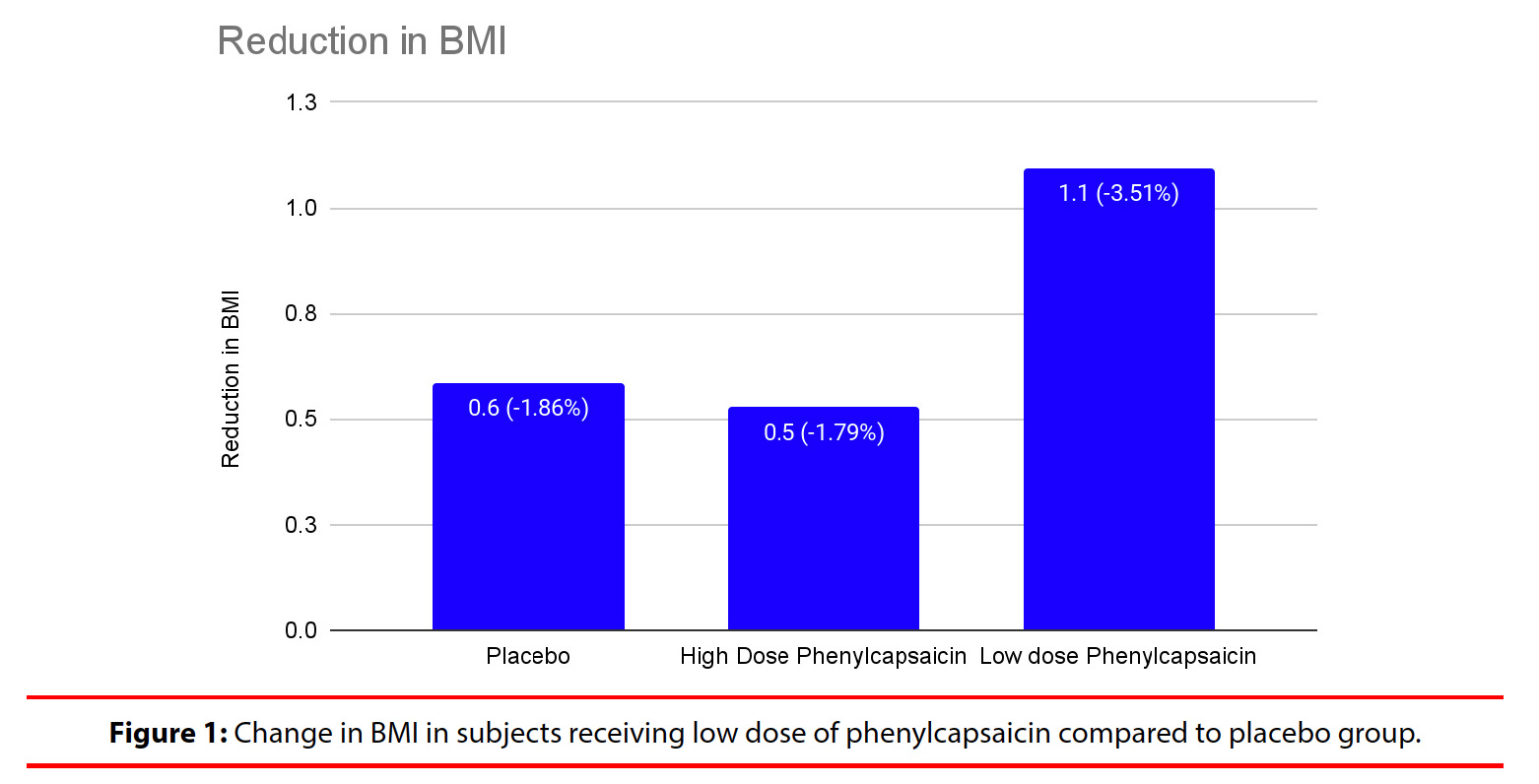
For reasons yet to be fully understood, the lower dose of phenylcapsaicin performed better in this initial pilot study. Future studies will address the dose-dependent results. Subjects in the low-dose group saw a decrease in BMI of 1.1 points while those in the high-dose group saw only a 0.5-point reduction and those in the control group saw a 0.6-point reduction. (Figure 1)
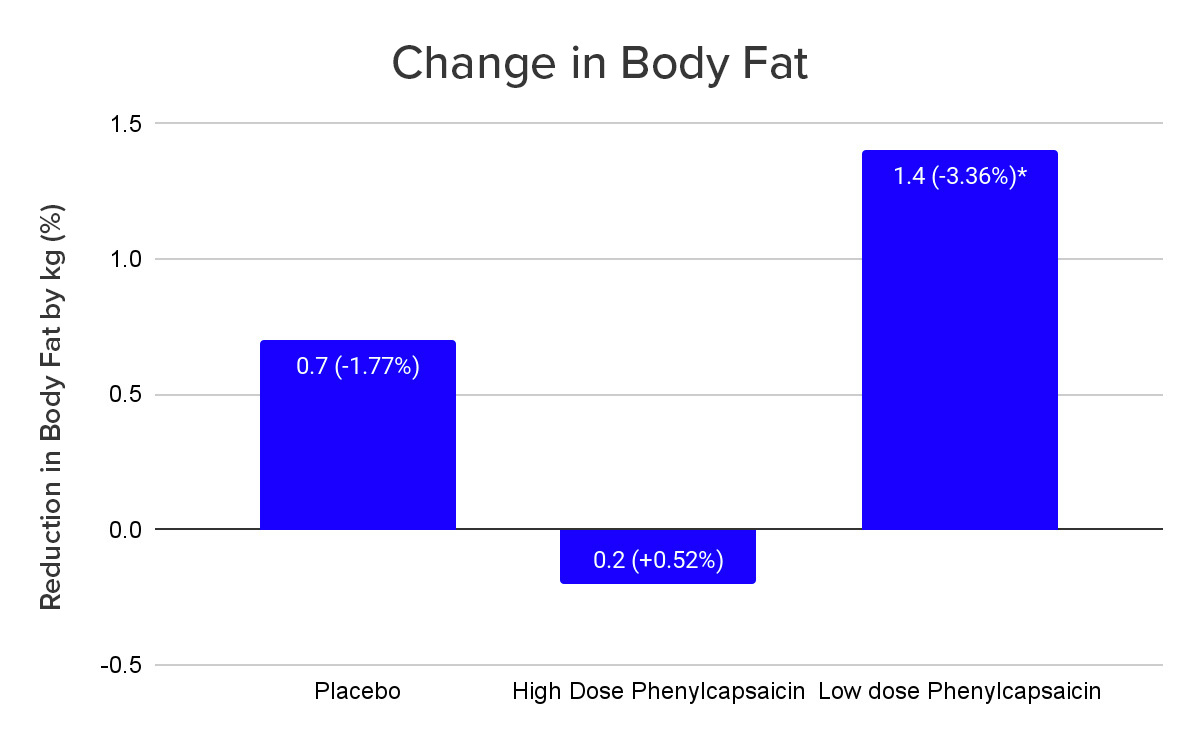
Body fat percentage also fell more within the low-dose phenylcapsaicin group, dropping an average of 1.4kg or 3.36 percent during the eight weeks, while the high dose group appeared to actually gain body fat. (Figure 2) It is theorized that the high dose group suffered from lack of compliance throughout the trial, which was conducted with a decentralized, self-administered protocol due to covid lockdown restrictions. Regardless, the proof of concept has been clearly proven and both the ongoing and future studies are being designed to address these concerns.

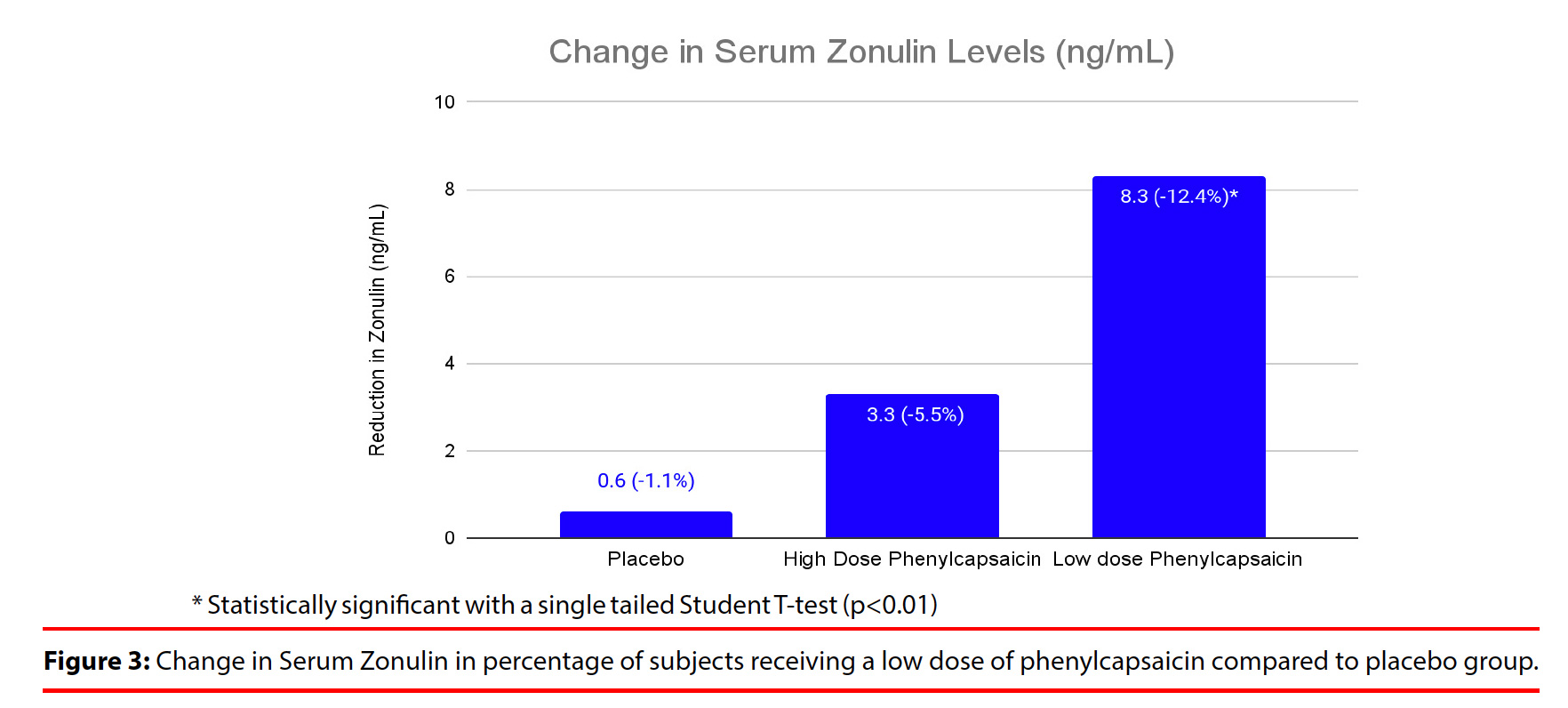
The final and most important result to emerge from this trial is that of the reduction in serum zonulin levels, which dropped by 8.3ng/ml, or 12.4 percent, in the low-dose group. (Figure 3) Such a drop in this biomarker could indicate an effect on intercellular tight junctions within the intestines, resulting in reduced intestinal permeability, improved gut barrier function and proactive modification of immune responses within the gut environment.
aXivite™—a thermogenic capsaicinoid beyond all others
Few natural products have been as widely investigated as capsaicin, which has been investigated in research published over the past 50-plus years. It has been established and accepted that capsaicinoids display potent agonistic activity to TRPV1, know widely refered to as “the capsaicin receptor.”3 Just one among a family of non-selective cation channels, TRPV1 is associated with temperature regulation—the foundation of capsaicin’s lauded thermogenic properties.
With that “heat,” however, comes the potential for irrititation, discomfort and intolerance, especially at doses effective to achieve desired results. aXivite Phenylcapsaicin is different. A 98-percent pure capsaicin analog, aXivite does not carry other analogs and impurities found in conventional chili-derived extracts. Plus, it’s microencapsulated for further protection against GI irritation.
aXichem’s pharmacokinetic data shows phenylcapsaicin to be a more potent TRPV1 agonist with up to four times the bioavailability of the standard chili-derived capsaicin extract (8% capsaicin standard). Plus, with its 98-perent purity, aXivite is literally 10 times more potent, effective at lower, more tolerable doses.4 And if the new preliminary data discussed herein holds true—which researchers believe will be confirmed in future trials—this new form of capsaicin offers benefits well beyond established capsaicin science, with the power to support the health and balance of the gut microbiome and support the integrity of the intestinal barrier, while maintaining the accepted thermogenic weight management acitivty and related TRPV1-mediated applications.
aXichem’s innovative aXivite phenylcapsaicin is available today in Omne Diem™ brand Thermogenic Weight Management and upcoming aXivite Gummies. For more information on aXivite, visit axivite.com. For more information on Omne Diem retail supplements, visit diemnutrition.com.
References:
- Proprietary research, aXichem AB, data on file.
- Proprietary research, aXichem AB, data on file.
- Yang Fm Zheng J. Understand spiciness: mechanism of TRPV1 channel activation by capsaicin. Protgein Cell (8),169-177, 2017.
- Turck D, Castenmiller J, De Henawu S., et al. Safety of Pheylcapsaicin as a novel food pursuant to regulation (EU). EFSA Journal (17), 05718, 2018
These statements have not been evaluated by the Food and Drug Administration. These products are not intended to diagnose, treat, cure or prevent any disease.
Any information provided or opinions made in email advertisements are not necessarily those of VRM Media or its owners. Publisher is not liable for advertiser product claims or representations. Advertisers assume total responsibility for the contents of their advertisements.