



Five Minnesota school districts raised awareness about genetically modified organisms (GMO) in food, reported the Minneapolis School District. Schools in Hopkins, Minneapolis, Orono, Shakopee, and Westonka celebrated GMO Awareness Day on November 5 by offering non-GMO menu options and communicating to students and families about GMOs, and the five districts serve a total of about 56,700 meals per day.
“GMO Awareness Day sparked a lot of good conversations,” said Bertrand Weber, director of Culinary and Nutrition Services at the Minneapolis Public Schools. “We also received a lot of positive messages, both from inside and outside our district.”
Director-level staff at the five districts began meeting to discuss GMOs in April, 2014, and decided to hold a collective awareness-raising event to help engage their communities, reported the district.
“We want to start conversations about the foods we serve and how our decision-making works,” said Laura Metzger, director of Food and Nutrition Services at Westonka Public Schools. “Our students will grow up to make their own decisions about the foods they eat, so this is an opportunity for education.”
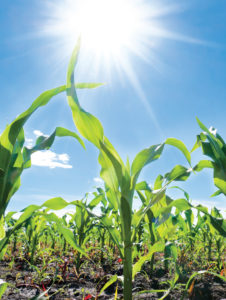
GMOs are plants or animals produced using a technology that merges DNA from different species to create new combinations of plant, animal, bacterial and viral genes that cannot occur in nature or in traditional crossbreeding, according to the district, noting now that most corn, soy, canola, cotton, and sugar beet crops grown in the United States are genetically modified. It is estimated that up to 80 percent of processed foods in U.S. supermarkets contain GMOs.
Though there’s been little research on the human health impacts of GMO consumption, however, animal feeding studies have linked GMOs to cancer, allergies, infertility, and more. Three U.S. states – Connecticut, Maine, and Vermont – have recently joined more than 60 countries worldwide requiring disclosure of GMO content on food packaging, according to the district.
Weber said he’s seen increasing interest in the GMO issue among school nutrition directors. “Many of us are already working to reduce food dyes and additives and bring in produce from local farms,” said Weber. “Reducing GMOs is another way we can support kids’ long-term health.”
To implement reductions in GMO content, nutrition directors are communicating non-GMO preferences to vendors and distributors, switching to non-GMO cooking oils, and working to eliminate other risk ingredients. “It’s been great to collaborate with other districts on this effort,” said Metzger. “It’s allowed us to share ideas and make sure we’re not reinventing the wheel.”
For more information, visit www.mpls.k12.mn.us