


Retailers should be ready to educate and provide helpful supplements to those who want to alleviate (or avoid) painful skeletal issues.
Bone health is important for the health of the entire body as bones provide structure and support, anchor muscles and protect the organs, according to the Centers for Disease Control and Prevention (CDC). But while many people know it’s important to take care of their heart or their brain, fewer are aware that bones are living tissue that require the same attention.
Osteoporosis and low bone mass affects about 52 million Americans, according to the National Osteoporosis Foundation (NOF). Osteoporosis, which means “porous bone,” is a disease where too much bone is lost or not enough new bone is made. As a result, bones become brittle and may break easily from a fall, or in serious cases, may even crack during a sneeze. About one in two women and up to one in four men aged 50 years and older will have a fracture due to osteoporosis, creating $19 billion in health care costs each year.
According to the World Health Organization, the prevalence of osteoporosis has increased worldwide since 2003, and will continue to grow by about three percent annually. This reality has led to greater awareness of preventative measures, especially in light of spiraling health care costs, said Leigh Reynolds, owner of Gluten Free Therapeutics, a Maine-based researcher and formulator of gluten-free supplements.
Many people are unaware that their bone health is declining until they experience immense pain or the disease has progressed far enough that they break a bone. But for those who know the earlier symptoms of the disease, it may be possible to intervene and prevent it from getting worse. “Some early warning signs can be receding gums, decreased grip strength, weak and brittle finger nails, cramps, muscle aches and bone pain, loss of height and low overall fitness,” said Reynolds.
Other symptoms of skeletal issues include achiness, swelling and limited mobility according to Lori Peters, marketing manager at California-based Apricot Power, a company that provides apricot seed kernels and B17 products. While bone health problems may start to occur in older populations, especially in women beginning menopause, Peters pointed out that problems could strike at any age. “Bone and joint health affects the young and the young at heart,” she said.
At any age, the struggle with poor bone health is not only physically painful, but it can also severely limit the sufferer’s quality of life. Therefore, it is important for retailers to point customers in the direction of supplements that may help build bone strength, such as calcium and vitamin D, as well as to educational materials on the topic. “Education on the importance of bone health is a great way for customers to better evaluate their need for a supplement,” said Keri Marshall, MS, ND, chief medical officer at California-based Nordic Naturals, a company that supplies high-quality omega and vitamin D supplements.
The Role of Vitamin D
Vitamin D plays a major role in protecting bones, and is required by the body to absorb calcium, a well-known building block for strong bones. “Research shows that vitamin D promotes the body’s absorption of calcium and phosphorous, minerals that are critical to bone health,” said Marshall.
Children need vitamin D to build strong bones, and adults need it to maintain those bones. According to the NOF, if an individual doesn’t get enough vitamin D, they may lose bone, have lower bone density and have a higher chance of fractures as they age. “One thing to remind retailers of when they market bone health supplements is that vitamin D deficiency can occur from a number of factors that aren’t always obvious,” said Marshall.
Vitamin D comes from three sources: the sun, food and supplements. The body produces vitamin D from ultraviolet light (UVB rays) in the form of vitamin D3 (cholecalciferol), which is a natural form of vitamin D preferred for optimal absorption, Marshall explained.
The amount of vitamin D the body makes from sunlight depends on the time of day, season, latitude and skin pigmentation, as well as other factors. Many people who live in cold climates or who limit their sun exposure may experience vitamin D deficiency. “This is a chronic problem in places like the U. K. and Ireland, and other locales where it’s cold and dark much of the year,” Marshall said.
But some people in sunnier climates intentionally avoid the sun due to concerns about skin cancer or skin aging, by staying indoors, wearing long clothing or slathering on sunscreen. A sunscreen with an SPF of as little as 8 can reduce the production of vitamin D in the body by 95 percent, according to the NOF. For those worried about skin cancer, foods that contain vitamin D are an alternative to catching some rays. These foods include fish, such as mackerel, salmon and tuna as well as fortified dairy products, orange juice and cereals.
The NOF recommends women and men under age 50 get 400 to 800 IU of vitamin D a day, while women and men 50 and older should get 800 to 1,000 IU daily. But it is often difficult to get all the D the body needs from foods alone. For example, one 8-oz. Glass of milk usually provides about 25 percent of the daily value of vitamin D, or only 100 IU. This is why a supplement may be beneficial.
Nordic Naturals offers several products with vitamin D, which the company often adds to its omega oils for added benefit. “Omega-3 is an essential nutrient that we are required to obtain from our diet,” said Marshall. “It is an important nutritional building block found throughout our body, in every single cell, including healthy bone matrix.”
Included in the company’s vitamin D lineup are Arctic- D Cod Liver Oil, Omega-3D, Complete Omega-D3 and its best-selling concentrate, Ultimate Omega-D3. The company also offers stand-alone Nordic Vitamin D3, and 100 percent vegetarian Vitamin D3 Vegan, as well as the new and popular Vitamin D3 Gummies.
“In terms of bone health, our wild-berry flavored Vitamin D3 Gummies is the most recent formulation,” said Marshall. “It offers 1,000 IU of vitamin D3 in each gummy, so it is potent and delicious.”
Customers have responded so positively to the Vitamin D3 Gummies that Nordic Naturals recently introduced a new, larger size for retailers to stock— providing the option of a 60-ct. Or 120-ct. Package. “Their gummies really taste good, so that makes it really easy for people who have trouble swallowing pills and for children,” said Terri Williams, Certified Clinical Nutritionist at Evergreen Nutrition, a health food store in Eugene, OR.
Another company providing a supplement with vitamin D is Gluten Free Therapeutics, with its new Celi•Vites Bone Health. This supplement is dissolvable in water to avoid a chalky taste, which the company’s researchers found is something customers try to avoid, said Reynolds.
Celi•Vites Bone Health provides 1,000 IU of vitamin D, as well as vitamin K as K2, or menaquinone-7. In a clinical study, postmenopausal women taking 180 mcg of vitamin K2 had decreased bone loss, according to Reynolds, so this is a welcome addition.
The Importance of Calcium
Adequate calcium is required for healthy bones and teeth, and it helps reduce the risk of osteoporosis later in life, according to the CDC. Studies have shown that calcium, particularly in combination with vitamin D, may help prevent bone loss associated with menopause. It may also help prevent bone loss in older men, according to the University of Maryland Medical Center.
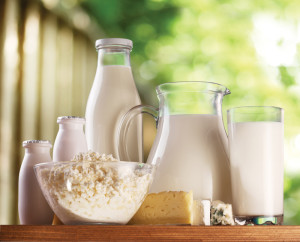
Since the body cannot produce calcium on its own, it must be absorbed through food. Foods rich in calcium include dairy products, dark green leafy vegetables, calcium-fortified foods such as cereals, and nuts. The CDC recommends adults aged 31 to 50 receive 1,000 mg/day, adults 51 to 70 and older should get 1,200 mg/d, and women who are pregnant or lactating should get 1,000 mg/day. But again, a supplement may help those struggling to meet calcium requirements through food alone.
Gluten Free Therapeutics’ Reynolds supports the idea of getting as much calcium from whole foods as possible, but agreed that supplements are often a great complement. Her company’s Celi•Vites Bone Health, a great source of vitamin D as previously mentioned, is also rich in calcium. One dose provides 500 mg, or 50 percent of the daily value.
Celi•Vites Bone Health supports the skeleton on multiple levels, according to Reynolds, as it contains Aquamin, a highly absorbable, plant-based source of calcium, vitamin D3, magnesium and potassium. “When building bone, you need the correct ratio of calcium to magnesium, and we worked with formulators representing the gold standard in the supplement industry to get this ratio right,” said Reynolds.
Apricot Power also offers bone health products, such as Bone Strength, a comprehensive supplement that provides magnesium, trace minerals, vitamin D and MCHA. MCHA, or microcrystalline hydroxyapatite, is a natural compound that makes up the crystalline matrix of bone and teeth, and it is the substance that gives them their rigidity, said Peters. “MCHA is a source of highly absorbable calcium and phosphorous, which are the major mineral components of bone,” she added. Bone Strength provides 4,000 mg of MCHA, as well as vitamins C, D and K to aid in the synthesis and maintenance of bone tissue.
Taking the Extra Step
Retailers can help their customers achieve better bone health by first suggesting blood work. “It’s important for people to get their vitamin D levels checked because it is key to bone health, and without it, there’s a big piece of the picture missing,” said Evergreen Nutrition’s Williams. “We encourage people to do that.”
If a customer is vitamin D deficient, it usually takes a higher dose of the vitamin to get back into a healthy range. “You’ve got to take a bigger dose. And you can get better absorption, by up to 60 percent, when you take it with a meal higher in fat. You want to optimize whatever you’re doing to get the most benefit,” she said.
Evergreen Nutrition offers health screenings twice a year where customers can get bone density scans to see if their bone health is improving. “People can take a supplement and then check it out to see if it’s helped increase their density at all,” Williams said. “They can see if the stuff they are taking is actually doing any good.”
But supplements are not a magic bullet, said Williams, so she suggested that retailers take the extra step to also encourage a healthy diet and lifestyle. “We want people to understand that foods, such as leafy greens and almonds, are actually bone food that you may not think of as bone food,” she said. “We are a supplement store, but we still want to point people in the direction of eating whole foods and exercising. There’s so much you can do with lifestyle.”