


Kimberton Whole Foods, six locations in Pennsylvania—Collegeville, Douglassville, Downington, Kimberton, Malvern and Ottsville
What began as a tiny farm store outside of Philadelphia, PA, now includes six natural grocery stores, a distribution center and commissary kitchen. While achieving growing success through the years, Kimberton Whole Foods never lost sight of ethical business practices and a commitment to regional sustainable agriculture.
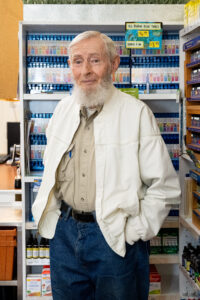
In 1986, Terry Brett and his wife Pat Brett were running a small, biodynamic farm store outside of Philadelphia for Seven Star Farms. It was located in a 400-square-foot building where they sold organic yogurt that was made onsite.
Today, the couple owns six natural grocery stores, Kimberton Whole Foods, with a majority managing position in a seventh, where they work alongside four of their five children and approximately 260 employees. Even the yogurt maintains a strong presence in the region.
With such exceptional growth, Kimberton Whole Foods is by all definitions a success story, but despite well-deserved bragging rights, owner Terry Brett is a low-key entrepreneur who prefers to stay humble. When asked the secret to the store’s success, he credits “the growth of the population in the suburbs of the Philadelphia area.”
He also noted that Philadelphia is a successful economic area—with a strong pharmaceutical and financial industries presence—and a diverse population. Another advantage he pointed to is consumers’ increased awareness of healthy food, supplements and lifestyles.
Being price conscious also adds to the stores’ allure. Since working on the farm, Brett said the focus was on keeping low costs—the retailer always passes savings on to customers. “We are known as the place for affordable prices,” he said, and the store’s growth makes it easier for Kimberton Whole Foods to save by buying in large quantities.
Still, one needs business savvy to make it work, and Brett appears to have an intrinsic knack—he is not a college graduate and never took a business course. “I learned as I went along. It’s common sense, which may be uncommon. I’m good at math and I can pretty quickly see and translate labor and overhead and gross profit margin into a combination, so you don’t lose money,” he said.
“We really work,” he added. “Some years we work on 1 percent gross profit margin. It’s not dissimilar to large grocery stores—1 or 2 percent. We almost never take discounts from vendors —whether it be supplements, body care, groceries or whatever and take a vendor discount and put that discount into our pocket. We always pass it on to customers. I believe we have a high level of integrity with vendors because they can see through SPINS data, when they give us a discount, we lower our prices. That’s why we can compete with a Wegmans and Whole Foods and Trader Joe’s, etc.”
No Competition
Primarily a food store with 45 percent devoted to fresh—meat, poultry and other perishables—Brett said supplements have a strong presence and recently have been seeing a 14 percent sales increase. The store’s six locations range in size from under 4,000 up to 15,000 square feet “If we open any new stores, we’ll probably be looking at the 12,000-square-foot range,” the owner said.
The closest competition to Kimberton Whole Foods is Wegmans, but according to a family friend, rather than focus on competitors, Brett has been known to help other natural product storeowners.
“I don’t want to make too much of it,” Brett said. Recently, he helped a friend open a store in New Hope, PA, which is about an hour outside of center city Philadelphia, and he has helped other retailers in the past, including a co-op trying to transition to private ownership. “We have such a huge advantage over small stores because of our buying power. It’s not like I was trying to help out somebody who has the same strength as we do—then they wouldn’t need it. They were good people trying to do a good thing.”
Local Farming, State-of-the-Art Distribution
Located on the edge of Lancaster County, PA, which has a rich agricultural history, Kimberton Whole Foods has strong relationships with a number of the region’s farms. These grew over time. “We’re buying raw goat and cow milk directly from them,” Brett said, “We have five kinds of raw milk, which is pretty unusual, and six or seven local relationships for eggs, cheese, meat, poultry and pork.”
The retailer invested in a centralized warehouse years ago to distribute the local goods to all of its stores, which are fairly spread out—one is an hour and a half away from the distribution center.
“It would be a hardship if not an impossibility for our farmers to drive all those ways to make direct deliveries. So, we created a platform that either we pick up from them, or they have that one point to deliver to. And we have, I think, a pretty advanced warehouse, it’s entirely computerized and it’s tied into our POS (point of sale) system. I’m really proud of what we’ve done and how we invested.”
Food from the retailer’s commissary kitchen, such as grab-and-go items and soups, also makes its way through the distribution center to the six locations. In addition, the retailer has a bulking operation that does bulk packaging for all six locations. “And we have our warehouse component, where we can have large buys of mainstream commodities and we can then push them out to the stores that need them, because some of our stores have virtually no back room,” Brett explained.
Of course, there have been challenges. One of the bigger bumps along the road happened when the retailer opened its second store. “It didn’t materialize to have the sales that we needed for a store that was 45 percent perishables, and that is where you really get killed, because you can’t turn the product fast enough,” Brett said. “So, we started distributing from our main store to that store. First, we were taking a minivan every day, then a cargo van to a small truck. When we opened our third and fourth stores, we continued that model until it was no longer feasible. It was too much stress on the primary store, so we opened the warehouse.”
Brett noted that this is unusual. “There are not many natural food retailers that are small, relatively—we do about $38 to $40 million a year of gross sales—that have a distribution center with refrigerated trucks. It’s a very tight operation. It needs to be because we don’t work on a high margin, so our efficiencies have to be as good as we can make them. Because we have a distribution center, we have warehouse personnel, we have drivers … that’s something that if you’re a single store you don’t have.”
INFRA Founding Member
Along with his usual business, Brett is a fourth term member of the board of directors with INFRA (Independent Natural Food Retail Association), and Kimberton Whole Foods was one of 10 original incorporators of the organization, about 12 years ago. “We have been deeply committed to the work of INFRA for all that time,” Brett said. “The most important aspect of that is trying to work as a virtual chain and try to speak as one voice for independent natural foods retailers to be a dedicated partner to our distribution partners and to the vendors that support us with our monthly deals program.
Staff Background and Training
Kimberton Whole Foods staff members have a full spectrum of health and wellness backgrounds.
According to Hannah Koch, supplements category manager, purchasing department, “We are fortunate to have a breadth of experience working in our Apothecary Departments. We have doulas, yoga teachers, massage therapists, reiki practitioner, aestheticians, flower essence practitioners and budding herbalists on our team,” she said. “Much of our staff are currently studying to be herbalists and nutritionists. We are always learning from our customers and the industry itself. We are proud to have team members who have been working with supplements in the natural foods industry for 10 to 20 years.”
Keeping staff up on the latest is ongoing. “Once a month we host a four-hour Apothecary training,” Koch said. “Vendors send reps or national educators to teach our staff about their companies and products. We get to see, smell and taste exciting new products and learn about what makes them different from other products on the market. This has been a great opportunity for Kimberton Whole Foods and vendors alike.” The staff is also rewarded for their participation in the INFRA Academy of Retail Training program where team members can learn about nutrition and supplements.
Customer Education
Kimberton Whole Foods’ customers have lots of questions, Koch said, “and we try very hard to have a staff that can answer them with confidence. I always want our customer to feel that they can use us as a resource to learn about healthy living. I think that’s what keeps them coming back to our Apothecary when they could easily buy something online.
“Personal health is an intimate topic and I think customers value the ability to talk face-to-face with an educated team member when making choices for their wellbeing,” Koch added. “I think the beauty of this industry is that our customers have the power to make informed choices about their health. We find that our customers are hungry for knowledge—whether that comes through as a question to a team member or by attending one of our workshops about CBD. Customers can come in with a question about a supplement and leave feeling empowered. Sometimes it’s the staff that’s learning from the customer. Kimberton Whole Foods has customers that have been living a natural and alternative lifestyle for well over 30 years. When they talk, we love to listen. It’s easy to maintain a focus on education when you have a passionate and engaged staff.”
The retailer’s customers deal with common health issues—they want to live a long life, have less pain and stress, get a full night’s sleep, maintain a healthy body weight and a sharp mind, Koch noted. “We live in such a fast-paced society that we are all trying to get it all done. Supplement companies have responded to customers’ concerns with force. I’m seeing movement away from single ingredient supplements toward structure/function combinations geared toward our fast-paced lifestyle.”
Meeting Customer Needs
Kimberton’s customers range from first-time health food store goers, to young farmers, to grass-roots shoppers. “Our communities vary from location to location; however, we see the common thread between our shoppers being a concern for their health, the environment and the values of the brands they support, said Becca Settle, director of marketing.
According to Koch, their customers’ demands are for human contact, education, and competitive pricing. “They need alternatives to what they are finding in the mainstream, inspiration to take their health into their own hands, and support and selection for making healthy choices. Our customers also need to be able to afford whatever they choose. And sometimes, all they need is someone to listen.”
And the staff wants to be a community resource for its customers. “Education is one way we can set ourselves apart from other retailers and from the mass market,” Koch said. “We believe in fostering positive and respectful relationships We hold consumer lectures at some locations to educate customers on specific health topics like CBD oil and gut health. We are very excited that Brenda Watson, renowned gut health expert and Chris Trad, the farmer and founder of Fountain of Health CBD coming this month. As often as possible we try to give the same great training opportunities to our customers that we make available to our staff.”
Kimberton’s supplement selections offers 150 different vendors. Some of its top suppliers are of Garden of Life, Nordic Naturals, EuroPharma, MegaFood, Gaia Herbs, Boiron, Charlotte’s Web and Plus CBD. “We also sell a great variety of smaller niche and local brands that you can’t find everywhere else,” Koch said. “We are really excited to grow our local herbal section with Mother Hylde’s Herbals and Natural Hope Herbals.”
The retailer also carries a selection of private label from two different companies. “My predecessor, Caron Balman, wisely chose companies that had very high standards and manufacture supplements for other supplement companies in the industry,” Koch said. “The quality is high and because they aren’t spending money on marketing, the price is unbeatable. It allows us to offer a great product at a great price and keep customers coming back to our store instead of other big box retailers. We will expand our private label offerings in areas where the other brands are comparable in function and quality to our own.”
Environment, Outreach
Speaking more about its dedication to local farming Settle said the retailer believes the true value of being a community market is in making contributions to the lives of its neighbors and the larger local economy. “We work with over 200 local producers in the Greater Philadelphia Area. We define local as being within 100 miles of our Distribution Center in Downingtown, Chester County. This central location helps our local vendors increase their reach while minimizing their carbon footprint and distribution costs.”
In November of 2018, the store announced its involvement with The Climate Collaborative. Together with other natural grocers, food companies, and distributors, it is working to leverage the power of the natural products industry to reverse climate change, according to the organization’s website.
“To support our participation with this group,” Settle said, “we have formed our own Climate Committee at Kimberton Whole Foods, built from dedicated team members from all of our stores and departments. Together, we’ll be working to roll out one climate-focused initiative at a time. In this way, we will take small steps toward big change.”
The stores offer BPA- and BPS-free recyclable receipt paper, made with vitamin C to transfer the thermal print. Its customers bring in extra reusable bags from home to add to the retailer’s Bag Tree. “This is a great option for those that forget theirs when they come to shop,” Settle explained. “Our produce department offers a corn-based compostable produce bag option that biodegrades in home composting. We are also encouraging customers to bring their own containers to fill up in our Bulk—a zero waste option!
“Also, each store location and the commissary kitchen participate in a composting program, where local farmers pick up our scraps to make compost or feed their pigs and hens.”
Charitable Contributions
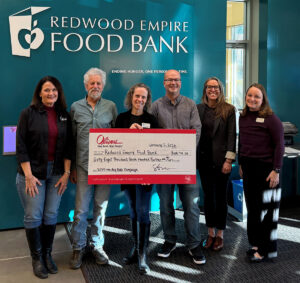
Kimberton Whole Foods said it values the work of its neighbors and is committed to supporting their efforts in sustaining a vibrant and healthy community. “Locally, we donate to food banks, schools, environmental conservancies and other philanthropic organizations,” Settle said. “Regionally and nationally, we support non-profit groups that promote sustainable agriculture and food transparency such as the Non-GMO Project. We are a Permanent Business Partner with the Pennsylvania Association for Sustainable Agriculture, which educates and connects local farmers, community members, businesses and policymakers, for a more sustainable food system in our state.”
The Family’s Future
Brett’s wife works part-time and four or the couple’s five children work full-time at the retail store. “There are challenges for sure because we don’t always agree,” said Brett, “But it’s really wonderful. All the children respect each other and get along.”
The family and staff have been very busy recently—they opened two stores one year apart—one in March 2018, another in March 2019.
“We’re tired,” said Brett. “We had some other irons in the fire, and I just told the developers who wanted us to be part of their developments that we were taking a break.”
Brett noted that he is considering a change. “Because four of my children are full-time in the business and my wife is part time in the business, the future growth of the company will be left up to them. I’ll be 64 in October and I’ve been putting the pedal to the metal for 33 years. They are encouraging me to relax a little bit. I have five wonderful grandchildren and I’ve always wanted to get back into farming. I actually bought 16 acres where we started the biodynamic farm. I hope next year to start with agricultural production. I love to work, but I’d like to not have so many daily challenges of running [the retail operation.]”
Who will take over remains to be seen, though Brett speculates that the family will divvy up the responsibilities. “Right now, the company is in the hands of primarily 30-year-olds. They’ll probably give it another 20 or 30 years, and after that maybe the grandchildren will take over. It’s up to the kids.”
Looking back, Brett said he never had the intent of becoming a six-location natural grocer. “I thought, maybe someday the store will do a million dollars a year. Now we do almost a million dollars in a week and two days.”
His driving force is being so instrumental in supporting a number of small farms, “which I think on a philosophical basis is just absolutely important. It’s important on a cultural level, because kids growing up on farms have a special relationship with the planet environmentally because we focus on organic, which has a positive aspect.”
When in college, Brett said he was a theology student, but realized that meant he would be just talking to people about theology. “So, I found my way into something which has become my life work. I never set out to do it that way.
“A long time ago, I thought if someone can get involved in the economic system, they could do a tremendous amount of good, but also could do a tremendous amount of harm. If you can do something and have it be positive and fair—people have health insurance and a decent wage, while doing the right thing and supporting family farms—that would be a worthwhile calling.” VR